
Buying a plot in Telangana can be a good long-term investment, especially in areas where roads, industries, employment zones, and other infrastructure projects are developing. But before investing your hard-earned money, one important question comes up: Which approval is safer HMDA, DTCP, or RERA?
Many buyers search for HMDA vs DTCP approved plots because they want to understand the difference between these approvals and choose a property with better legal and development clarity.
The truth is that HMDA, DTCP, and RERA are not three competing approvals for exactly the same thing. Each has a different purpose. HMDA and DTCP mainly relate to planning and layout permissions, while RERA is a regulatory framework that provides protections and disclosure requirements for eligible real estate projects.
So, which one should a buyer choose?
Let’s understand HMDA vs DTCP approved plots, the role of RERA, what documents to verify, and how to make a safer plot-buying decision in Telangana.
HMDA stands for Hyderabad Metropolitan Development Authority. It is the planning authority responsible for development and planning in its jurisdiction around Hyderabad.
An HMDA-approved layout generally means that the layout has received approval from HMDA according to applicable planning and layout regulations.
HMDA approval can be particularly relevant when you are purchasing plots within the HMDA planning area.
HMDA-approved plots can offer several advantages:
However, HMDA approval alone should not be treated as a complete guarantee that every aspect of a property transaction is safe.
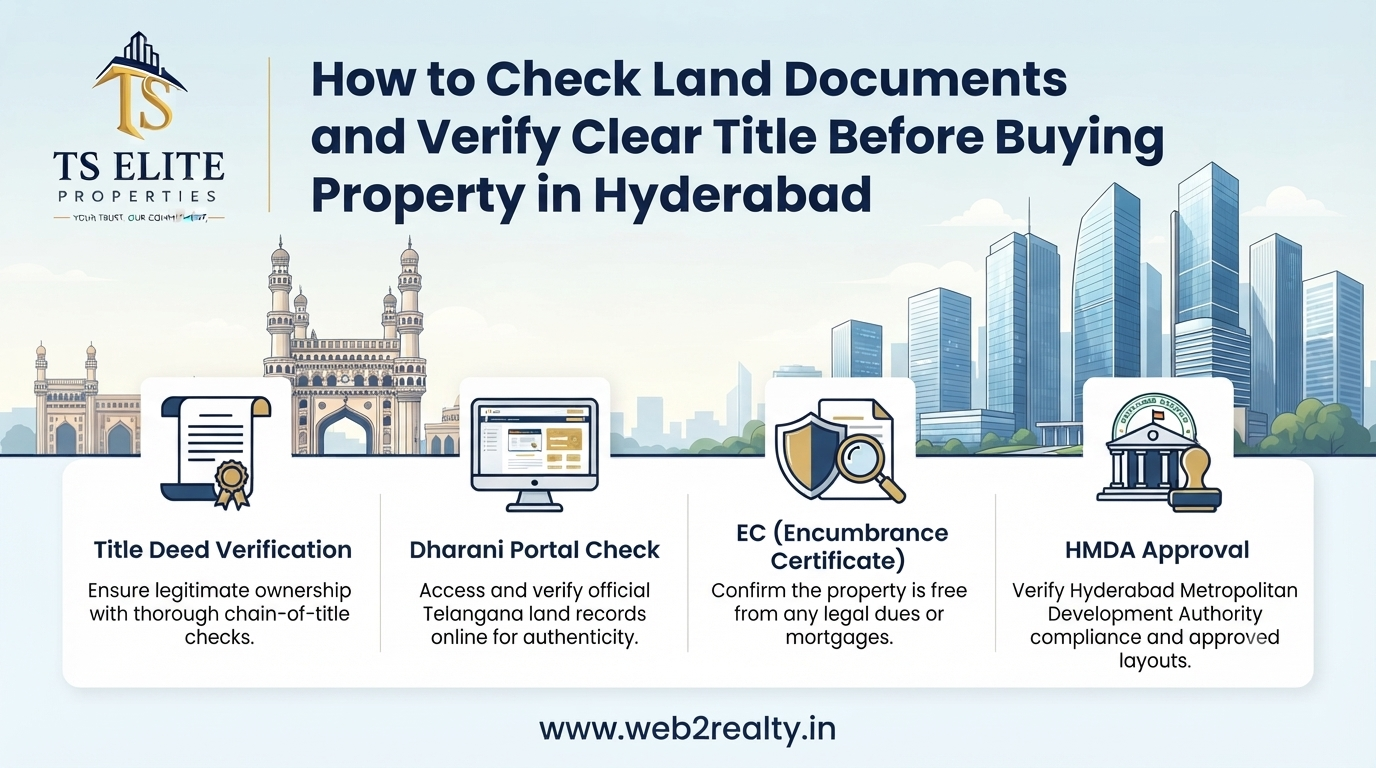
Buyers should still verify ownership, title, encumbrances, survey details, land conversion where applicable, and registration-related documents.
DTCP refers to the Directorate of Town and Country Planning. DTCP deals with planning and development in areas falling under its applicable jurisdiction outside the relevant metropolitan authority areas.
A DTCP-approved layout means the layout has received planning approval from the competent planning authority under the applicable regulations.
DTCP-approved plots are common across developing areas of Telangana.
DTCP-approved plots can be attractive because:
As with HMDA plots, DTCP approval should be only one part of your due diligence.
One of the most common mistakes buyers make is assuming that HMDA approval is automatically better than DTCP approval.
The better approach is to understand where the property is located and which planning authority has jurisdiction over that location.
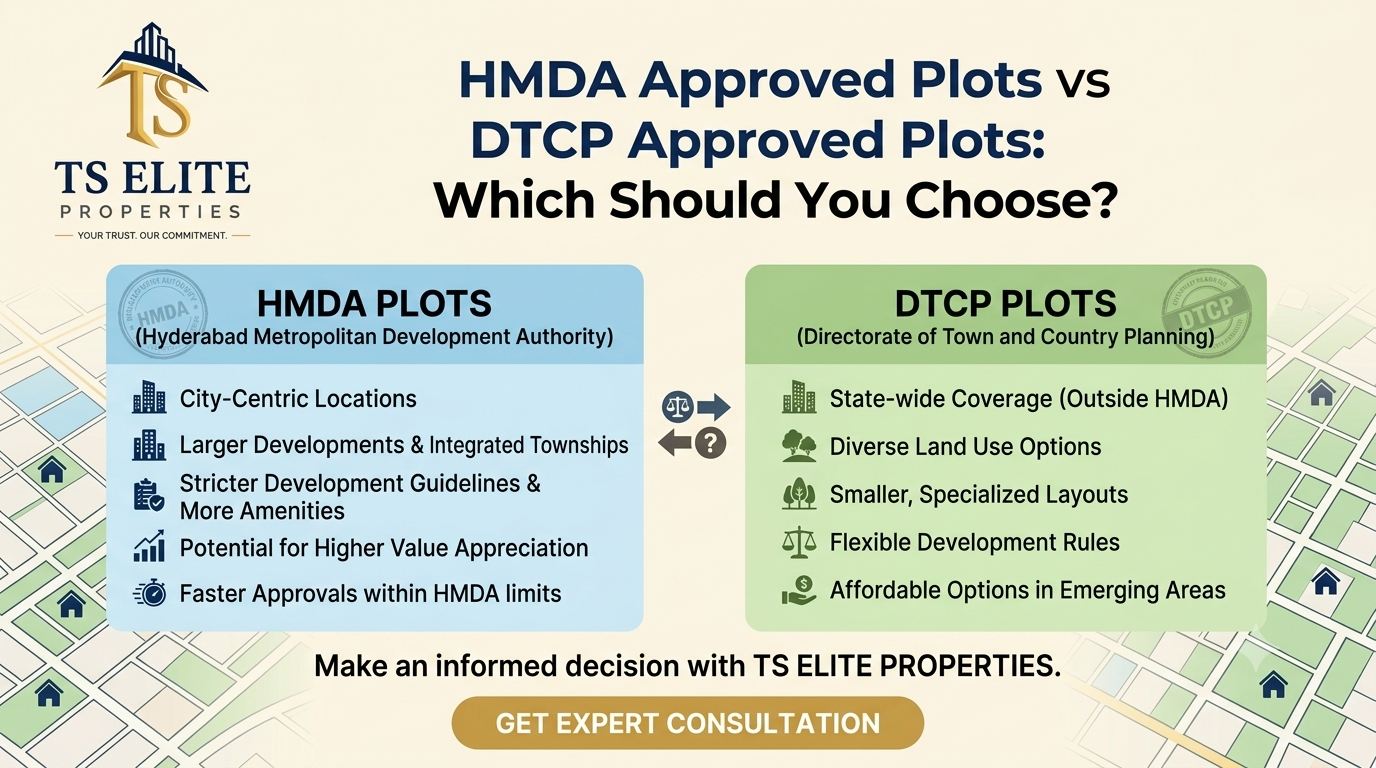
Feature | HMDA | DTCP |
Full form | Hyderabad Metropolitan Development Authority | Directorate of Town and Country Planning |
Main role | Metropolitan planning and development | Town and country planning |
Typical area | Hyderabad metropolitan region and applicable areas | Applicable areas outside HMDA jurisdiction |
Main relevance | Layout and development planning | Layout and development planning |
Buyer consideration | Verify HMDA approval and documents | Verify DTCP approval and documents |
Is it a title guarantee? | No | No |
Should documents be checked? | Yes | Yes |
The key point is simple:
HMDA vs DTCP approved plots is not about one approval always being safer than the other. It is about whether the layout is legally approved by the competent authority and whether the property’s other documents are clear.
RERA stands for the Real Estate (Regulation and Development) Act, 2016.
RERA was introduced to improve transparency and accountability in the real estate sector.
In Telangana, eligible real estate projects may come under the Telangana RERA framework.
For buyers, RERA can provide useful information about a registered project, promoter, project details, timelines, and other disclosures.
But there is an important distinction:
HMDA and DTCP are primarily concerned with planning and layout development permissions.
RERA is focused on regulation, transparency, disclosures, and buyer protection for applicable real estate projects.
Therefore, a buyer should not simply ask:
“Is this plot RERA approved?”
Instead, ask:
“What is the layout approval, and does RERA registration apply to this project?”
The answer should be verified based on the specific project and applicable rules.
There is no single answer such as “HMDA is always safest” or “RERA is better than DTCP.”
Each serves a different purpose.
Best understood as a planning and layout approval applicable within its jurisdiction.
Also relates primarily to planning and layout approval within its jurisdiction.
Provides a regulatory and transparency framework for applicable real estate projects.
Therefore, the safest approach is not to choose an approval based only on its name.
Instead, look for a combination of:
Proper planning approval + clear title + correct land records + applicable RERA compliance + proper documentation + reliable developer.
Imagine you find two plots.
Plot A has HMDA approval.
Plot B has DTCP approval.
You may immediately think that Plot A is safer.
But what if Plot A has a title dispute or an unresolved encumbrance?
At the same time, Plot B may have:
In such a situation, the approval name alone does not determine which property is safer.
This is why HMDA vs DTCP approved plots should always be evaluated together with title and legal verification.
Whether you are considering an HMDA or DTCP layout, don’t rush into booking.
Ask the developer for the actual approval document and layout plan.
Don’t depend only on a brochure, advertisement, WhatsApp message, or verbal statement.
Check:
Understand how the land came into the current owner’s possession.
A property lawyer can help examine the chain of ownership and relevant parent documents.
This is particularly important for large land parcels converted into plotted developments.
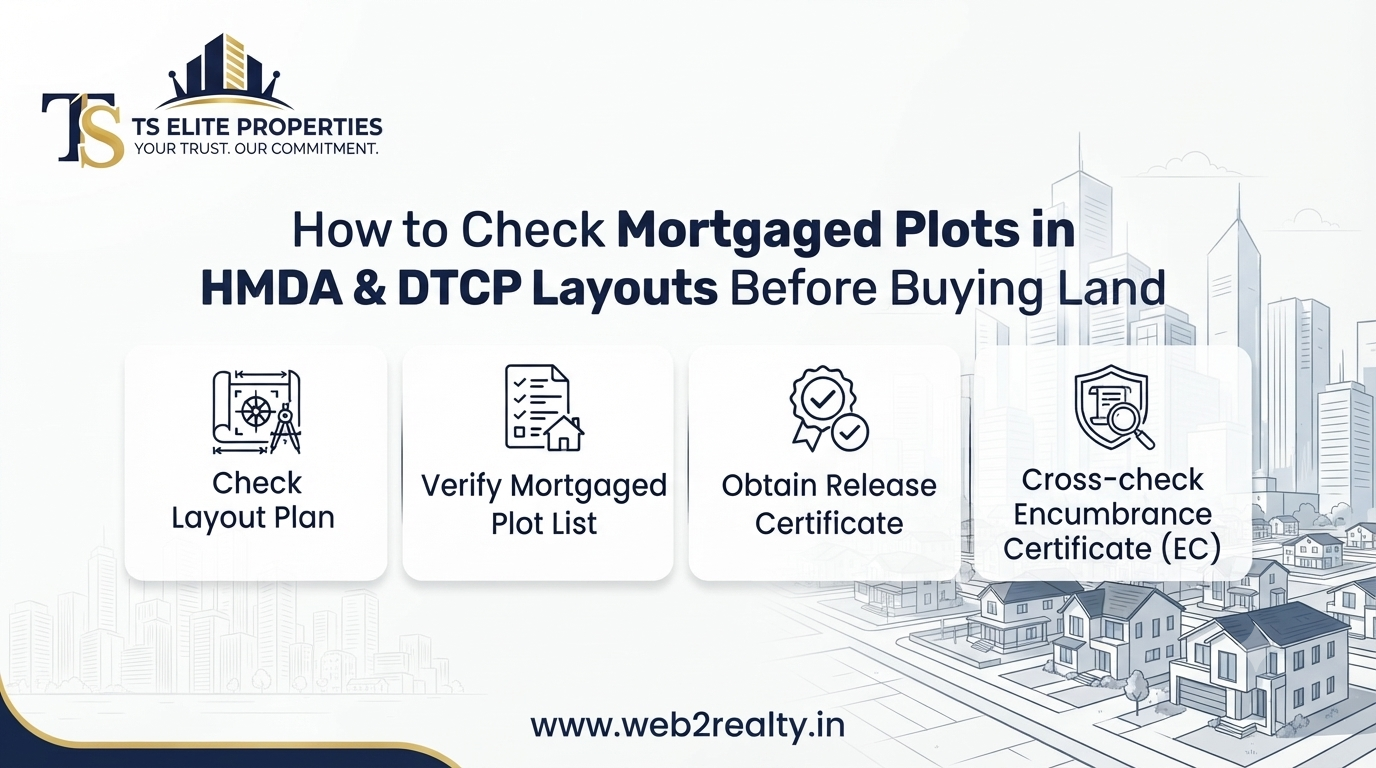
An Encumbrance Certificate can help identify registered transactions or certain claims affecting the property.
However, an EC should not be treated as the only legal verification.
A lawyer should review the complete title documentation.
Make sure the survey number mentioned in the sale documents matches the approved layout and relevant land records.
A mismatch can create serious problems later.
The plot number shown in the brochure should correspond with the approved layout plan.
Don’t assume that every plot shown in a marketing brochure is necessarily an approved plot.
Look at the approved layout and physically inspect the property.
Check whether the proposed road access exists and whether the plot is actually accessible.
A good location with poor access can affect future usability and value.
Depending on the property and location, applicable land-use permissions and conversion requirements should be verified.
Don’t assume that a plotted layout automatically answers every land-use question.
Ask the developer whether the project is covered by RERA and, if applicable, verify the project’s registration details.
The project information should match the property being marketed to you.
Research the developer before paying a large amount.
Look at:
This is one of the most important steps.
Don’t depend entirely on the developer’s legal team.
Hire an independent property lawyer to examine the documents before signing the sale agreement or paying a significant advance.
The right choice depends on your investment objective.
If you are looking at a property within HMDA jurisdiction, an HMDA-approved layout may be the relevant planning approval to verify.
If you are looking at a property outside HMDA jurisdiction, a DTCP-approved layout may be the appropriate approval, depending on the location and authority.
Therefore, don’t choose a plot simply because someone says:
“HMDA is better than DTCP.”
Instead, ask:
These questions are much more important than simply comparing two approval names.
Yes, these can relate to different regulatory requirements.
A project can have planning/layout permissions while also being subject to RERA registration requirements if it falls within the applicable scope of RERA.
This is why buyers should understand that:
HMDA/DTCP and RERA are not substitutes for each other.
One deals primarily with planning approval, while the other deals with regulation and transparency for applicable real estate projects.
Approval is important, but location matters too.
A legally documented plot in a developing corridor may have better long-term potential than a poorly located property with limited connectivity.
When evaluating plots around Hyderabad and Telangana, consider:
However, never buy based only on promises about “future development.”
Verify major infrastructure claims from reliable official sources wherever possible.
An approval name does not replace complete due diligence.
Words such as “near airport,” “future city,” “highway coming soon,” or “guaranteed appreciation” should be independently verified.
Always compare the plot being offered with the approved layout.
Avoid making a large payment before reviewing important documents.
RERA registration is useful, but buyers still need to verify title, approvals, and the specific property.
So, HMDA vs DTCP approved plots which is safer?
The answer is: neither is automatically safer simply because of the approval name.
An HMDA-approved plot can be a good choice when the property is within HMDA jurisdiction and all relevant documents are clear.
A DTCP-approved plot can also be a good choice when it is properly approved by the competent authority and the title and other documents are satisfactory.
RERA adds another layer of regulatory transparency where applicable, but it should not be considered a replacement for layout approval or independent title verification.
For buyers in Telangana, the safest approach is to look at the complete property picture:
Approved Layout + Clear Title + Verified Land Records + Applicable RERA Compliance + Proper Documentation + Good Location + Independent Legal Verification
That is a much stronger basis for buying a plot than choosing between three approval labels.
If you are searching for HMDA vs DTCP approved plots in and around Hyderabad, take time to compare the approval, location, documentation, connectivity, and future development potential before making your decision.
At Web2Realty, our goal is to help buyers explore property opportunities with better clarity and confidence.
Whether you are looking for open plots in Hyderabad, HMDA-approved plots, DTCP-approved plots, or land in developing areas of Telangana, make documentation and due diligence your first priority.
Don’t choose a plot only because it sounds attractive. Choose it after understanding what you are buying.
👉 Explore available properties at Web2Realty and connect with our team to discuss suitable plot options and arrange a site visit.
Not necessarily. HMDA and DTCP are different planning authorities with different jurisdictions. The appropriate approval depends on the property’s location and competent authority.
HMDA approval is an important factor, but it does not by itself guarantee clear ownership or eliminate every legal risk. Buyers should verify title, encumbrances, land records, and other documents.
A properly approved DTCP layout can be considered, but buyers should conduct complete legal and document verification before purchasing.
No. HMDA approval relates primarily to planning and development within HMDA’s jurisdiction, while RERA is a regulatory framework for applicable real estate projects.
There is no universal answer. Location, price, title clarity, development potential, connectivity, infrastructure, and documentation should all be considered.
Yes, you should determine whether RERA registration applies to the particular project and, where applicable, verify the project’s registration details.
Important documents may include the approved layout plan, title documents, link documents, encumbrance records, survey details, relevant land records, sale documents, and applicable permissions. An independent property lawyer should review them.
Loan availability depends on the property, documents, lender, borrower profile, and other conditions. Approval by HMDA or DTCP alone does not automatically guarantee a loan.
Where RERA registration is applicable, having the relevant planning approval and RERA registration can provide additional information and regulatory transparency. However, independent title and document verification is still important.
Don’t focus on one document alone. Verify the title, approved layout, survey details, encumbrances, applicable permissions, RERA status, and the identity and credibility of the seller/developer before purchasing.