
Buying a plot is a major financial decision. Whether you are planning to build your dream home, secure land for your family, or invest for the future, choosing the right property is important. But before paying an advance or signing an agreement, there are several things you should check.
One of the most important things to look for today is RERA approved plots.
RERA has brought more transparency and accountability into the real estate sector. For plot buyers, understanding RERA can help reduce risks and make the property-buying process more informed.
But what exactly is RERA? What does RERA registration mean for a plot project? And why should you consider RERA approved plots when looking for land?
Let us understand everything in simple terms.
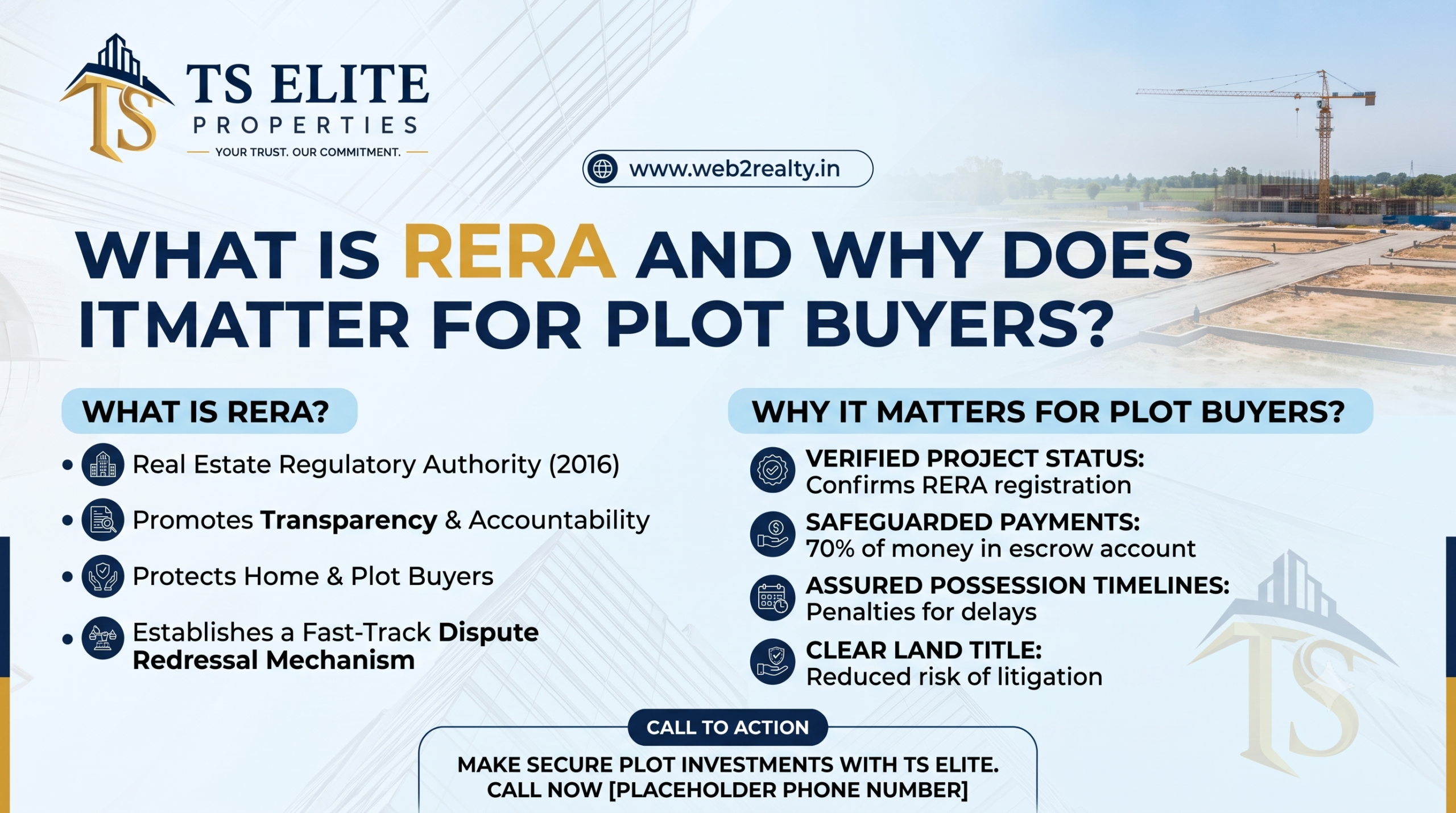
RERA stands for the Real Estate (Regulation and Development) Act, 2016. The law was introduced to bring greater transparency, accountability, and discipline into the real estate sector.
In Telangana, the regulatory authority is the Telangana Real Estate Regulatory Authority (TG RERA).
The purpose of RERA is to protect the interests of property buyers and make real estate developers more accountable. It also provides a regulatory framework for registered real estate projects and a mechanism for addressing complaints.
For plot buyers, this is especially important because buying land involves a large amount of money and long-term planning.
According to TG RERA, eligible real estate projects involving plots can come under RERA. The Telangana authority also states that promoters generally cannot advertise, market, book, or sell plots in a real estate project covered by the Act without registering the project with TG RERA, subject to applicable exemptions.
This is why checking RERA registration should be an important part of your property research.
The phrase RERA approved plots is commonly used by property buyers and developers to describe plots that are part of a project registered with the relevant Real Estate Regulatory Authority.
However, buyers should understand one important point: RERA registration and layout approval are not the same thing.
RERA is mainly concerned with regulation, transparency, disclosure, and responsibilities of promoters. Layout permissions and planning approvals are separate matters handled by the relevant planning authorities.
Therefore, when purchasing a plot, do not check only whether the project has a RERA registration number.
You should also verify:
A project having RERA registration does not mean that buyers should skip their own legal and document verification.
Buying land without proper verification can create unnecessary problems later. RERA helps create a more transparent system where buyers can access important project-related information.
Here are some reasons why RERA approved plots can be an important consideration.
Transparency is one of the major objectives of RERA.
Buyers can check information relating to registered projects through the relevant RERA authority. TG RERA provides online access to registered project information and citizen services.
This gives buyers an opportunity to research a project before making a major financial commitment.
Instead of depending entirely on verbal promises, buyers can look for documented project information.
A plot purchase should never be based only on attractive advertisements, low prices, or future appreciation promises.
Buyers should understand what they are purchasing.
When considering RERA approved plots, you can check the project’s registration details and compare them with the information provided by the promoter.
This can help you identify inconsistencies before moving ahead.
RERA establishes responsibilities for promoters and provides a regulatory framework for real estate projects.
This encourages developers to follow proper procedures and provide relevant information to buyers.
For a plot buyer, dealing with a project operating within the applicable RERA framework can provide greater confidence than making a purchase based only on informal assurances.
Property-related disagreements can be stressful and expensive.
RERA provides a formal mechanism for eligible complaints relating to registered real estate projects. TG RERA states that an aggrieved person can file a complaint regarding violations or contraventions of the Act, rules, or regulations.
This regulatory mechanism is an important reason why buyers should pay attention to RERA registration when selecting a project.
One of the biggest advantages of buying property in a registered project is the ability to cross-check project information.
TG RERA guidance states that plot buyers can visit the TG RERA website to check whether a project is registered. It also notes that advertisements for covered projects must carry the applicable TG RERA registration number.
As a buyer, you should use this information instead of simply accepting a registration number shown in an advertisement.
This is one of the most important things to understand before purchasing a plot.
RERA registration is not the same as layout approval.
For example, a project may have a planning or layout approval from the applicable authority. RERA registration is a separate regulatory requirement where applicable.
Therefore, when searching for RERA approved plots, ask the seller or developer for both:
and
You should verify both before making a decision.
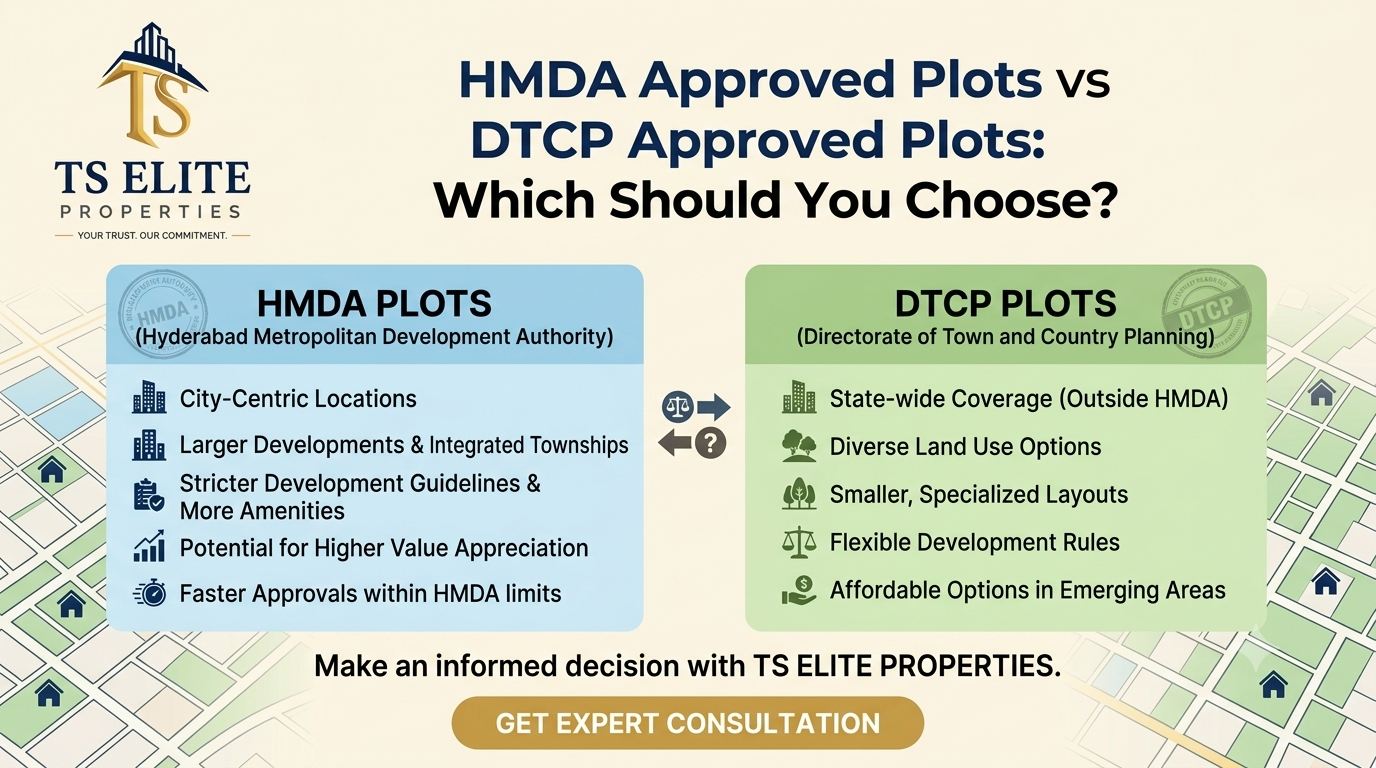
Depending on the location and project, buyers may come across terms such as HMDA, DTCP, GHMC, or other relevant planning authorities. The applicable approval depends on the property’s location and development regulations.
This simple distinction can help you avoid confusion.
RERA registration is important, but it should not be the only thing you check.
Here is a practical checklist for plot buyers.
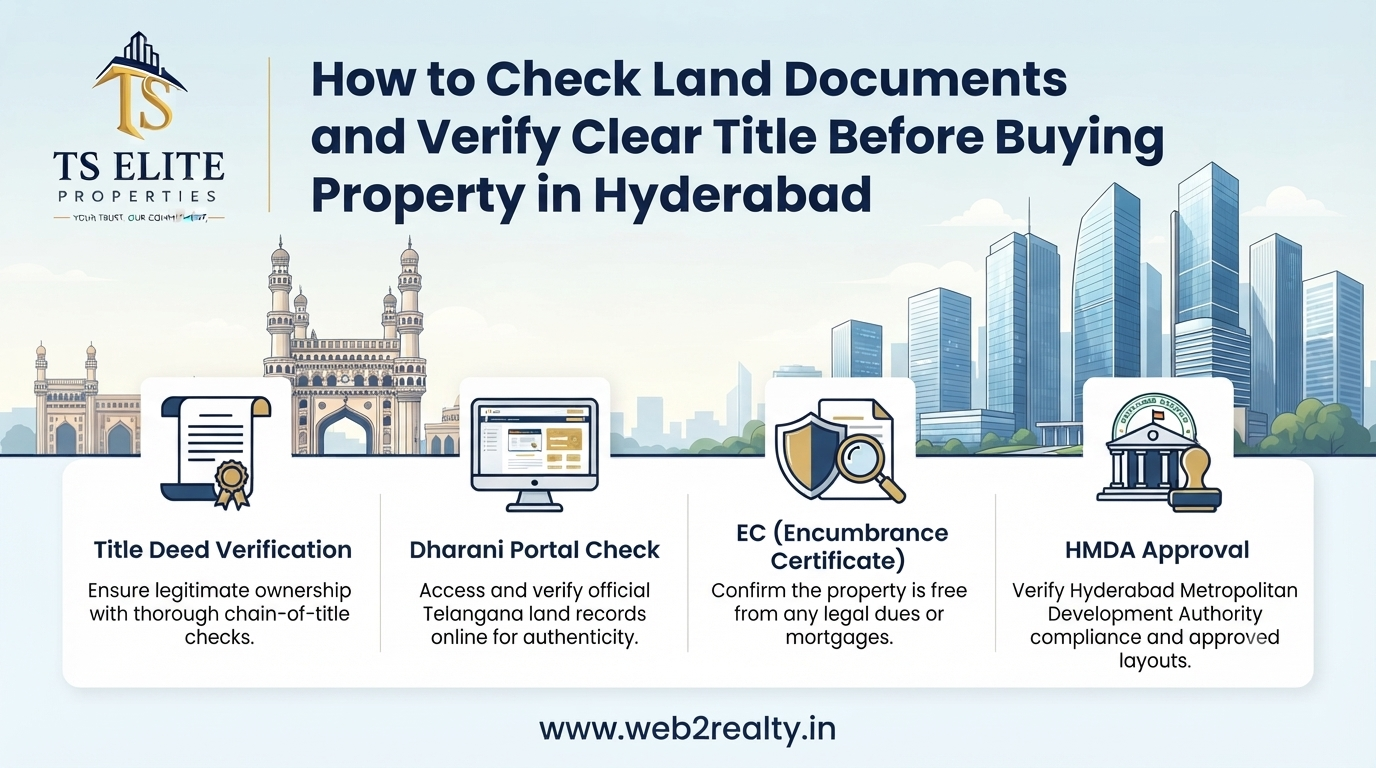
Ask for the project’s RERA registration number and verify it on the official RERA portal.
Make sure the project name, promoter details, location, and other information match the property being offered to you.
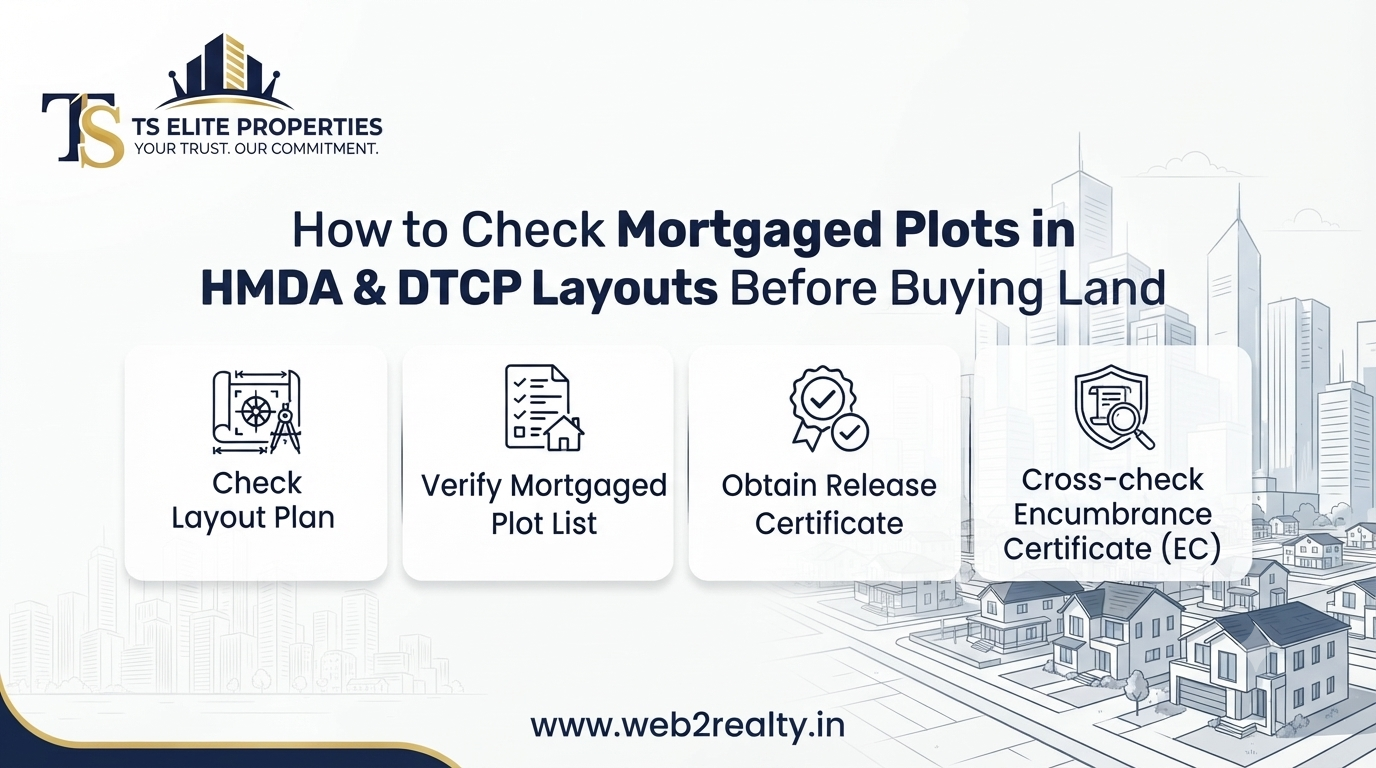
Ask for the approved layout plan and verify the relevant approval details.
Check whether your selected plot is actually part of the approved layout.
Ownership is a critical part of land verification.
Ask for the relevant title documents and have them reviewed by an independent property lawyer.
Do not rely only on photocopies or verbal statements.
An Encumbrance Certificate can help identify certain registered transactions or encumbrances relating to the property.
A legal professional can help you understand what the available records mean for your particular transaction.
Always confirm that the plot number, dimensions, survey details, and location mentioned in the documents match the actual plot shown to you.
A site visit is essential.
Before making a substantial payment, carefully read the sale agreement and other relevant documents.
Understand the payment schedule, possession or development commitments, cancellation terms, registration process, and other conditions.
If you do not understand a legal clause, seek professional advice.
Land has traditionally been considered a long-term investment option. However, no property investment comes with a guaranteed return.
The potential of a plot depends on several factors, including:
Therefore, RERA approved plots can offer an additional layer of regulatory transparency, but buyers should still evaluate the location and financial potential carefully.
A legally compliant and well-planned project in a developing location may be more attractive for long-term investors than a property selected only because it is cheap.
Even when buying RERA approved plots, location remains one of the most important factors.
A plot located near major roads, employment centres, educational institutions, hospitals, commercial areas, and planned infrastructure may have better long-term potential.
For buyers looking around Hyderabad and its developing corridors, it is useful to study current connectivity as well as planned infrastructure.
But remember: future development claims should always be verified through reliable sources. Do not make an investment decision solely because a salesperson says that a major project is “coming soon.”
Many property buyers make mistakes because they rush into a purchase.
Here are some common mistakes to avoid:
Ignoring documents: Never buy land based only on brochures or advertisements.
Checking only the price: A low price does not automatically mean a good investment.
Not verifying RERA details: Always check the project’s registration details on the official authority portal where applicable.
Confusing RERA with layout approval: Remember that these are separate matters.
Skipping legal verification: A property lawyer can help identify issues that an ordinary buyer may miss.
Not visiting the site: Visit the actual property and verify its location and surroundings.
Believing guaranteed returns: Property appreciation depends on market conditions and location. No genuine investment should be treated as risk-free.
If you are planning to purchase a plot in Telangana, you can use the official TG RERA website to research registered projects.
Start by searching for the project using its name or registration details. Compare the information available on the portal with the information provided by the developer or seller.
Check:
TG RERA also provides project-related updates and citizen services through its portal.
For your protection, always use the official regulatory website for verification rather than relying only on screenshots or forwarded documents.
Real estate transactions involve significant amounts of money. Buyers want confidence that their investment is being made in a properly documented and regulated project.
RERA has helped create a more structured real estate environment by promoting transparency and accountability.
For plot buyers, this means you can approach your purchase with better information.
Still, remember one simple rule:
RERA registration is important, but it is not a substitute for complete property due diligence.
A smart buyer checks RERA registration, layout approval, ownership documents, encumbrances, location, development status, and the agreement before investing.
RERA approved plots generally refers to plots that are part of a real estate project registered under RERA, where registration is applicable. Buyers should also verify layout approvals, title documents, encumbrance details, and other relevant permissions before purchasing.
No. RERA registration and layout approval are different. RERA focuses on regulating applicable real estate projects and promoting transparency, while layout approval relates to planning and development permissions from the relevant authority.
You can check the official Telangana RERA portal to search for registered projects. Verify the project name, promoter details, registration number, location, and other available project information before making a purchase.
RERA registration can provide greater transparency and accountability for applicable real estate projects. It allows buyers to check project-related information and provides a regulatory framework for eligible complaints and disputes.
RERA registration can be an important factor when evaluating a plot project, but it does not guarantee investment returns or eliminate all risks. Buyers should also verify title, layout approval, location, development status, documents, and other legal details.
Buyers should check RERA registration details where applicable, layout approval, title documents, encumbrance records, survey and plot details, sale agreement, development permissions, and other relevant property documents. Professional legal advice is recommended before making a major investment.
Yes, buyers can find projects in and around Hyderabad that are registered under RERA where applicable. Before purchasing, verify the project’s RERA details, applicable layout approval, ownership documents, location, and other legal records.
No. RERA registration should not be the only factor in your decision. Buyers should also conduct proper legal and property due diligence, including checking title, layout approval, encumbrances, plot measurements, location, and the sale agreement.
TG RERA refers to the Telangana Real Estate Regulatory Authority. It is the regulatory authority responsible for implementing RERA in Telangana and provides services related to registered real estate projects and eligible complaints.
Yes. A site visit is highly recommended. It allows you to verify the actual location, access roads, surrounding development, plot dimensions, nearby infrastructure, and other factors before making a purchase decision.
Buying a plot can be a smart long-term decision when you choose the right location and verify the property properly.
Choosing RERA approved plots can be an important part of that process because RERA promotes transparency, accountability, and buyer protection within its applicable framework.
However, don’t stop at the RERA registration number. Check the layout approval, title documents, plot details, development status, and other legal records. Take professional legal advice when necessary.
If you are searching for RERA approved plots in and around Hyderabad, take your time, compare projects, visit the site, and verify every important document before making a payment.
Ready to find a plot that matches your budget and future plans?
Explore verified property options, check the project details, visit the site, and make an informed investment decision.
Contact us today to know more about RERA approved plots and available plot options.
Book a site visit at www.web2realty.in today and take the first step toward owning your future piece of land!