Day: August 8, 2026

What Is a Layout Approval and Why Is It Important for Plot Buyers?
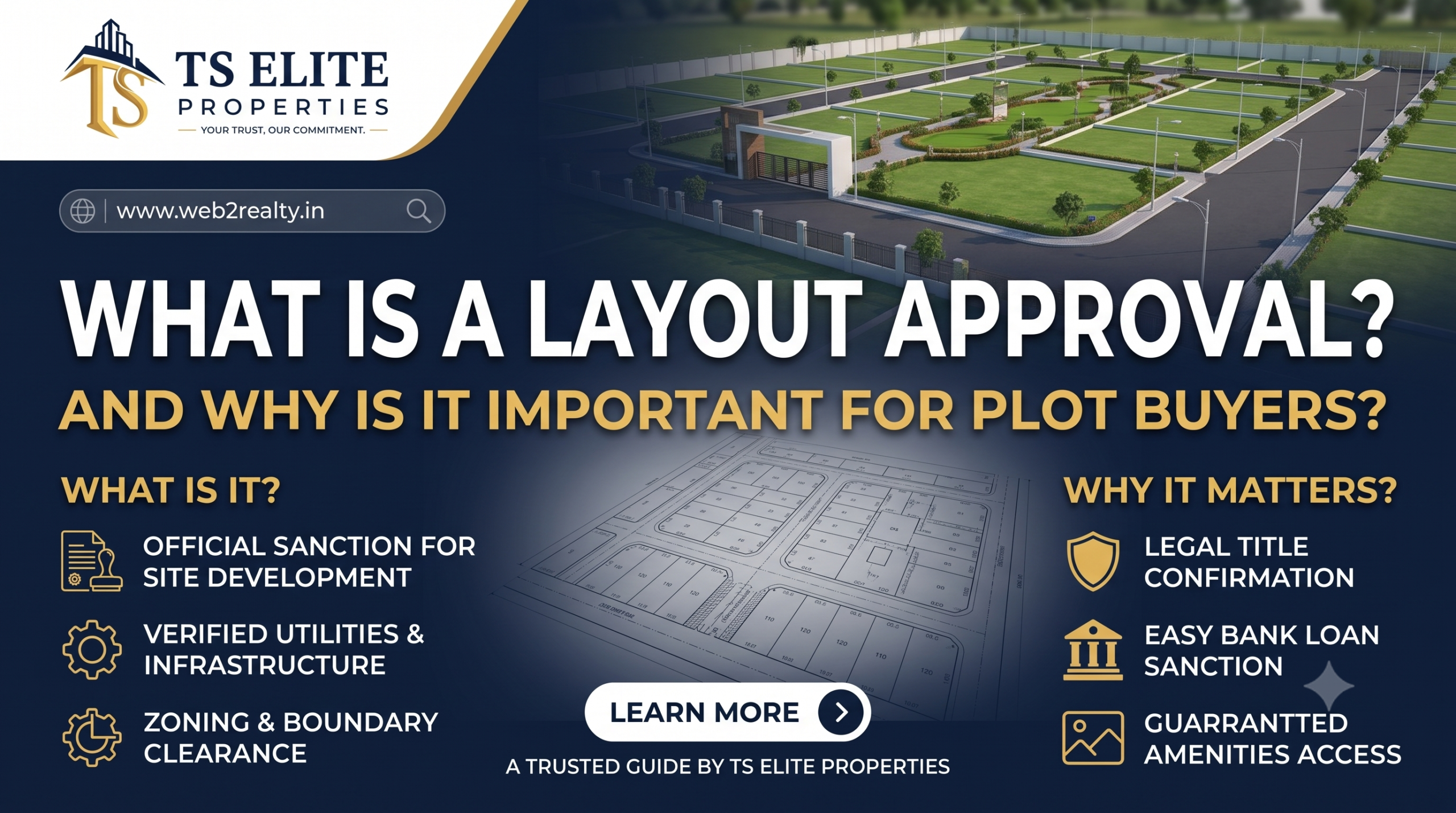
Best Approved Layout Plots

What Is a Layout Approval and Why Is It Important for Plot Buyers?

Buying land is one of the most significant financial milestones in an individual’s life. Whether you are purchasing a plot to build your dream home or looking for a secure long-term investment asset, real estate land offers an unparalleled sense of security and strong capital appreciation. However, entering the property market without adequate knowledge can turn a dream investment into a complex legal and financial headache. One of the most critical factors that determines whether a plot is safe, legal, and valuable is Layout Approval.


Many first-time land buyers fall into the trap of purchasing unapproved plots simply because they are offered at discounted rates. Unfortunately, these cheap plots often come with severe hidden costs: missing basic infrastructure, legal disputes, lack of bank loan approvals, and even risks of government demolition. To safeguard your investment, choosing best approved layout plots must be your absolute top priority.


In this comprehensive guide, we will unpack everything you need to know about layout approvals, why they are mandatory for plot buyers, how local planning authorities evaluate layouts, and how investing in best approved layout plots guarantees long-term peace of mind and high returns.


1. Understanding Layout Approval: What Does It Mean?

A Layout Approval is an official sanction granted by a government urban development authority (such as HMDA, DTCP, BDA, CMDA, or PMRDA) allowing a developer or landowner to divide a large tract of land into smaller residential or commercial plots.


Before a piece of raw agricultural land can be converted into a residential township, the master plan of the proposed layout must be submitted to the competent urban planning department. The authority examines the proposed layout to ensure it strictly complies with zoning regulations, environmental norms, road width requirements, public space allocations, and infrastructure connectivity.


When an authority approves a layout, it assigns a unique approval reference or permit number (e.g., LP Number). This stamp of approval confirms that the land has been legally converted for non-agricultural/residential use and that the developer is authorized to sell individual plots to buyers. Therefore, when searching for plot options, prioritizing the best approved layout plots ensures you are buying land that is 100% legal and recognized by municipal laws.


Crucial Fact: Simply having a registered sale deed or land conversion certificate does NOT mean the plot layout is approved. Land registration registers ownership, but Layout Approval legally permits the division and residential development of plots.


2. Key Components of an Approved Layout

When an urban planning authority approves a residential layout, it enforces strict design standards to ensure planned urban development. A layout is only granted approval when the developer allocates specific portions of the total land area for essential infrastructure and civic amenities:


  1. Internal Road Widths: Approved layouts mandate minimum road widths (typically 30 feet, 40 feet, 60 feet, or wider) to allow smooth two-way vehicular movement, fire tender access, and service utility laying.
  2. Open Space & Parks Reservation: Authorities mandate that 10% or more of the layout’s total area must be reserved for public parks, playgrounds, and green belts. This land is legally gifted to the local municipality.
  3. Civic Amenities Space: Layouts must reserve dedicated space for community centers, primary healthcare centers, utilities, and electricity sub-stations.
  4. Utility Lines & Underground Infrastructure: Plans must clearly demarcate drainage lines, sewage treatment setups, water supply mains, and underground electricity cabling layouts.

By opting for best approved layout plots, buyers automatically gain access to structured roads, open green spaces, and pre-planned utility connections that unapproved layouts completely lack.


3. Why Is Layout Approval Essential for Plot Buyers?

Investing in plot layouts that lack government sanction exposes buyers to severe legal, financial, and practical risks. Here is why layout approval is absolutely indispensable when purchasing land:


A. Complete Legal Safety & Title Protection

An approved layout undergoes rigorous title verification by urban planning lawyers and government engineers before sanction. This guarantees that the plot is free from government land claims, forest department reservations, or agricultural ceiling restrictions. Investing in best approved layout plots shields you against litigation, illegal encroachments, and title disputes.


B. Guaranteed Basic Amenities & Quality Infrastructure

Unapproved layouts often feature narrow 15-foot dirt paths, no street lighting, no storm-water drains, and no municipal water lines. In contrast, approved layout developers are legally bound to construct blacktop/concrete roads, drainage lines, streetlights, and water overhead tanks before handing over plots. When you choose best approved layout plots, you invest in a fully developed community rather than an isolated patch of land.


C. Easy Bank Loan Sanctions & Construction Financing

Leading public and private banks (such as SBI, HDFC, ICICI, and Axis Bank) perform strict due diligence on real estate projects. Financial institutions never extend plot loans or home construction loans for unapproved or unauthorized layouts. Buying best approved layout plots opens doors to easy home loans with competitive interest rates and seamless disbursement.


D. Hassle-Free Building Plan Approval

Purchasing a plot is usually the first step toward building your dream home. However, municipal authorities will strictly reject building permit applications if your plot is situated in an unapproved layout. In approved layouts, securing a building permission certificate is quick, standardized, and straightforward.


E. High Capital Appreciation and Superior Resale Value

Real estate markets favor secure assets. Approved layout plots appreciate at a significantly higher rate compared to unapproved land because future buyers and developers prioritize verified legal titles. When you invest in best approved layout plots, you ensure maximum return on investment (ROI) and excellent liquidity if you decide to sell in the future.


Key Takeaway for Investors: Unapproved plots may offer a lower upfront price, but they carry massive long-term financial liabilities. The premium paid for best approved layout plots is a direct investment in security, liquidity, and peace of mind.


4. Key Authorities Responsible for Layout Approvals

Depending on the geographical location of the land in India, different state urban planning bodies are responsible for evaluating and granting layout approvals:


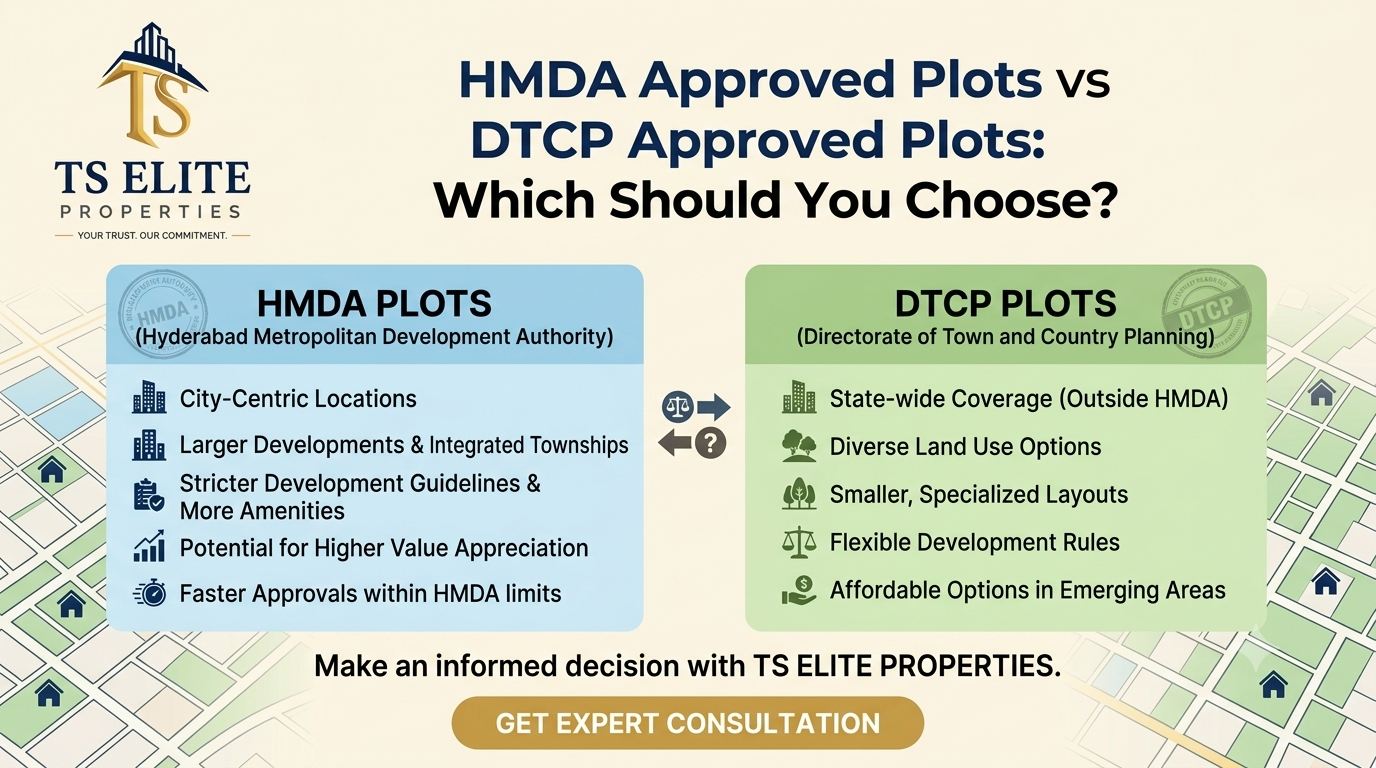
  • Urban Development Authorities (UDAs): Bodies like HMDA (Hyderabad), BDA (Bengaluru), CMDA (Chennai), and PMRDA (Pune) govern metropolitan growth limits and approve urban layouts.


  • Directorate of Town and Country Planning (DTCP): Governs layout approvals outside major metro boundaries, covering tier-2 cities, towns, and rapidly expanding suburban corridors.


  • RERA (Real Estate Regulatory Authority): In addition to layout sanction, real estate layouts spanning over 500 sq. meters or more than 8 plots must be registered under RERA, ensuring developer accountability and timely project completion.


Note: Gram Panchayat approvals alone are NOT sufficient for urban residential layout conversion unless backed by DTCP or urban body sanctions. Always ensure your seller offers best approved layout plots with valid DTCP/HMDA/RERA approvals.


5. How to Check if a Plot Has Valid Layout Approval (Step-by-Step Guide)

Before making an advance payment or signing a sale agreement, follow this step-by-step verification process:


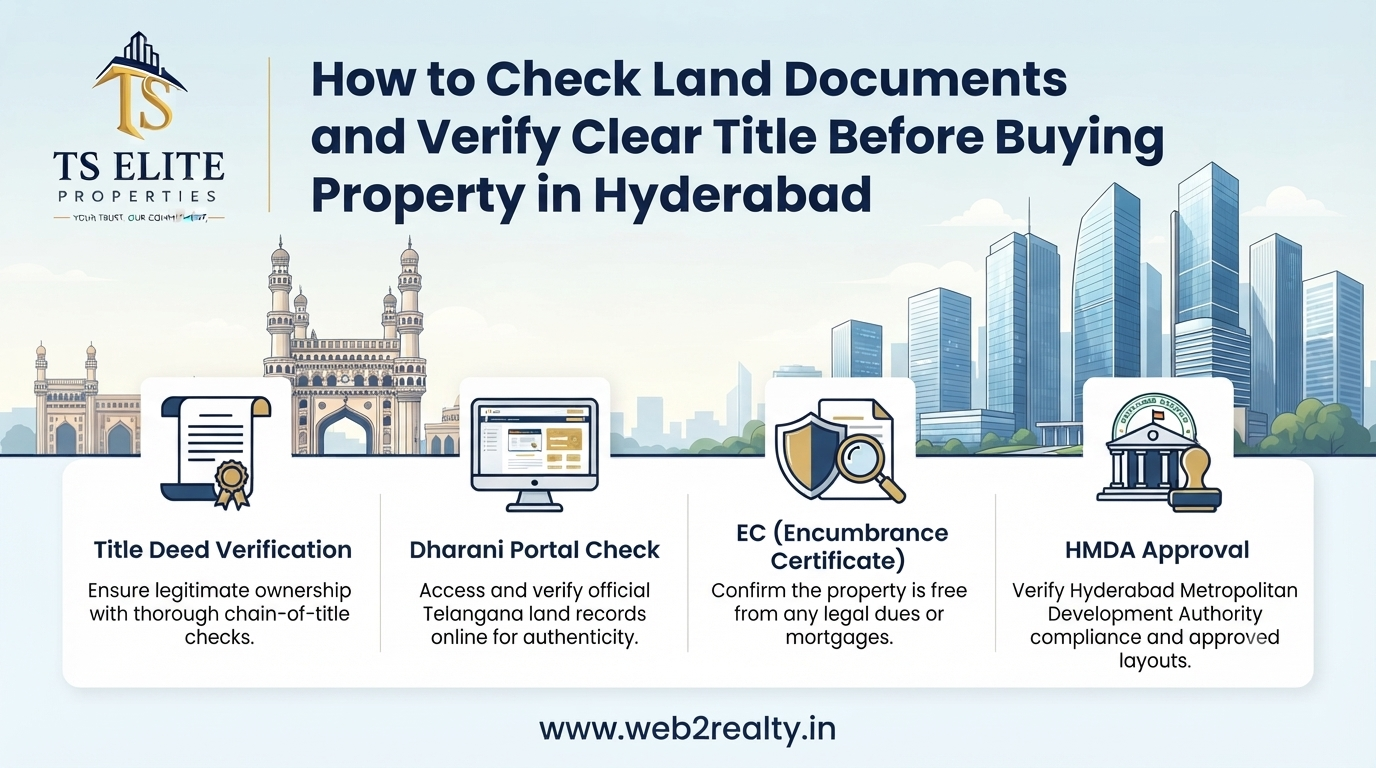
  1. Request the Layout Approval Permit (LP Number): Ask the developer for the official Layout Approval Certificate issued by the competent authority (DTCP/HMDA/BDA/CMDA).
  2. Examine the Approved Layout Map: Verify that the layout plan bears the official seal, signature, and approval number of the planning authority. Compare the plot number on the map with the plot offered to you.
  3. Cross-Check on Official Government Portals: Visit the official web portal of the relevant development authority or state RERA website to confirm that the LP number and layout details are active and authentic.
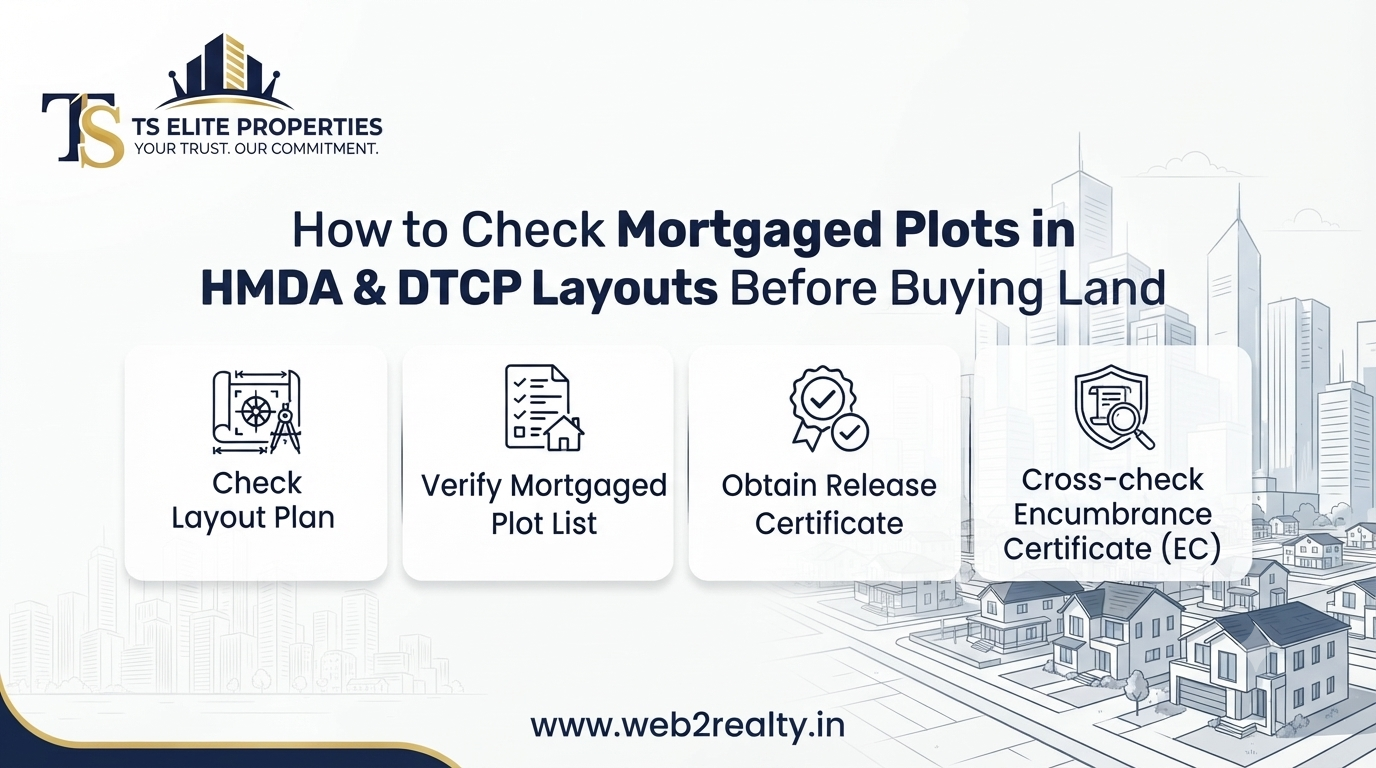
  4. Inspect the Encumbrance Certificate (EC): Obtain an EC for the last 30 years to verify that the property title is free from mortgages, legal claims, or court disputes.
  5. Verify RERA Registration Number: Ensure the project has an active RERA registration number displayed on marketing materials and official documentation.

6. Why You Should Invest in Best Approved Layout Plots with TS Elite Properties

At TS Elite Properties (featured on www.web2realty.in), we believe that transparency and legal perfection are the bedrock of real estate trust. Our core commitment “Your Trust. Our Commitment”  ensures that every property in our portfolio represents the highest standards of legal safety and modern urban planning.


When you explore layout projects with us, you are guaranteed access to the best approved layout plots featuring:


  • 100% DTCP / HMDA & RERA Approved Layouts: Verified clear marketable titles with zero legal complications.


  • World-Class Infrastructure: Wide BT/CC roads, underground drainage networks, water supply lines, and solar streetlights.


  • Eco-Friendly Living: Avenue plantations, landscaped green parks, and dedicated children’s play areas.


  • Bank Loan Eligibility: Pre-approved layout projects eligible for hassle-free loans from leading banks.


  • Prime Locations: Strategically selected along high-growth highways and industrial corridors for maximum return on investment.


Here are the most frequently asked questions (FAQs) regarding Layout Approval and buying plots on www.web2realty.in:


Frequently Asked Questions (FAQs)

Q1: What is the main difference between Land Registration and Layout Approval?

A: Land registration simply transfers ownership of a piece of land from the seller to the buyer at the government sub-registrar office. Layout Approval, granted by authorities like DTCP or HMDA, legally converts raw land into sanctioned residential plots, ensuring that roads, drainage, parks, and utility lines strictly comply with government norms. Registration guarantees ownership, but Layout Approval guarantees legality for residential construction.


Q2: Why is Gram Panchayat layout approval alone considered risky?

A: Local Gram Panchayats often do not have the legal authority to approve large urban residential layouts. Without master plan sanctions from major development authorities (such as DTCP, HMDA, or BDA), plots in Gram Panchayat layouts are treated as unapproved by municipal bodies, leading to loan rejections, lack of civic utilities, and building permission denials.


Q3: Is RERA registration mandatory for plot layout projects?

A: Yes. As per the Real Estate (Regulation and Development) Act, any residential or commercial layout project exceeding 500 square meters or containing more than 8 plots with common infrastructure must be registered under RERA before being advertised or sold.


Q4: Can I get a bank loan for a plot in an unapproved layout?

A: No. Leading nationalized and private banks (such as SBI, HDFC, ICICI, and Axis Bank) strictly require approved layout plans (LP numbers) and valid RERA registrations before approving plot or construction loans. Banks will reject loan applications for unapproved land to minimize financial risk.


Q5: How can I independently verify if a plot layout is approved?

A: You can verify layout approvals in 4 simple steps:


  • Check the LP (Layout Permit) Number: Request the sanction copy from the seller.


  • Cross-check Online: Visit the official website of the state urban planning body (e.g., HMDA, DTCP) or RERA portal.


  • Verify Layout Map: Ensure the specific plot number on-site matches the sanctioned layout plan.


  • Obtain Encumbrance Certificate (EC): Get an EC for the last 30 years from the sub-registrar’s office to confirm a clear, dispute-free title.


Q6: Why should I buy approved plots through TS Elite Properties on www.web2realty.in?

A: TS Elite Properties (“Your Trust. Our Commitment”) guarantees 100% legal safety:


  • Every listed plot features valid DTCP / HMDA and RERA approvals.


  • Full infrastructure guarantees: Wide asphalt/concrete roads, underground drainage, electricity, and water networks.


  • Immediate eligibility for bank loans from top financial institutions.


  • Located in prime growth corridors for high capital appreciation.


 Secure Your Dream Plot with 100% Legal Peace of Mind!

Don’t risk your hard-earned lifetime savings on unapproved or risky land investments. Explore verified, high-appreciation best approved layout plots with TS Elite Properties.


Have More Questions?


Visit www.web2realty.in today to view our latest DTCP & HMDA approved plot layouts or schedule an exclusive site visit!


 Contact TS Elite Properties: Your Trust. Our Commitment.


.

Related Post

What Is RERA and Why Does It Matter for Plot Buyers?

RERA approved plots

Buying a plot is a major financial decision. Whether you are planning to build your dream home, secure land for your family, or invest for the future, choosing the right property is important. But before paying an advance or signing an agreement, there are several things you should check.

One of the most important things to look for today is RERA approved plots.

RERA has brought more transparency and accountability into the real estate sector. For plot buyers, understanding RERA can help reduce risks and make the property-buying process more informed.

But what exactly is RERA? What does RERA registration mean for a plot project? And why should you consider RERA approved plots when looking for land?

Let us understand everything in simple terms.

What Is RERA?

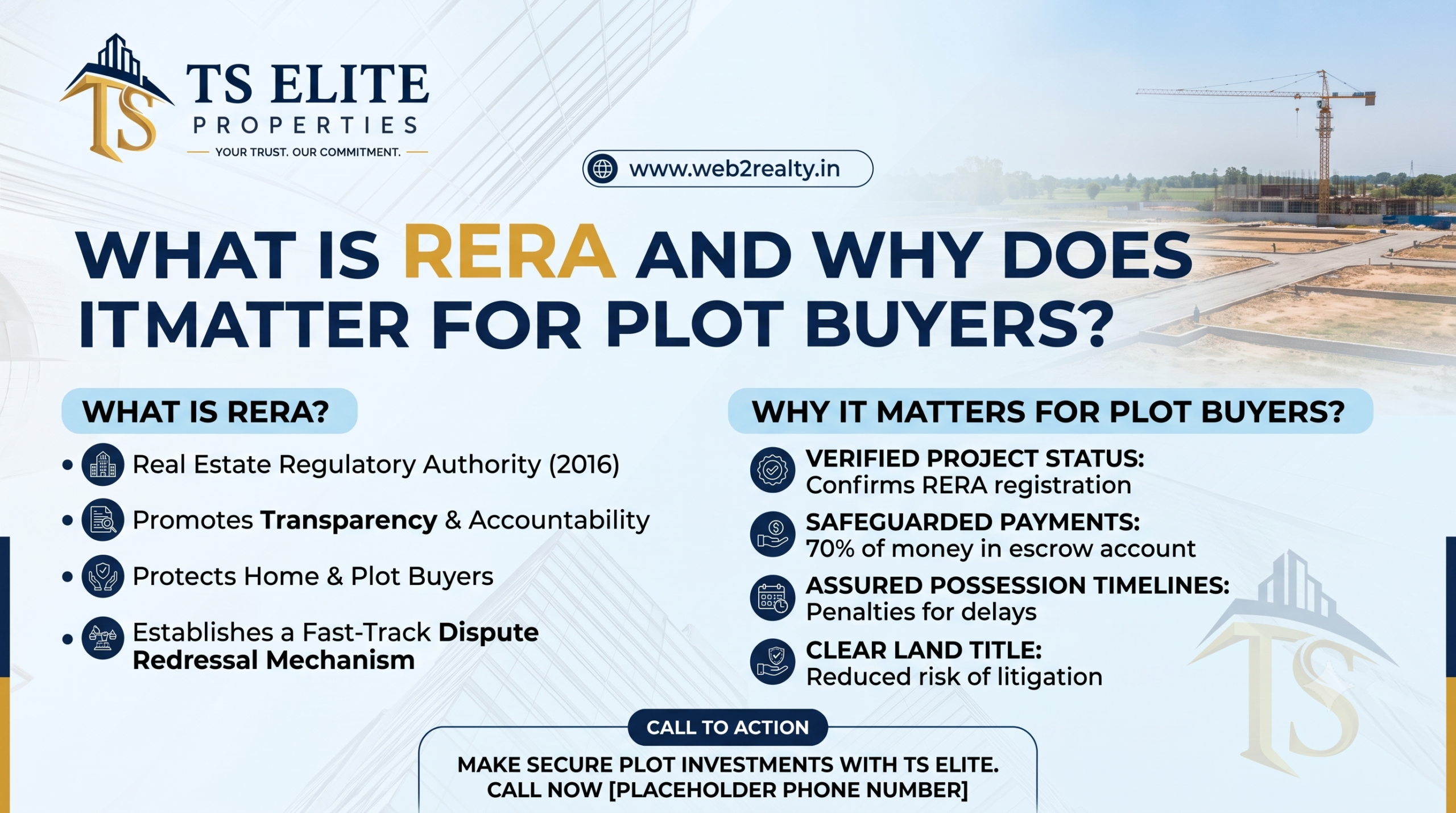
RERA stands for the Real Estate (Regulation and Development) Act, 2016. The law was introduced to bring greater transparency, accountability, and discipline into the real estate sector.

In Telangana, the regulatory authority is the Telangana Real Estate Regulatory Authority (TG RERA).

The purpose of RERA is to protect the interests of property buyers and make real estate developers more accountable. It also provides a regulatory framework for registered real estate projects and a mechanism for addressing complaints.

For plot buyers, this is especially important because buying land involves a large amount of money and long-term planning.

According to TG RERA, eligible real estate projects involving plots can come under RERA. The Telangana authority also states that promoters generally cannot advertise, market, book, or sell plots in a real estate project covered by the Act without registering the project with TG RERA, subject to applicable exemptions.

This is why checking RERA registration should be an important part of your property research.

What Are RERA Approved Plots?

The phrase RERA approved plots is commonly used by property buyers and developers to describe plots that are part of a project registered with the relevant Real Estate Regulatory Authority.

However, buyers should understand one important point: RERA registration and layout approval are not the same thing.

RERA is mainly concerned with regulation, transparency, disclosure, and responsibilities of promoters. Layout permissions and planning approvals are separate matters handled by the relevant planning authorities.

Therefore, when purchasing a plot, do not check only whether the project has a RERA registration number.

You should also verify:

  • RERA registration details
  • Layout approval
  • Land ownership documents
  • Encumbrance details
  • Development permissions
  • Location and survey details
  • Agreement and sale documents
  • Applicable local approvals

A project having RERA registration does not mean that buyers should skip their own legal and document verification.

Why Does RERA Matter for Plot Buyers?

Buying land without proper verification can create unnecessary problems later. RERA helps create a more transparent system where buyers can access important project-related information.

Here are some reasons why RERA approved plots can be an important consideration.

1. Better Transparency

Transparency is one of the major objectives of RERA.

Buyers can check information relating to registered projects through the relevant RERA authority. TG RERA provides online access to registered project information and citizen services.

This gives buyers an opportunity to research a project before making a major financial commitment.

Instead of depending entirely on verbal promises, buyers can look for documented project information.

2. Helps Buyers Make Informed Decisions

A plot purchase should never be based only on attractive advertisements, low prices, or future appreciation promises.

Buyers should understand what they are purchasing.

When considering RERA approved plots, you can check the project’s registration details and compare them with the information provided by the promoter.

This can help you identify inconsistencies before moving ahead.

3. Greater Accountability for Promoters

RERA establishes responsibilities for promoters and provides a regulatory framework for real estate projects.

This encourages developers to follow proper procedures and provide relevant information to buyers.

For a plot buyer, dealing with a project operating within the applicable RERA framework can provide greater confidence than making a purchase based only on informal assurances.

4. Access to a Complaint Mechanism

Property-related disagreements can be stressful and expensive.

RERA provides a formal mechanism for eligible complaints relating to registered real estate projects. TG RERA states that an aggrieved person can file a complaint regarding violations or contraventions of the Act, rules, or regulations.

This regulatory mechanism is an important reason why buyers should pay attention to RERA registration when selecting a project.

5. Helps You Verify Project Information

One of the biggest advantages of buying property in a registered project is the ability to cross-check project information.

TG RERA guidance states that plot buyers can visit the TG RERA website to check whether a project is registered. It also notes that advertisements for covered projects must carry the applicable TG RERA registration number.

As a buyer, you should use this information instead of simply accepting a registration number shown in an advertisement.

RERA Registration vs Layout Approval: Know the Difference

This is one of the most important things to understand before purchasing a plot.

RERA registration is not the same as layout approval.

For example, a project may have a planning or layout approval from the applicable authority. RERA registration is a separate regulatory requirement where applicable.

Therefore, when searching for RERA approved plots, ask the seller or developer for both:

  1. RERA registration details

and

  1. Applicable layout approval details

You should verify both before making a decision.

Depending on the location and project, buyers may come across terms such as HMDA, DTCP, GHMC, or other relevant planning authorities. The applicable approval depends on the property’s location and development regulations.

This simple distinction can help you avoid confusion.

What Should You Check Before Buying RERA Approved Plots?

RERA registration is important, but it should not be the only thing you check.

Here is a practical checklist for plot buyers.

Check the RERA Registration Number

Ask for the project’s RERA registration number and verify it on the official RERA portal.

Make sure the project name, promoter details, location, and other information match the property being offered to you.

Verify Layout Approval

Ask for the approved layout plan and verify the relevant approval details.

Check whether your selected plot is actually part of the approved layout.

Check Land Ownership

Ownership is a critical part of land verification.

Ask for the relevant title documents and have them reviewed by an independent property lawyer.

Do not rely only on photocopies or verbal statements.

Check Encumbrance Details

An Encumbrance Certificate can help identify certain registered transactions or encumbrances relating to the property.

A legal professional can help you understand what the available records mean for your particular transaction.

Check the Plot Number and Measurements

Always confirm that the plot number, dimensions, survey details, and location mentioned in the documents match the actual plot shown to you.

A site visit is essential.

Understand the Agreement

Before making a substantial payment, carefully read the sale agreement and other relevant documents.

Understand the payment schedule, possession or development commitments, cancellation terms, registration process, and other conditions.

If you do not understand a legal clause, seek professional advice.

Are RERA Approved Plots a Good Investment?

Land has traditionally been considered a long-term investment option. However, no property investment comes with a guaranteed return.

The potential of a plot depends on several factors, including:

  • Location
  • Infrastructure development
  • Road connectivity
  • Nearby employment hubs
  • Population growth
  • Development activity
  • Demand in the area
  • Legal and documentation status
  • Purchase price

Therefore, RERA approved plots can offer an additional layer of regulatory transparency, but buyers should still evaluate the location and financial potential carefully.

A legally compliant and well-planned project in a developing location may be more attractive for long-term investors than a property selected only because it is cheap.

Why Location Still Matters

Even when buying RERA approved plots, location remains one of the most important factors.

A plot located near major roads, employment centres, educational institutions, hospitals, commercial areas, and planned infrastructure may have better long-term potential.

For buyers looking around Hyderabad and its developing corridors, it is useful to study current connectivity as well as planned infrastructure.

But remember: future development claims should always be verified through reliable sources. Do not make an investment decision solely because a salesperson says that a major project is “coming soon.”

Common Mistakes Plot Buyers Should Avoid

Many property buyers make mistakes because they rush into a purchase.

Here are some common mistakes to avoid:

Ignoring documents: Never buy land based only on brochures or advertisements.

Checking only the price: A low price does not automatically mean a good investment.

Not verifying RERA details: Always check the project’s registration details on the official authority portal where applicable.

Confusing RERA with layout approval: Remember that these are separate matters.

Skipping legal verification: A property lawyer can help identify issues that an ordinary buyer may miss.

Not visiting the site: Visit the actual property and verify its location and surroundings.

Believing guaranteed returns: Property appreciation depends on market conditions and location. No genuine investment should be treated as risk-free.

How to Verify RERA Approved Plots in Telangana

If you are planning to purchase a plot in Telangana, you can use the official TG RERA website to research registered projects.

Start by searching for the project using its name or registration details. Compare the information available on the portal with the information provided by the developer or seller.

Check:

  • Project name
  • Promoter name
  • Registration number
  • Project location
  • Project status
  • Relevant documents
  • Available updates
  • Any available complaints or orders

TG RERA also provides project-related updates and citizen services through its portal.

For your protection, always use the official regulatory website for verification rather than relying only on screenshots or forwarded documents.

Why RERA Matters in Today’s Property Market

Real estate transactions involve significant amounts of money. Buyers want confidence that their investment is being made in a properly documented and regulated project.

RERA has helped create a more structured real estate environment by promoting transparency and accountability.

For plot buyers, this means you can approach your purchase with better information.

Still, remember one simple rule:

RERA registration is important, but it is not a substitute for complete property due diligence.

A smart buyer checks RERA registration, layout approval, ownership documents, encumbrances, location, development status, and the agreement before investing.

Frequently Asked Questions About RERA Approved Plots

1. What are RERA approved plots?

RERA approved plots generally refers to plots that are part of a real estate project registered under RERA, where registration is applicable. Buyers should also verify layout approvals, title documents, encumbrance details, and other relevant permissions before purchasing.

2. Is RERA registration the same as layout approval?

No. RERA registration and layout approval are different. RERA focuses on regulating applicable real estate projects and promoting transparency, while layout approval relates to planning and development permissions from the relevant authority.

3. How can I check RERA approved plots in Telangana?

You can check the official Telangana RERA portal to search for registered projects. Verify the project name, promoter details, registration number, location, and other available project information before making a purchase.

4. Why should I choose RERA approved plots?

RERA registration can provide greater transparency and accountability for applicable real estate projects. It allows buyers to check project-related information and provides a regulatory framework for eligible complaints and disputes.

5. Are RERA approved plots a safe investment?

RERA registration can be an important factor when evaluating a plot project, but it does not guarantee investment returns or eliminate all risks. Buyers should also verify title, layout approval, location, development status, documents, and other legal details.

6. What documents should I check before buying a plot?

Buyers should check RERA registration details where applicable, layout approval, title documents, encumbrance records, survey and plot details, sale agreement, development permissions, and other relevant property documents. Professional legal advice is recommended before making a major investment.

7. Can I buy RERA approved plots in Hyderabad?

Yes, buyers can find projects in and around Hyderabad that are registered under RERA where applicable. Before purchasing, verify the project’s RERA details, applicable layout approval, ownership documents, location, and other legal records.

8. Is RERA registration enough to buy a plot?

No. RERA registration should not be the only factor in your decision. Buyers should also conduct proper legal and property due diligence, including checking title, layout approval, encumbrances, plot measurements, location, and the sale agreement.

9. What is TG RERA?

TG RERA refers to the Telangana Real Estate Regulatory Authority. It is the regulatory authority responsible for implementing RERA in Telangana and provides services related to registered real estate projects and eligible complaints.

10. Should I visit the site before buying a plot?

Yes. A site visit is highly recommended. It allows you to verify the actual location, access roads, surrounding development, plot dimensions, nearby infrastructure, and other factors before making a purchase decision.


Final Thoughts

Buying a plot can be a smart long-term decision when you choose the right location and verify the property properly.

Choosing RERA approved plots can be an important part of that process because RERA promotes transparency, accountability, and buyer protection within its applicable framework.

However, don’t stop at the RERA registration number. Check the layout approval, title documents, plot details, development status, and other legal records. Take professional legal advice when necessary.

If you are searching for RERA approved plots in and around Hyderabad, take your time, compare projects, visit the site, and verify every important document before making a payment.

Looking for RERA Approved Plots?

Ready to find a plot that matches your budget and future plans?

Explore verified property options, check the project details, visit the site, and make an informed investment decision.

 Contact us today to know more about RERA approved plots and available plot options.

 Book a site visit at www.web2realty.in today and take the first step toward owning your future piece of land!

Related Post