
Buying land in Telangana can be a smart long-term investment, but it is also a decision that requires careful verification. A property may look attractive because of its location, price, or future development potential. However, before paying an advance or signing a sale agreement, buyers should make sure that the property has a clear and legally valid title.
One of the important documents used during property verification is an Encumbrance Certificate (EC). It helps buyers understand whether a property has registered transactions, mortgages, or other recorded encumbrances.
If you are planning to buy land in Telangana, understanding the EC and checking the property’s title can help you avoid many legal and financial problems.
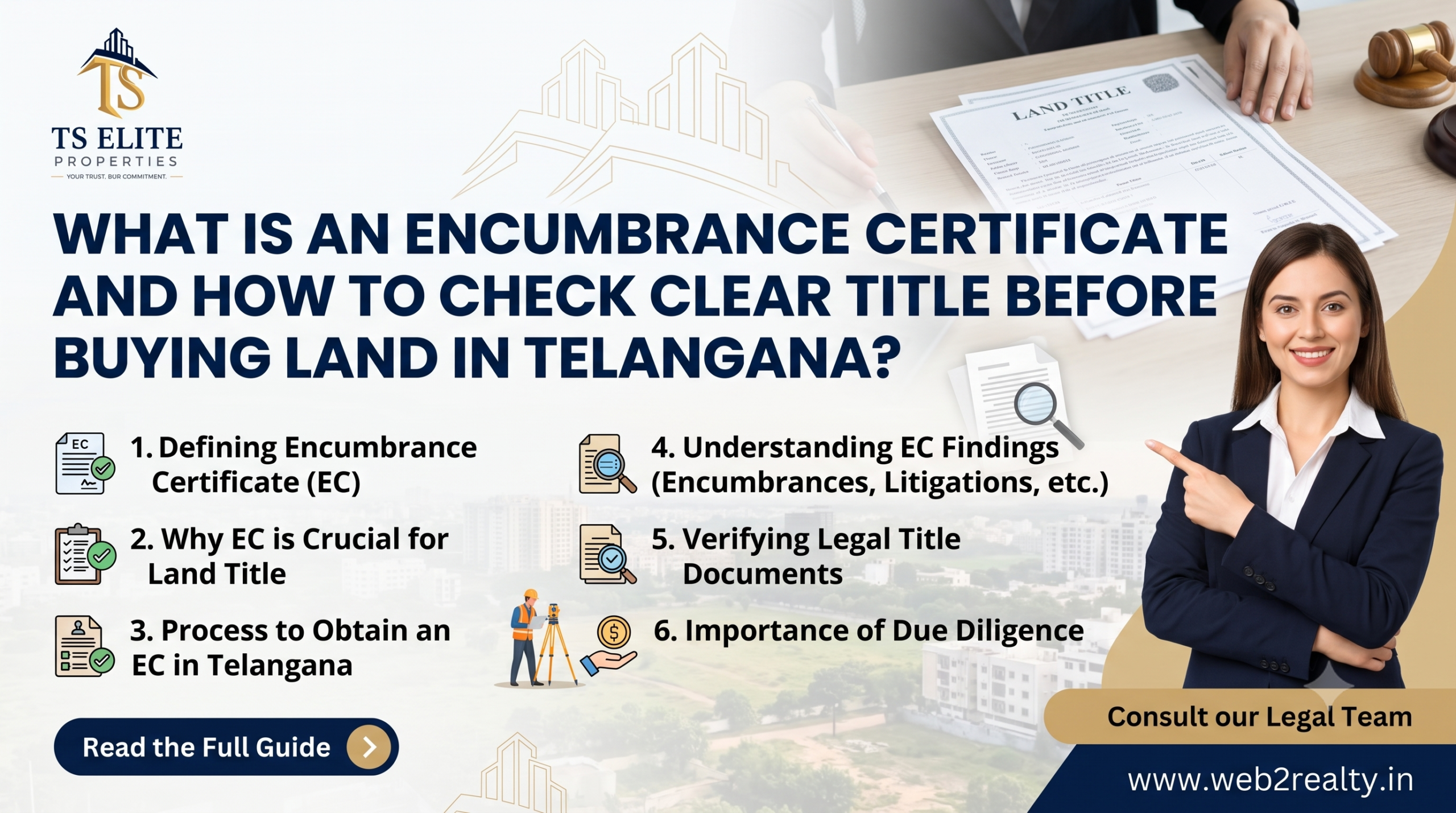
An Encumbrance Certificate is an official document that provides information about registered transactions and encumbrances associated with a particular property for a specified period.
In simple words, an EC helps you check whether the property has any registered financial or legal liability recorded against it.
For example, if a property was previously mortgaged to a bank or transferred through a registered sale transaction, such information may appear in the EC for the relevant period.
When purchasing land in Telangana, buyers should consider obtaining and reviewing the EC as part of their property due diligence.
Buying land without checking its legal history can create problems later. A property could have an outstanding mortgage, previous registered transactions, or ownership-related complications.
An EC can help a buyer:
However, an important point is that an EC should not be treated as the only proof of clear title. It is one part of a broader legal verification process.
Suppose you find a plot in a developing area and the seller offers it at an attractive price. Before proceeding, you should verify the ownership documents, previous sale deeds, approvals, tax records, and other relevant documents.
The EC can provide additional information about registered transactions involving the property.
For buyers searching for land in Telangana, this step becomes especially important when purchasing resale properties or land that has changed hands several times.
A proper document check can help you make a more informed investment decision.
The information available in an EC depends on the records and period searched. It may contain details of registered transactions such as:
If no registered transactions or encumbrances are found for the searched period, the certificate may indicate that there are no such entries in the available registration records for that period.
This does not automatically mean that the property is completely free from every possible legal issue.
That is why buyers should combine the EC with other property documents and legal verification.
If you are planning to purchase land in Telangana, you can check the availability of property registration-related information through the official Telangana registration services.
The process generally involves providing property-related information such as the relevant registration details, document information, or property identification details, depending on the service available.
Before relying on any online record, make sure that you are using the official government portal or obtaining certified records through the appropriate registration authority.
For an important land purchase, it is also advisable to have a property lawyer verify the documents.
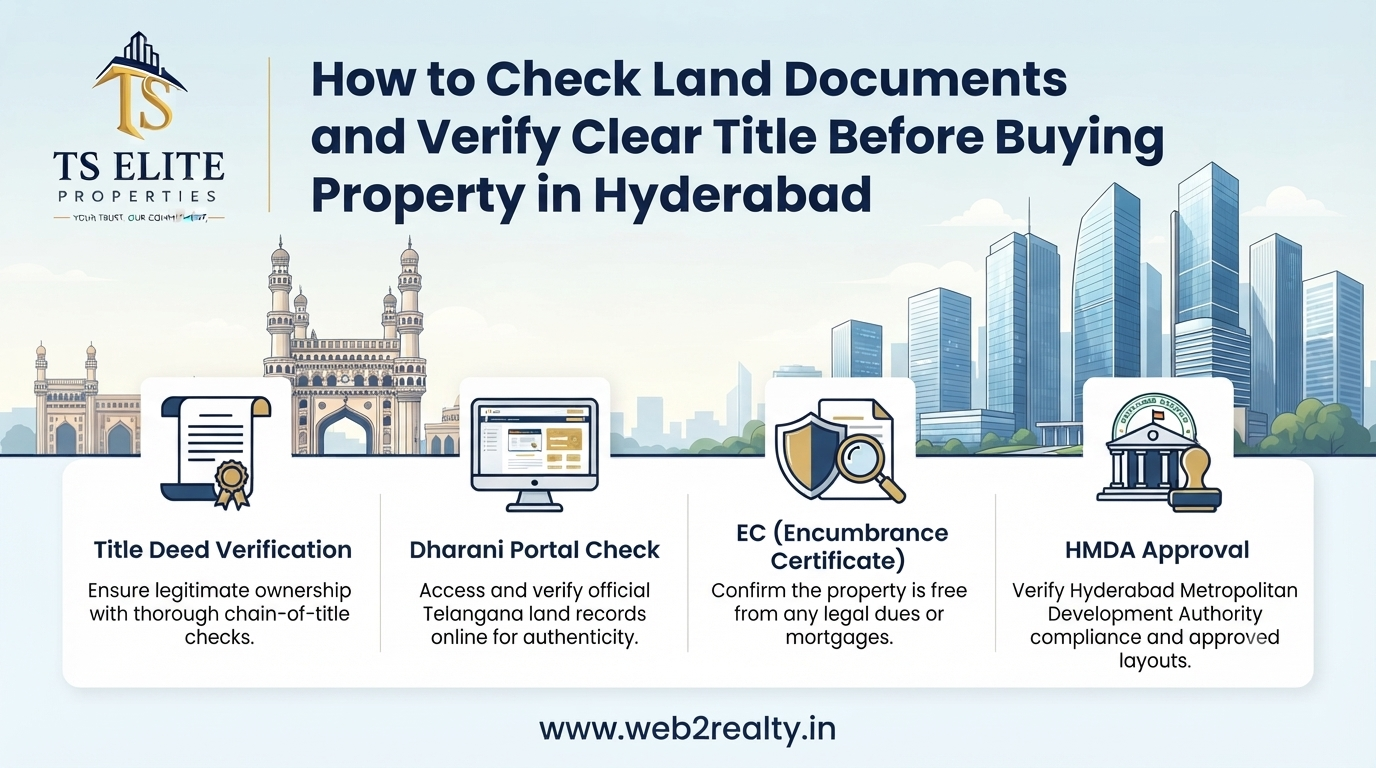
Checking the clear title is more comprehensive than simply obtaining an EC. A buyer should examine the property’s ownership history and supporting documents.
Here are some important steps to follow before purchasing land in Telangana.
First, confirm that the person selling the property is the actual legal owner.
Check the seller’s name against the relevant sale deed, title documents, registration records, and other available records.
If there are multiple owners, make sure all necessary owners are involved in the transaction.
Do not look only at the latest sale deed.
Review previous ownership documents to understand how the property was transferred from one owner to another.
This process is commonly referred to as checking the chain of title.
A continuous and properly documented chain of ownership can provide greater confidence about the property’s title.
The EC should be checked for an appropriate period based on the property’s history and legal advice.
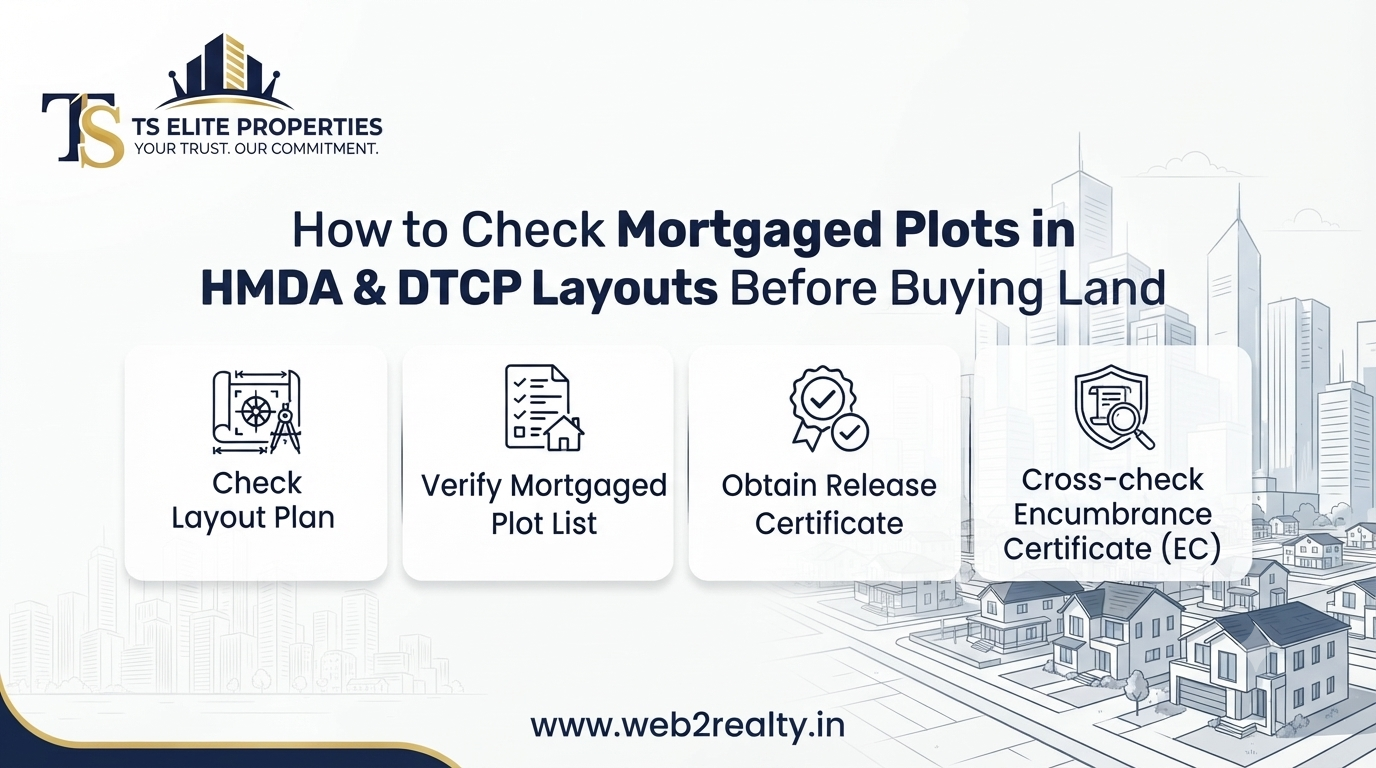
Look for registered mortgages, sales, releases, or other relevant entries.
If the property has been owned by several people over the years, reviewing its transaction history becomes even more important.
Check the applicable land and revenue records to confirm details such as ownership, survey number, extent, and classification.
The exact records and verification process can vary depending on the nature and location of the property.
Make sure the information in different documents is consistent.
One common mistake buyers make is focusing only on the plot number.
You should also verify the survey number, boundaries, extent, location, and other identifying details.
The information should match across the relevant documents.
Even a small mismatch can require further investigation before proceeding.
Ask whether there are any court cases, family disputes, inheritance claims, or other legal issues involving the property.
A lawyer can help conduct appropriate legal searches and review available records.
This is particularly important if the property’s ownership history is complicated.
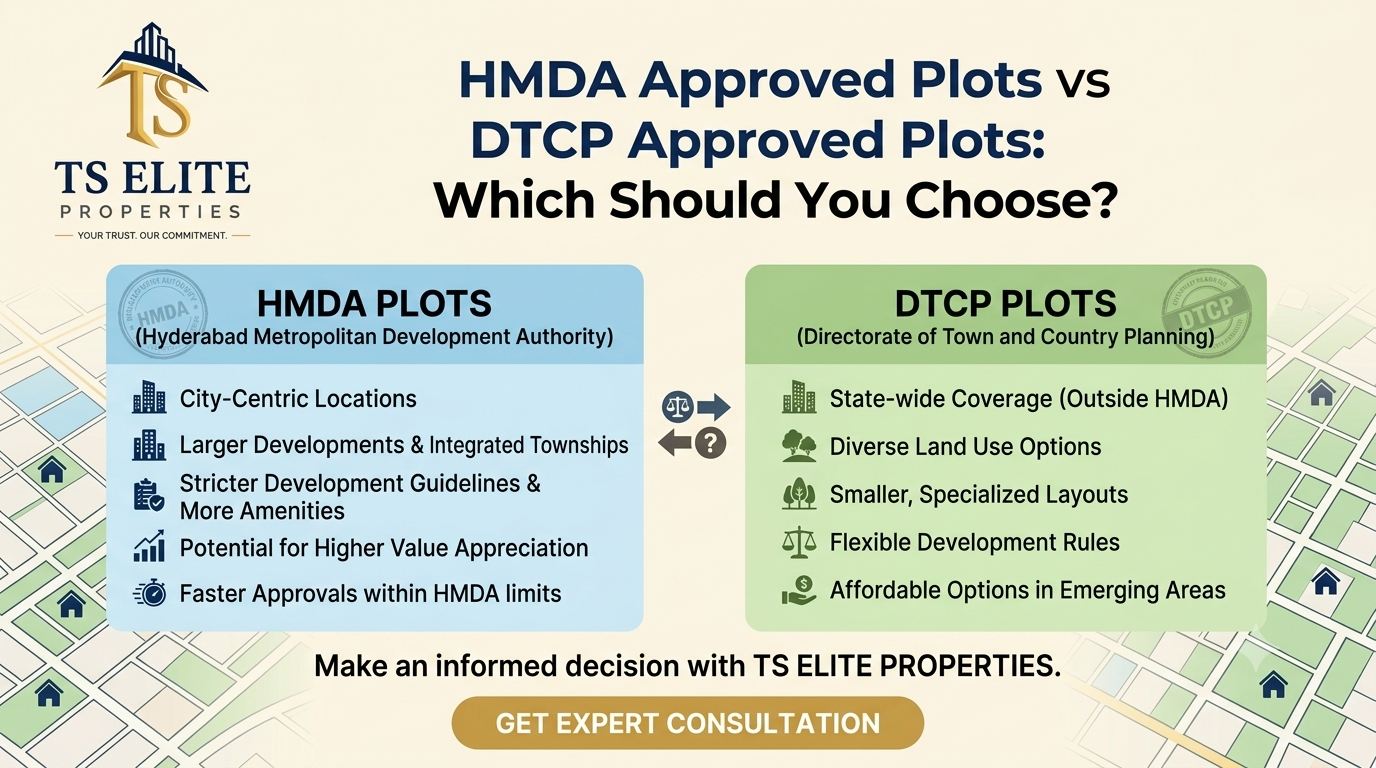
If you are buying a plotted property, check whether the layout has the required approval from the relevant authority.
Depending on the location and type of development, applicable approvals may involve authorities such as HMDA, DTCP, or other competent planning authorities.
Do not assume that every plotted development being advertised as land in Telangana is legally approved.
Always verify the approval independently.
Find out how the land is classified and whether the proposed use is permitted.
For example, agricultural land and residential plots can have different legal and regulatory requirements.
If you are buying land to construct a house or develop a property, verify whether the intended use is legally permitted.
Where applicable, verify whether property taxes, development charges, utility-related dues, or other liabilities are pending.
Outstanding dues can create complications after purchase.
Ask the seller for relevant receipts and supporting documents.
A property lawyer can review the title documents, EC, previous deeds, land records, approvals, and other relevant documents.
Professional legal verification may cost some money, but it can potentially protect you from much larger losses.
For a major investment in land in Telangana, legal due diligence should never be skipped simply because the seller is offering a good price.
Before finalizing a property purchase, buyers should generally ask for relevant documents such as:
The exact documents required can differ depending on whether you are buying agricultural land, an individual plot, a developed layout, or another type of property.
Many property buyers focus mainly on location and price. While these factors matter, legal verification should come first.
Avoid these common mistakes:
Relying only on the EC: An EC is useful, but it does not replace complete title verification.
Trusting verbal promises: Always ask for documentary proof.
Skipping previous ownership documents: A current sale deed alone may not reveal the complete ownership history.
Ignoring approval details: Verify layout and development approvals independently.
Paying a large advance before verification: Complete due diligence before making substantial financial commitments.
Not checking boundaries: Make sure the physical property matches the documents and survey details.
No. An EC is an important property document, but it is not sufficient by itself to establish a completely clear title.
An EC primarily reflects registered transactions and encumbrances recorded in the relevant registration records for the searched period. Some disputes, claims, family arrangements, unregistered interests, or other issues may not appear in an EC.
Therefore, a buyer should review the EC along with title documents, land records, approvals, tax records, and a legal opinion where appropriate.
The value of land in Telangana can vary significantly depending on location, infrastructure, connectivity, development activity, and legal status.
A property in a promising location can still become a problem if its title is unclear.
Good due diligence helps you focus on both investment potential and legal safety.
Before buying, take time to verify the documents instead of rushing because of a limited-time offer or pressure from a seller.
Before you finalize your purchase, ask yourself:
If the answer to all these questions is yes, you are in a much stronger position to make an informed decision.
An Encumbrance Certificate is an official record showing registered transactions and certain encumbrances associated with a property for a specified period.
While the exact documentation requirements can vary by transaction, obtaining and reviewing an EC is an important part of property due diligence when buying land in Telangana.
No. An EC is only one part of title verification. Buyers should also examine ownership documents, previous deeds, land records, approvals, and other relevant records.
A registered mortgage or other recorded encumbrance may appear in the EC, depending on the nature of the transaction and the registration records.
You should verify the current and previous title deeds, EC, applicable land records, survey details, approvals, tax records, and possible legal disputes. A property lawyer can conduct a detailed title review.
Check ownership, title history, EC, survey number, boundaries, land classification, applicable layout approvals, taxes, legal disputes, and other relevant documents before purchasing.
Legal verification can help identify ownership issues, document inconsistencies, encumbrances, disputes, and approval-related concerns before you commit your money.
No. Buyers should independently verify the applicable approvals and legal status of the specific property rather than relying only on advertisements or seller statements.
Buying land in Telangana can be a valuable long-term investment, but legal verification should always be a priority. An Encumbrance Certificate is an important document that can help you understand registered transactions and certain encumbrances associated with a property.
However, checking an EC alone is not enough. contact www.web2realty.in to verify the ownership chain, title documents, land records, approvals, property details, taxes, and possible legal disputes.
Whether you are purchasing a residential plot, investment land, or another type of property, taking the time to complete proper due diligence can help protect your investment.
Looking for legally verified and suitable land in Telangana? Explore properties carefully, compare locations and approvals, and take professional legal advice before making your final decision. A little verification today can help you enjoy greater confidence in your property investment tomorrow.