
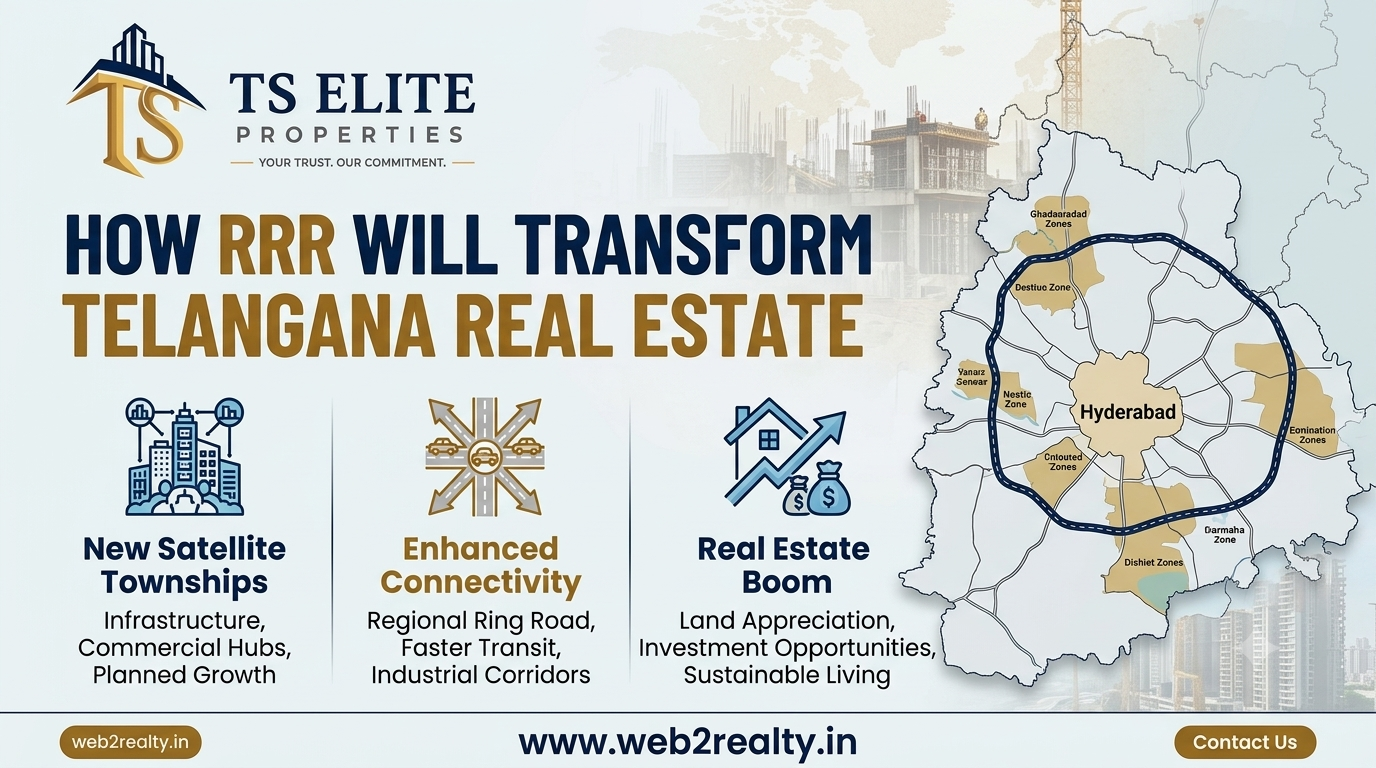
Telangana is going through a major phase of infrastructure and urban development. Hyderabad has already grown into a leading technology, business and employment hub, but the next stage of growth is expected to spread beyond the existing city limits.
One of the infrastructure projects attracting significant attention is the Regional Ring Road (RRR).
The RRR Hyderabad project is expected to improve regional connectivity, connect important towns and highways, and support the development of new economic and residential corridors around Hyderabad. Better connectivity can have a direct impact on land demand, housing, commercial development and investment opportunities.
For people interested in Telangana real estate, understanding the potential impact of RRR Hyderabad is becoming increasingly important.
The Regional Ring Road, commonly referred to as RRR, is planned as a large ring road around Hyderabad’s existing Outer Ring Road.
The project is intended to improve connectivity between Hyderabad and several towns and districts in the wider region. It is also expected to connect important national highways and create smoother movement of goods and people.
Unlike the Outer Ring Road, which primarily supports movement within the Hyderabad metropolitan area, the Regional Ring Road is designed to provide broader regional connectivity.
This difference could be important for Telangana’s real estate market.
When major roads connect previously less-accessible locations with major cities, those areas can become more attractive for residential, commercial, industrial and logistics development.
Infrastructure is one of the strongest drivers of real estate development.
A location with good roads, public transport, employment opportunities and social infrastructure is generally more attractive to buyers and businesses.
The RRR Hyderabad project could create new connections between developing areas and Hyderabad. This may encourage developers and investors to look beyond established locations and explore emerging corridors.
The potential impact could be seen across different property segments, including:
As connectivity improves, demand can gradually move toward areas that were previously considered too far from the main city.
One of the most important effects of the RRR could be the creation of new growth corridors.
Real estate development usually follows infrastructure.
When a major highway or ring road becomes operational, travel becomes easier between towns and employment centres. Businesses may find new locations more practical, while residential developers may see opportunities to build communities near emerging employment zones.
This could result in a wider development pattern around Hyderabad.
Instead of property growth being concentrated around the existing ORR, development could gradually expand toward areas connected by the RRR.
For investors, this makes RRR Hyderabad an important infrastructure project to watch.
However, proximity to the RRR alone does not guarantee property appreciation. The surrounding area’s infrastructure, development activity, legal approvals and actual demand remain equally important.
Land is likely to be one of the property segments most closely watched as the RRR develops.
In emerging areas, open plots can provide investors with an opportunity to purchase land before an area becomes fully developed.
As roads and other infrastructure improve, investors may begin looking at locations with better future connectivity.
For buyers searching for plots in Hyderabad and surrounding areas, the RRR corridor could offer several locations worth researching.
But buyers should be careful.
A plot should not be purchased simply because an advertisement says it is “near RRR.”
Investors should verify the actual distance, road access, approvals, title documents and surrounding development.
A property that is close to a major road but lacks proper access roads or basic infrastructure may not benefit in the same way as a well-connected development.
Residential growth is another area that could benefit from improved connectivity.
When new employment and industrial centres develop around a city, workers need homes.
This can create demand for:
Areas along important RRR connections could gradually attract residential developers.
Families may also consider locations farther from central Hyderabad if commuting becomes easier and property prices remain comparatively affordable.
Over time, schools, hospitals, supermarkets, restaurants and other facilities may follow residential growth.
This creates a cycle of development:
Better roads → more businesses → more jobs → more housing demand → more social infrastructure → stronger local development.
The impact of RRR Hyderabad will not be limited to residential property.
Industrial and logistics development could become an important part of the regional growth story.
Companies involved in manufacturing, warehousing and distribution need access to highways and major markets.
A regional ring road can help businesses move goods between different highways and locations without depending entirely on the central city road network.
This can make strategically located areas attractive for warehouses, logistics parks and industrial facilities.
As these businesses expand, they can also create employment.
Employment growth, in turn, can generate demand for nearby housing and commercial services.
This is why the real estate impact of RRR Hyderabad could extend much further than the immediate road corridor.
Another important benefit of the RRR is regional connectivity.
Telangana has several towns and developing urban centres that are located outside Hyderabad’s established metropolitan areas.
Improved connections between these locations and Hyderabad could support greater economic interaction.
People may find it easier to travel for employment, education, healthcare and business.
Businesses may also find it easier to transport products and materials.
Over time, this can strengthen smaller towns and encourage more balanced regional development.
For Telangana real estate, this could mean that investment opportunities are no longer limited to traditional Hyderabad neighbourhoods.
The development of Bharat Future City adds another important dimension to the region’s real estate story.
Bharat Future City is being planned as a major future-focused development with proposed sectors such as artificial intelligence, healthcare, education and life sciences.
As new employment centres emerge, connectivity will become increasingly important.
The RRR, radial roads and other infrastructure projects could help connect emerging economic zones with wider regional networks.
If employment and infrastructure develop together, nearby property markets could see increased interest.
This could create opportunities for developers, landowners, commercial businesses and long-term property investors.
Real estate developers generally look for areas where future demand is likely to increase.
Major infrastructure projects can provide important signals.
When a region receives new highways, roads, industrial projects or employment centres, developers may begin planning projects to serve future residents and businesses.
This does not mean development happens immediately.
Large infrastructure projects often take several years, and surrounding development can happen in stages.
Therefore, investors should take a long-term approach when studying RRR Hyderabad.
Instead of asking only about today’s property price, it can be more useful to ask:
What could this location look like five or ten years from now?
If you are considering buying property near the RRR corridor, do not make your decision based only on future expectations.
Check the following factors carefully:
Find out the actual distance from the proposed or developing road. Do not rely only on marketing claims.
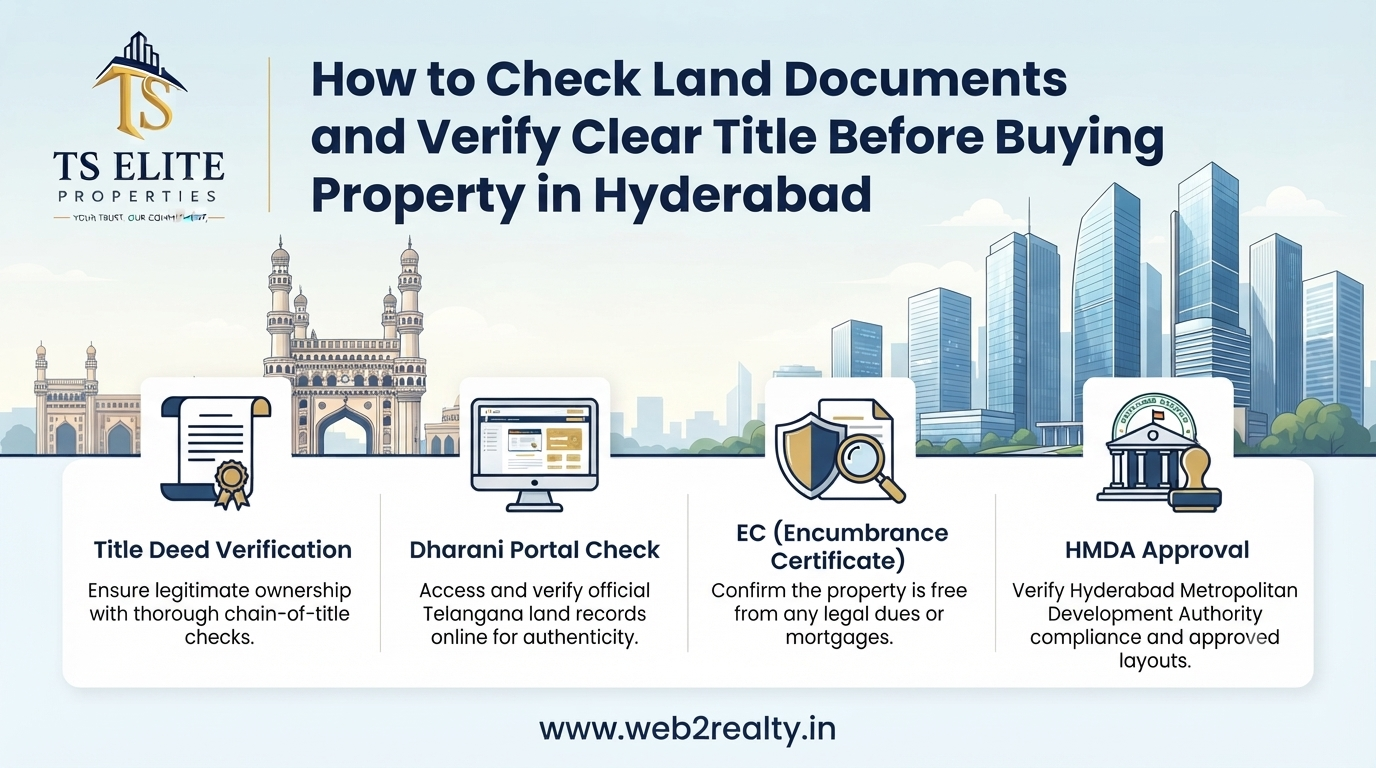
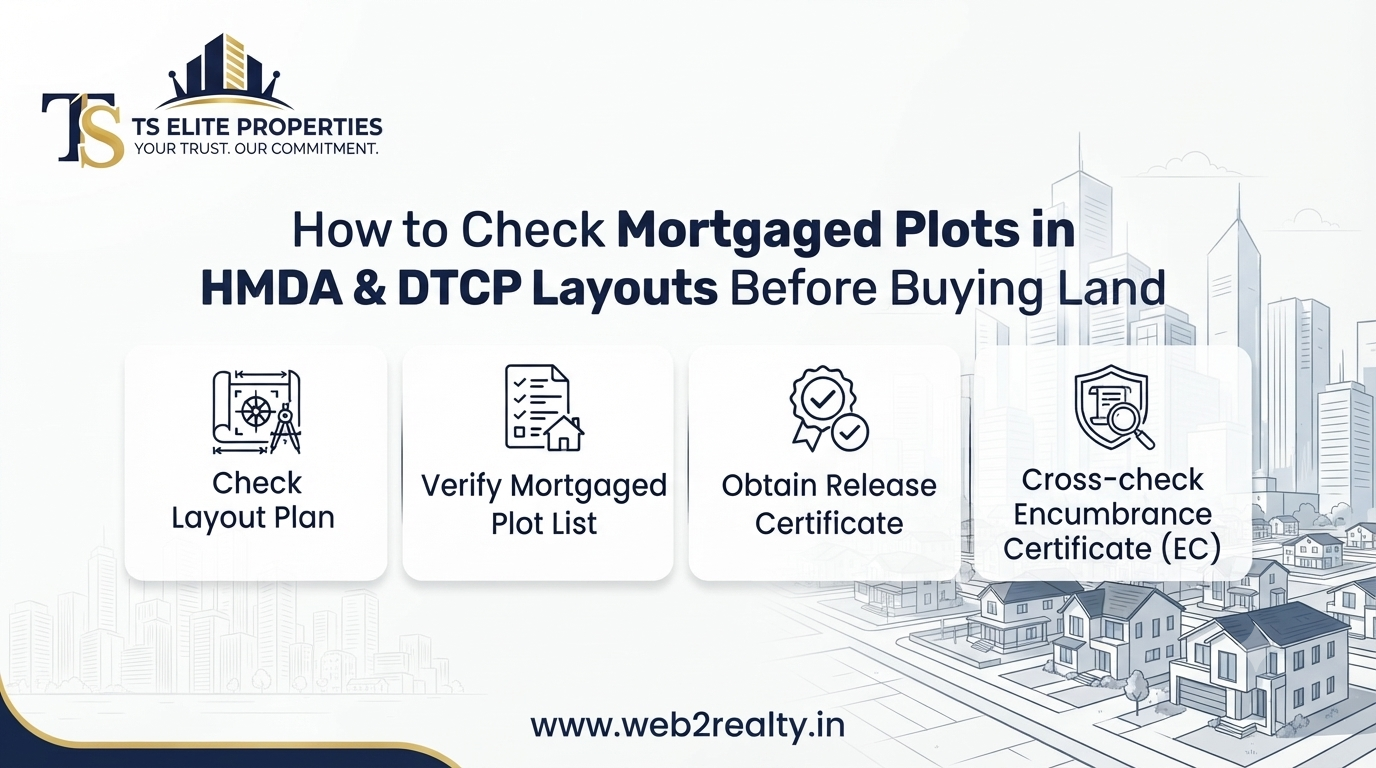
Verify ownership, title history and other relevant property documents.
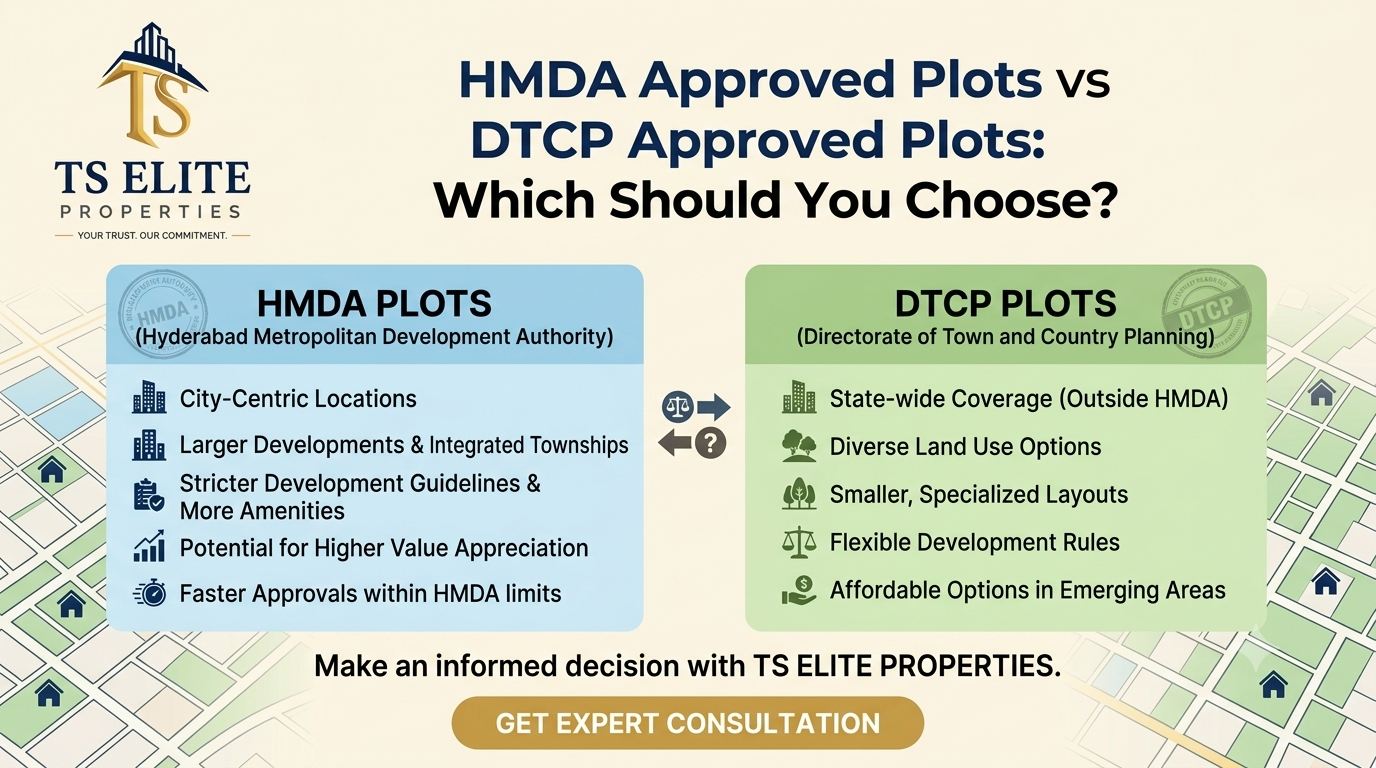
Check whether the plot or project has the required planning and layout approvals.
A property should have proper access from an existing or legally established road.
Look at electricity, water supply, drainage and nearby facilities.
Check whether genuine residential, commercial or industrial development is happening around the property.
Study official announcements and government plans rather than depending on rumours circulating on social media.
If you are purchasing from a developer, check the company’s history, documentation and previous projects.
This is one of the most common questions among investors.
The answer is not necessarily.
Infrastructure can support property demand, but prices are influenced by many factors.
These include:
Some locations may benefit significantly from the RRR, while others may take longer to develop.
The strongest opportunities are likely to be locations where road connectivity, employment, infrastructure and real demand come together.
The biggest potential impact of RRR Hyderabad may be the expansion of the city’s real estate ecosystem.
Hyderabad has already experienced major growth through the development of the Outer Ring Road and surrounding business corridors.
The RRR could support another stage of outward growth.
As connectivity improves, the boundary between Hyderabad and surrounding towns may become less significant from a business and residential perspective.
More people may live farther from the city centre while still accessing employment and services.
Businesses may also select locations outside the existing urban core because of land availability and regional connectivity.
This could gradually transform the real estate map of Telangana.
Telangana’s real estate market is increasingly connected to infrastructure development.
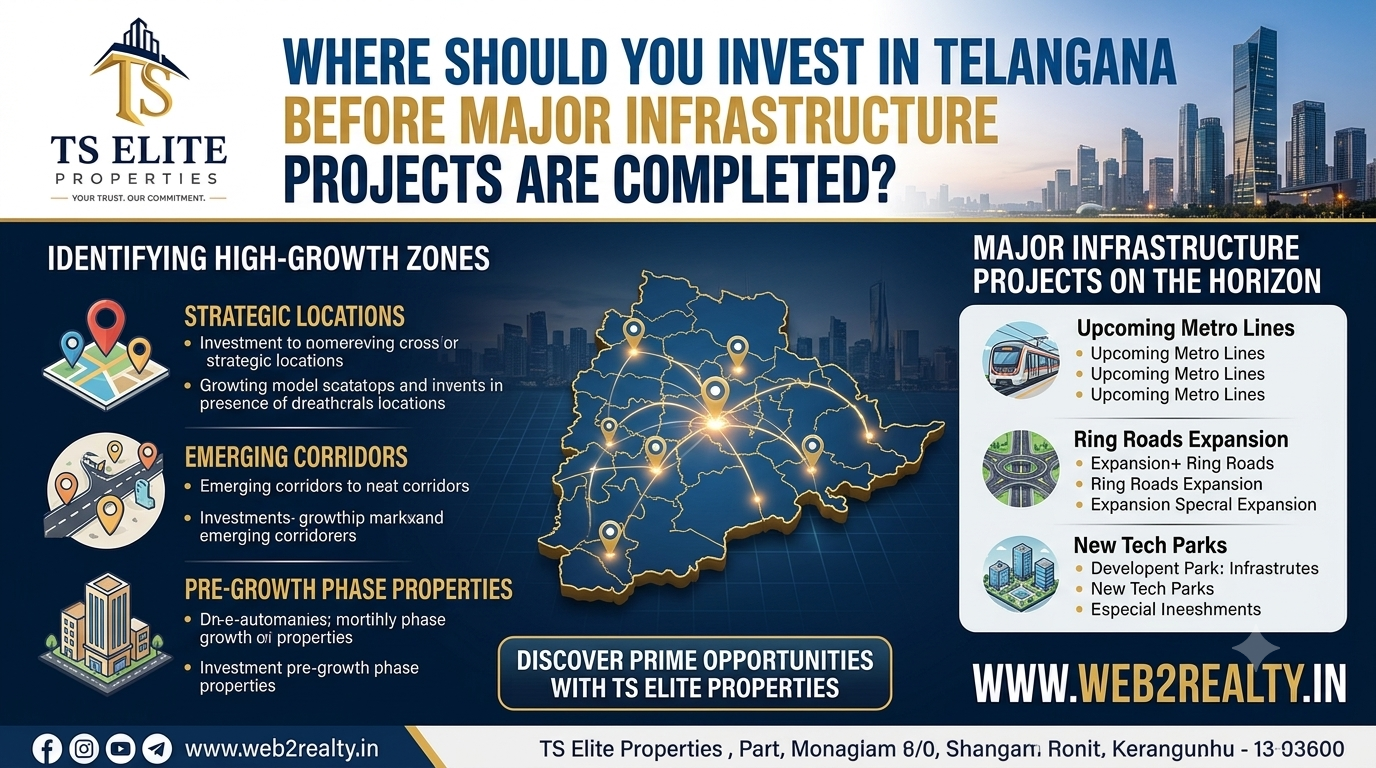
Projects such as the RRR, Future City, industrial corridors, highways and other transport improvements can create new opportunities.
For investors, the key is to identify locations where multiple growth factors overlap.
A location with only a proposed road may carry significant uncertainty.
A location with existing roads, nearby employment, planned infrastructure, good approvals and active development may offer a stronger investment case.
The RRR Hyderabad project should therefore be viewed as part of a much larger regional development story.
The Regional Ring Road could become an important part of Telangana’s future infrastructure network.
By improving regional connectivity, the RRR may support the development of new residential, commercial, industrial and logistics corridors around Hyderabad.
For property investors, this could create new opportunities in plots, land, housing and commercial real estate.
However, successful property investment requires more than following an infrastructure project. Buyers should verify property documents, approvals, location, connectivity and actual development potential before investing.
If you are considering property in Hyderabad or the surrounding growth corridors, now is a good time to research locations connected to major infrastructure projects.
Explore emerging locations, compare connectivity and verify property approvals before making your investment decision.
Contact us today to discover available property and plot opportunities in and around Hyderabad’s future growth corridors.
The right location today could become part of Hyderabad’s next growth story tomorrow.
RRR Hyderabad refers to the Regional Ring Road planned around Hyderabad. It is intended to improve regional connectivity between Hyderabad and surrounding towns, districts and major highways.
RRR could improve accessibility and support residential, commercial, industrial and logistics development in emerging areas around Hyderabad.
RRR may support property demand in strategically located areas, but price appreciation is not guaranteed. Local infrastructure, employment, development and market conditions will also influence prices.
Plots near major infrastructure corridors can be considered for long-term investment, but buyers should verify approvals, title, road access, exact location and surrounding development before purchasing.
Improved regional connectivity can make it easier for businesses to transport goods, access markets and connect with different parts of Telangana.
Residential development could increase in locations where RRR connectivity is combined with employment growth, local infrastructure and demand for housing.
Check the property’s legal title, layout approval, road access, infrastructure, exact distance from the RRR and the credibility of the developer or seller.
The Outer Ring Road primarily supports movement around Hyderabad’s metropolitan area, while the Regional Ring Road is intended to provide wider regional connectivity around the city.
Yes. One of the project’s potential benefits is improved connectivity between Hyderabad and surrounding towns and districts, which could support regional economic and real estate development.
The RRR could become an important infrastructure link supporting Hyderabad’s outward growth. Its eventual impact will depend on project implementation, connectivity with other roads and the development of businesses and communities along the corridor.