
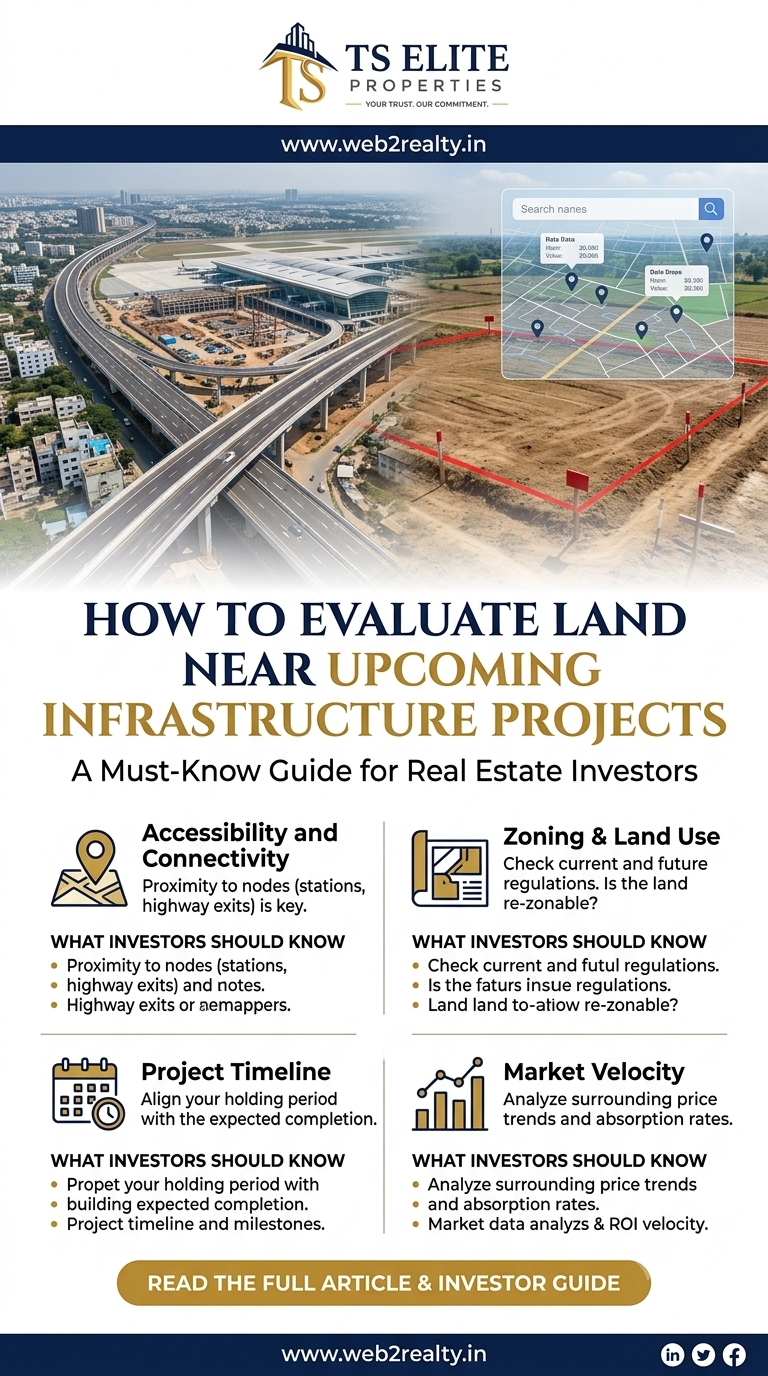
Infrastructure development is one of the major factors that can influence the future of real estate. New highways, metro routes, airports, industrial parks, regional roads, business districts, and other large projects can improve connectivity and encourage development around them.
For real estate investors, this creates an important question: How can you identify land that may benefit from upcoming infrastructure projects?
Buying property near a proposed project can offer opportunities, but it also requires careful research. An infrastructure announcement alone does not guarantee higher property prices. Investors need to understand the project’s status, location, connectivity, surrounding development, legal approvals, and actual market demand.
This is particularly important for people looking for plots in Hyderabad, where several areas are experiencing infrastructure-led development and urban expansion.
Infrastructure can change the way people and businesses access a location.
A new road can reduce travel time. A new transport connection can make a developing area easier to reach. An industrial project can create employment. New commercial development can bring shops, offices, restaurants, and services.
As these changes happen, demand for nearby residential and commercial property may increase.
This is why plots in Hyderabad located in emerging growth areas can attract attention from investors who are willing to take a long-term view.
However, investors should remember that infrastructure is only one part of the investment decision.
The strongest opportunities are usually locations where infrastructure development is supported by population growth, employment, connectivity, amenities, and genuine demand.
The first step is to understand exactly what infrastructure project is planned.
Do not rely only on advertisements, social media posts, or statements from property sellers.
Find out:
Understanding these details can help you avoid making an investment based on an unverified future promise.
For buyers searching for plots in Hyderabad, this research can make a significant difference when comparing different locations.
Being “near” an infrastructure project can mean very different things.
A property may be advertised as being close to a highway, airport, metro station, or business district, but the actual travel distance may be considerably different.
Always check the exact location on a reliable map and visit the site personally.
Consider:
A plot with convenient access to a major road can be more practical than a property that is technically closer but difficult to reach.
This is especially important when evaluating plots in Hyderabad in developing areas.
Do not focus only on what is planned for the future.
Look at what already exists today.
Check whether the area has:
Existing infrastructure provides useful clues about the area’s current level of development.
Upcoming infrastructure can support future growth, but existing infrastructure provides a clearer picture of present-day livability.
One common mistake investors make is assuming that every announced project will be completed quickly.
Large infrastructure projects can take years to plan, approve, construct, and become fully operational.
Therefore, investors should distinguish between:
Announced → Planned → Approved → Under Construction → Operational
These stages can have very different implications for an investment decision.
If a project is only at the announcement stage, investors should be more cautious about assigning future value to it.
If construction is progressing and related development is already visible, the investment story may be easier to evaluate.
Infrastructure becomes more valuable for real estate when it connects people to jobs.
An area may have an excellent road network, but if there is little economic activity around it, residential demand may remain limited.
Look for nearby:
Employment growth can create demand for housing.
This can eventually support demand for residential plots in Hyderabad, particularly in areas where workers want to live close to employment and transportation networks.
Another important indicator is whether people are actually moving into the area.
Look for signs of residential growth such as:
When more people begin living in an area, supporting infrastructure usually follows.
For investors, this can provide a stronger indication of demand than an infrastructure announcement alone.
Before purchasing land, compare prices with similar properties in surrounding locations.
Do not assume that a plot is a good investment simply because it is close to a major infrastructure project.
Ask:
Price comparison can help investors avoid overpaying.
When researching plots in Hyderabad, comparing multiple locations is often more useful than focusing on one project.
Infrastructure potential cannot compensate for problems with the property itself.
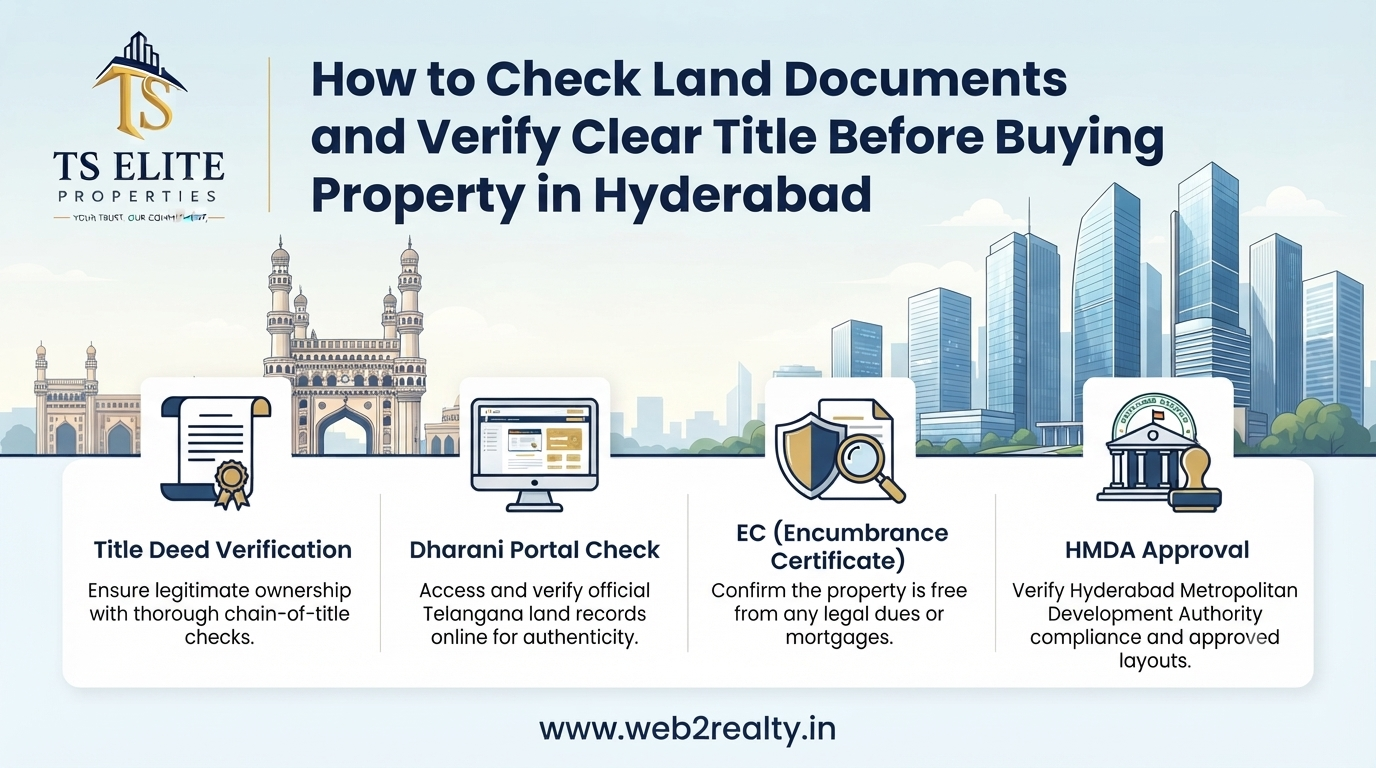
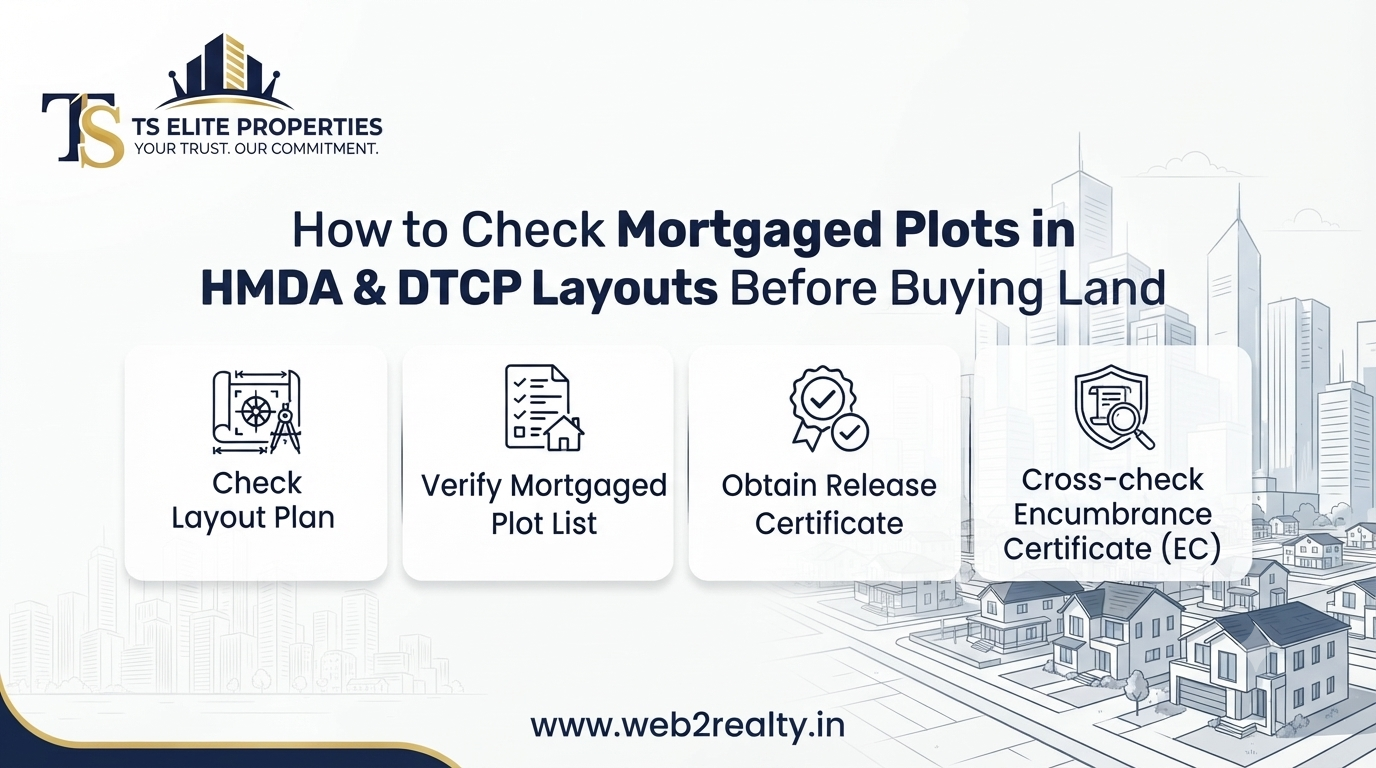
Before buying land, verify the documentation carefully.
Depending on the property and location, buyers may need to examine:
Buyers should also confirm that the property being sold matches the documents.
It is advisable to consult qualified legal and property professionals before completing a transaction.
For plotted developments, the internal layout is extremely important.
A property may be close to a major highway but still have poor internal connectivity.
Check:
Good internal infrastructure can improve the practical value of a plotted development.
Therefore, investors should evaluate the entire project rather than only its location on a map.
Real estate investment should not be based entirely on short-term price movements.
Think about who may want the property in the future.
Potential future buyers could include:
Ask yourself whether the location is likely to remain attractive after the infrastructure project is completed.
A strong location should ideally have multiple reasons for future demand.
This is one reason plots in Hyderabad can be attractive to long-term investors when they are located in areas supported by broader economic and infrastructure growth.
It is important to keep expectations realistic.
A new highway, metro line, airport, or industrial project can support real estate growth, but appreciation is not automatic.
Property prices can also be affected by:
An investor should therefore avoid purchasing land simply because someone claims that prices will double after a particular project is completed.
Good investment decisions are based on evidence rather than promises.
Hyderabad has expanded significantly beyond its traditional urban areas.
Growth in technology, business, infrastructure, education, healthcare, and residential development has created new areas of interest for property buyers.
As the city expands, locations on the outskirts and along emerging connectivity corridors can attract attention from investors looking for long-term opportunities.
This has increased interest in plots in Hyderabad, particularly where infrastructure development is combined with improving connectivity and surrounding economic activity.
However, every location needs to be evaluated independently.
A growing city can create opportunities, but not every plot will perform equally.
Before buying land near an upcoming infrastructure project, ask these questions:
Location
Infrastructure
Development
Demand
Pricing
Documentation
Future Potential
If the answers are positive, the property may deserve further consideration.
Upcoming infrastructure projects can create new opportunities for real estate investors, but successful investing requires more than following headlines.
For anyone considering plots in Hyderabad, the best approach is to study the complete picture: infrastructure status, accessibility, employment growth, residential development, land prices, documentation, approvals, and long-term demand.
Do not buy simply because a property is advertised as being “near a future project.”
Instead, look for locations where real infrastructure, real connectivity, real development, and real demand are coming together.
With careful research and proper due diligence, investors can make more informed decisions and identify land opportunities that align with their long-term goals.
If you are planning to invest in land, explore locations with strong connectivity, future development potential, and proper documentation.
Web2Realty can help you explore open plot opportunities in Hyderabad and emerging growth corridors.
📞 Contact us today to discuss available plots, locations, pricing, approvals, and site-visit options.
Your Trust. Our Commitment.
It can be, provided the project is genuine, the location has good accessibility, and there is supporting economic and residential development. Investors should verify the project status before investing.
Highways, metro lines, airports, industrial corridors, business districts, regional roads, logistics hubs, and other major infrastructure can potentially influence nearby property demand and prices.
No. Future infrastructure should be one factor in your decision. You should also consider current connectivity, approvals, documentation, surrounding development, pricing, and actual market demand.
There is no universal ideal distance. The important factor is convenient and practical connectivity. A property with good access roads may be more valuable than one that is physically closer but poorly connected.
Check information from relevant government departments, planning authorities, official project announcements, and reliable sources. Do not depend only on information provided by property advertisements.
Hyderabad’s urban expansion, employment opportunities, infrastructure development, and growth of residential areas have increased interest in land and plotted developments across emerging locations.
Buyers should verify ownership, title, encumbrance information, approved layout and applicable permissions, survey details, land use, and other relevant documents. Professional legal verification is recommended.
Not necessarily. The effect may take time and depends on project progress, actual connectivity, economic activity, supply, demand, and the overall development of the surrounding area.
No. Price is only one factor. Location, documentation, accessibility, approvals, infrastructure, and future demand are equally important.
Compare multiple locations, inspect the site, study infrastructure and development plans, compare market prices, verify all documents and approvals, and assess the property’s long-term demand before making a decision.