
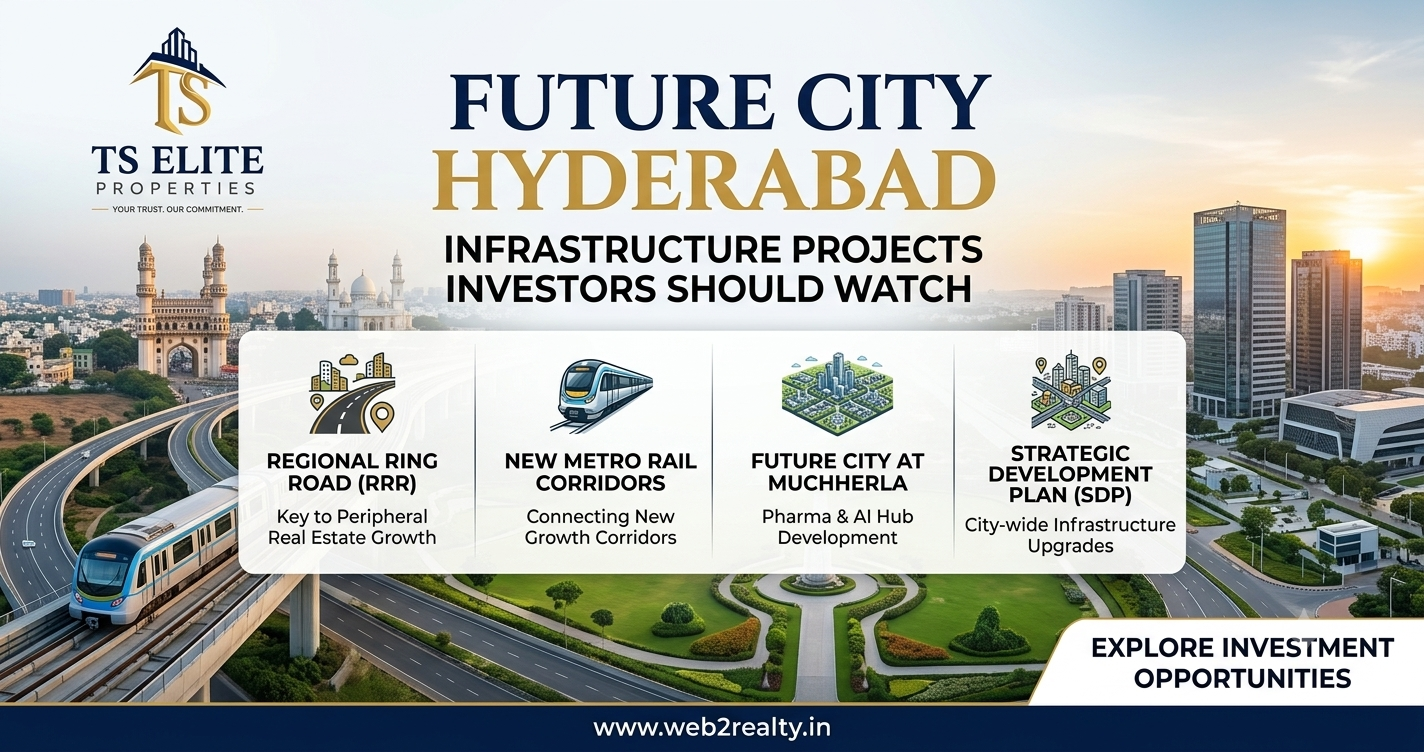
Hyderabad has been one of India’s most active real estate markets, and the city’s next phase of growth is moving beyond its established IT corridors. One of the major developments attracting attention is Bharat Future City, planned in the southern part of the Hyderabad region.
With new roads, proposed metro connectivity, radial roads, employment hubs, educational institutions and large-scale business investments, Future City could influence the development of surrounding areas.
For people looking for land in Hyderabad, this emerging growth zone is worth watching.
However, investing in a developing area requires more than simply looking at future announcements. Investors need to understand the infrastructure planned around the project, how connectivity may improve and whether the surrounding locations have the fundamentals to support long-term growth.
Let’s look at some of the major infrastructure projects and developments investors should keep an eye on.
Bharat Future City is being planned as a large, modern urban development south of Hyderabad. The Telangana government’s vision includes sectors such as artificial intelligence, healthcare, education, green pharmaceuticals, data centres, sports and global corporate offices.
The state has also established the Future City Development Authority (FCDA) to support planning and development. In June 2026, the FCDA office building at Bharat Future City was inaugurated, marking another step in the development process.
The government has described Bharat Future City as a future-focused urban centre designed to attract global companies and create a modern economic ecosystem.
For real estate investors, the important point is that the project is not being planned as an isolated residential development. It is intended to combine employment, business, education, healthcare, technology and urban infrastructure.
That combination could influence demand for land in Hyderabad and nearby growth areas over the long term.
Infrastructure is one of the biggest factors affecting property demand.
A location may have affordable land today, but better roads, public transportation, employment opportunities and commercial development can gradually change its real estate potential.
This pattern has already been seen in different parts of Hyderabad.
As connectivity improves, travel becomes easier. Businesses find it more convenient to establish operations. Employees look for homes closer to their workplaces. Retail and other services follow.
This creates a cycle of development.
For investors searching for land in Hyderabad, understanding this cycle can help identify locations that may have long-term potential.
Radial roads are among the important infrastructure projects to watch around Future City.
The Telangana government has proposed and initiated development of radial road infrastructure to improve connectivity within the Future City region and link it with surrounding areas.
In September 2025, the foundation stone was laid for Greenfield Radial Road-1, planned to connect Kongarakalan with Amangal.
Radial roads can be particularly important for emerging areas because they provide connections between major highways, residential zones, employment centres and other parts of the metropolitan region.
As connectivity improves, locations along or close to well-developed road networks can become more accessible for residents and businesses.
This is one reason investors interested in land in Hyderabad should monitor the progress and actual alignment of major road projects rather than relying only on broad location names.
Rajiv Gandhi International Airport is already one of the major transportation assets in southern Hyderabad.
Future City is being planned with connectivity to the airport as an important part of its development strategy.
The Telangana government has previously discussed road and metro connectivity between Shamshabad Airport and Future City. Officials were also directed to prepare plans for connecting the Outer Ring Road and Regional Ring Road through the Future City region.
Better airport connectivity can support several real estate sectors, including:
For people considering land in Hyderabad, proximity to major transportation infrastructure can be one of the factors to evaluate.
Of course, distance alone is not enough. Actual road access, infrastructure completion and surrounding development are equally important.
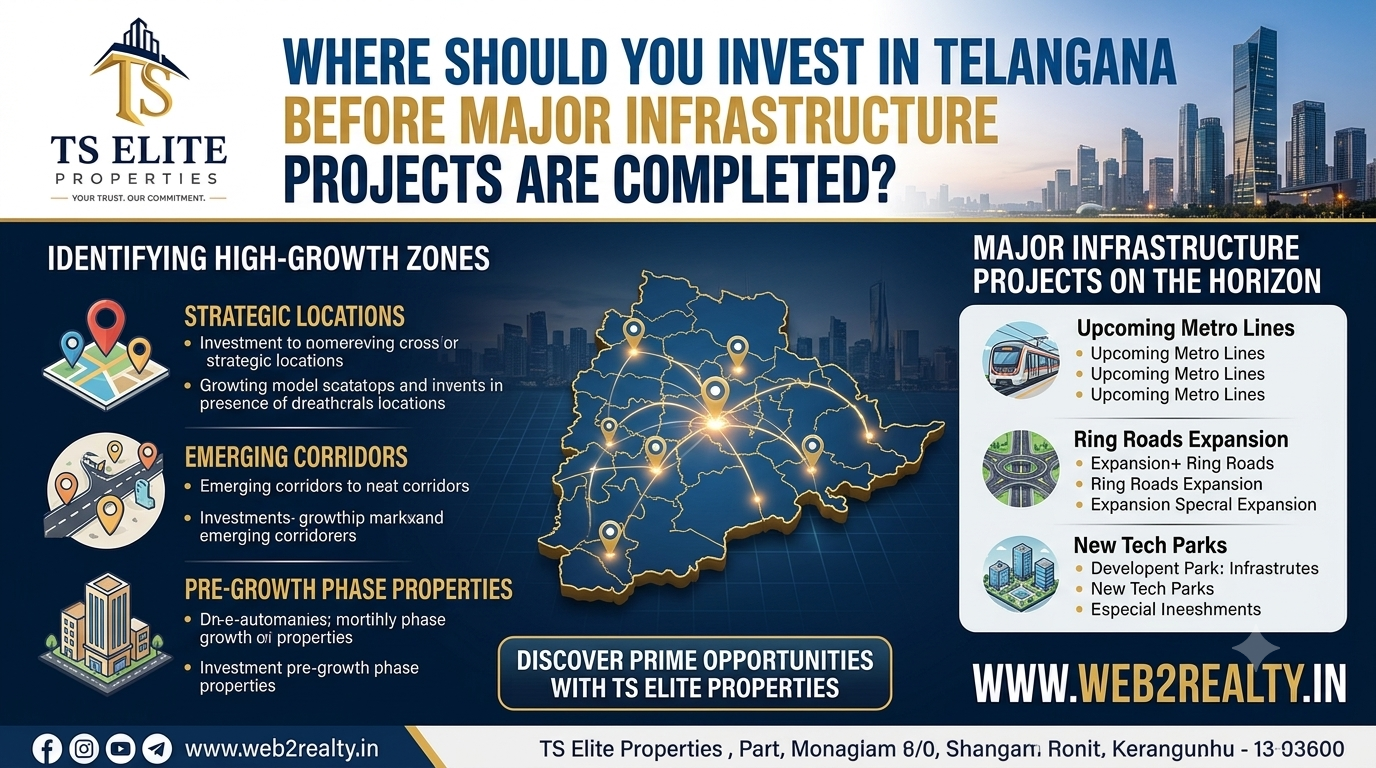
Metro connectivity is another major development investors should watch.
Plans for metro connectivity to Future City have been discussed, including a proposed route from the existing Hyderabad Metro network toward the airport and Future City.
The state government has also discussed studying metro connectivity from the New High Court area to Future City via Shamshabad Airport.
If implemented, mass transit could significantly improve accessibility to the emerging city.
For real estate, this can have an important effect.
People generally prefer locations that provide convenient access to workplaces, educational institutions, shopping areas and other parts of the city.
As public transportation expands, demand can gradually spread beyond established urban areas.
For investors looking at land in Hyderabad, future transportation corridors therefore deserve close attention.
It is important, however, to distinguish between a proposal, an approved project and a completed infrastructure project before making an investment decision.
The Regional Ring Road, or RRR, is another major infrastructure project that could influence Hyderabad’s future growth pattern.
HMDA states that the Hyderabad Metropolitan Region has been extended up to the upcoming RRR, including a buffer of up to two kilometres outside it. HMDA also notes that the RRR is expected to support urbanisation and development in the surrounding region.
The importance of the RRR goes beyond reducing traffic.
Ring roads can create new development nodes by connecting different highways and regional centres.
Future City is being considered within this broader growth strategy.
For investors searching for land in Hyderabad, locations that benefit from multiple connectivity routes may deserve greater attention than properties that depend on a single road.
Another proposed infrastructure initiative is a major greenfield highway connecting Future City toward Machilipatnam through Amaravati.
The Telangana government has also discussed a parallel railway connection as part of a broader strategy to strengthen road, rail and port connectivity.
The proposed highway could potentially strengthen connections between Hyderabad’s emerging southern growth zone and coastal trade infrastructure.
For Future City, such connectivity could support industrial, logistics and commercial activity.
For real estate investors, the bigger takeaway is the potential creation of multiple economic connections around the new city.
Infrastructure alone does not create a strong real estate market.
People need reasons to move to an area.
That is where employment becomes important.
The government’s Future City vision includes global corporate offices, AI, data centres, healthcare, education, green pharmaceuticals and other sectors.
There are already signs of large-scale business interest.
In July 2026, the Telangana government announced the foundation stone ceremony for an Amazon Web Services data centre at Bharat Future City. The state described the project as an important step toward building the new city and attracting major global investment.
As more businesses establish operations, demand for housing and supporting services can potentially increase.
This could benefit different property segments, including apartments, villas, commercial properties and land in Hyderabad located in suitable growth areas.
Education and skill development can also influence real estate demand.
The Young India Skills University is being developed in the Future City region, with construction progress reviewed by the state government in 2026.
Educational institutions can create demand for housing, rental accommodation, transport services, restaurants and other businesses.
Over time, a combination of education and employment can help create a more active local economy.
This is an important factor for anyone evaluating land in Hyderabad from a long-term perspective.
Future City is also being planned with a strong focus on sustainability.
The Telangana Rising 2047 vision describes Bharat Future City as a climate-smart, inclusive and net-zero city, with an emphasis on green infrastructure, renewable energy and environmentally responsible urban development.
Sustainable urban planning can become increasingly important as Hyderabad expands.
Instead of simply adding buildings and roads, future developments need to consider parks, water management, energy efficiency, public spaces and environmental protection.
For homebuyers and investors, well-planned communities can become more attractive when they provide a better quality of life.
The development of Future City could create opportunities, but investors should remain realistic.
Not every plot around a major project will automatically appreciate.
Location continues to matter.
When evaluating land in Hyderabad, investors should consider:
Check the actual road access to the property rather than simply looking at the property’s advertised distance from Future City.
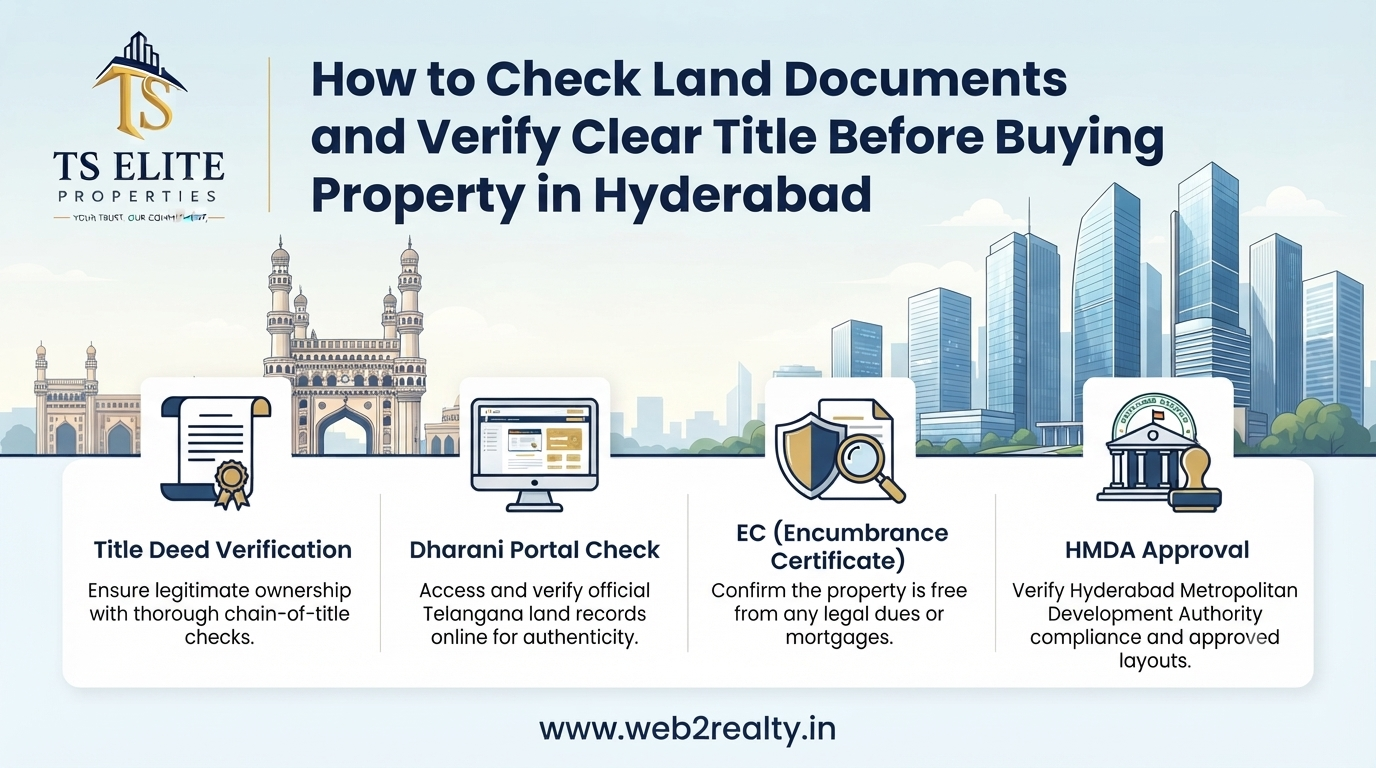
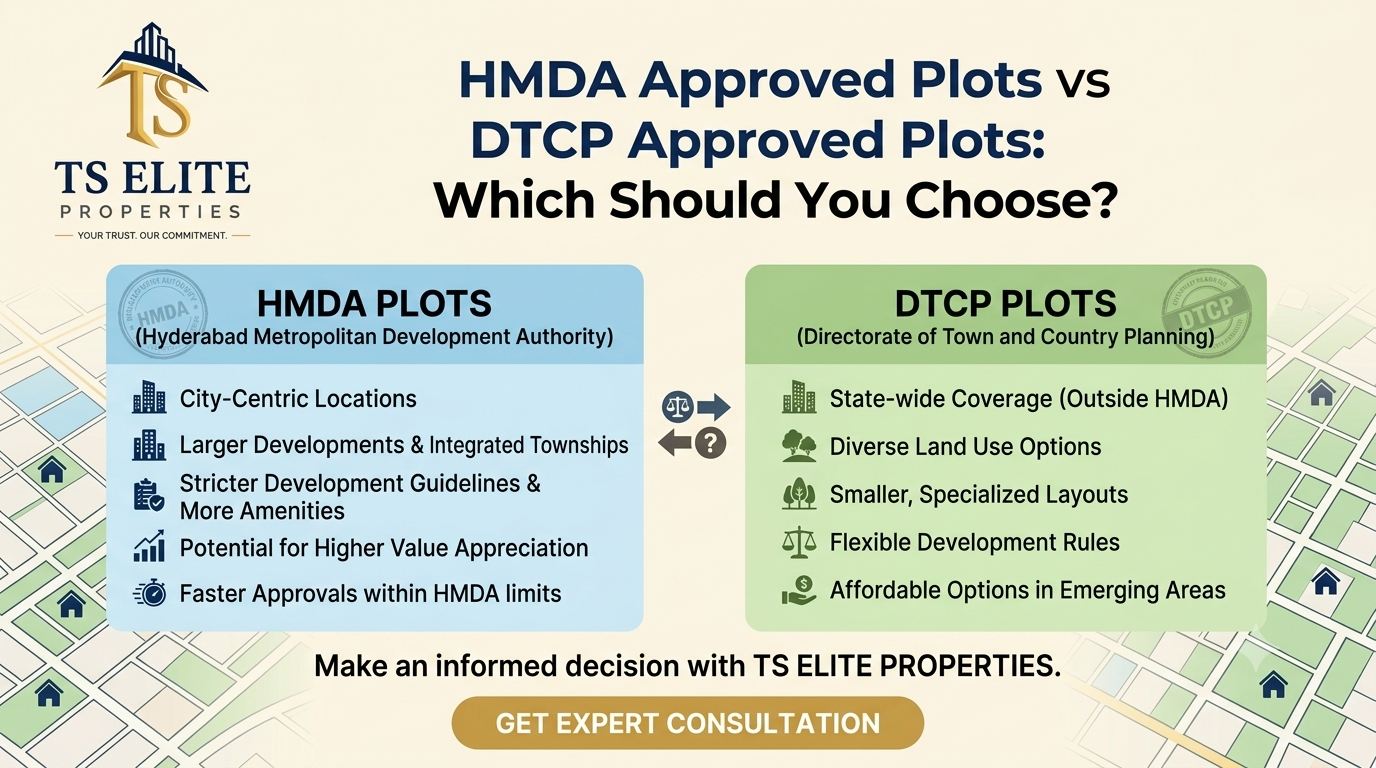
Verify the layout approval and other applicable permissions before purchasing.
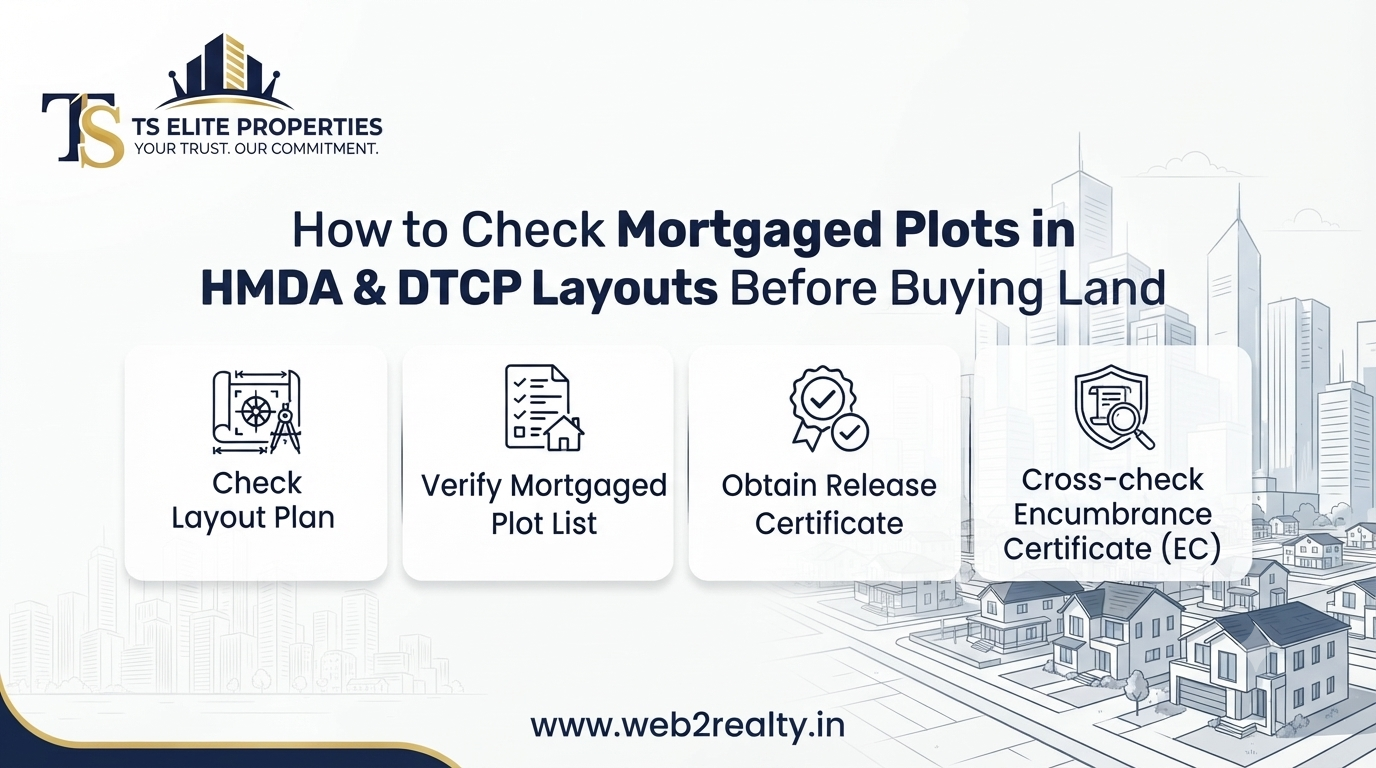
Make sure the property’s ownership records and legal documents are properly verified.
Find out whether a road, metro line or other project is proposed, sanctioned, under construction or already operational.
Look at what is actually developing around the property. Existing communities, schools, businesses and roads can provide stronger evidence of demand than future promises alone.
Emerging areas generally require patience. Investors should be prepared to hold the property for the long term rather than expecting immediate returns.
Future City has several factors that make the region worth watching.
The combination of proposed transportation infrastructure, airport connectivity, employment generation, educational institutions and major business investments could support long-term urban development.
For people searching for land in Hyderabad, the southern growth belt could therefore become an area of interest.
But investment decisions should always be based on verified information.
A property with clear documentation, suitable approvals, good access and genuine surrounding development can be more attractive than a property marketed only on the basis of a future project.
Do your research before investing.
Future City Hyderabad could become one of the important new development centres in the Hyderabad region.
Projects such as radial roads, proposed metro connectivity, airport access, RRR connectivity and wider road and rail initiatives could gradually improve accessibility.
At the same time, developments in technology, healthcare, education, data centres and corporate offices could create employment and support demand for residential and commercial property.
This combination makes Future City an important area to monitor for anyone interested in land in Hyderabad.
The opportunity, however, is not simply about buying land close to a major project. The real opportunity lies in identifying locations with strong fundamentals, verified infrastructure, legal clarity and long-term development potential.
If you are considering investing in land in Hyderabad, now is a good time to research emerging growth corridors, compare locations and understand how infrastructure could shape the city’s next phase of development.
Explore emerging locations around Hyderabad and compare properties based on location, connectivity, approvals, documentation and future development potential.
Don’t invest only because a location is being called a “Future City.” Invest after understanding the land, the location and the infrastructure behind it.
Looking for suitable land investment opportunities around Hyderabad’s emerging growth corridors? Connect with Web2Realty to explore available properties and make a more informed investment decision.
Future City Hyderabad, also referred to as Bharat Future City, is a planned urban development in the southern part of the Hyderabad region focusing on technology, healthcare, education, life sciences, business and modern infrastructure.
Future City could attract businesses, employment, transportation infrastructure and educational institutions. These factors can potentially increase demand for residential and commercial properties in surrounding areas.
It can be worth considering as a long-term investment, but every property should be evaluated individually. Investors should verify title, approvals, connectivity, infrastructure and surrounding development before purchasing.
Important developments to monitor include radial roads, proposed metro connectivity, airport connectivity, RRR-related infrastructure and wider road and rail connectivity.
Improved public transportation can make locations easier to access and potentially increase residential and commercial demand. However, price appreciation is never guaranteed.
The RRR is expected to improve regional connectivity and support urbanisation around its broader influence area. HMDA has expanded the Hyderabad Metropolitan Region up to the RRR.
Good airport connectivity can support businesses, hotels, commercial development, logistics and residential communities, making the surrounding region more accessible.
Check the property’s title, ownership documents, layout approval, road access, zoning, registration details, infrastructure status and the reputation of the developer or seller.
No. Future infrastructure does not guarantee appreciation. Property prices depend on actual development, demand, connectivity, economic conditions, approvals and broader market trends.
Future City could offer long-term potential because of its planned infrastructure and economic development. Investors should focus on legally clear, properly approved properties in locations with genuine connectivity and development prospects.