Author: sabasultanatsi@gmail.com

How to Check Mortgaged Plots in HMDA & DTCP Layouts Before Buying Land
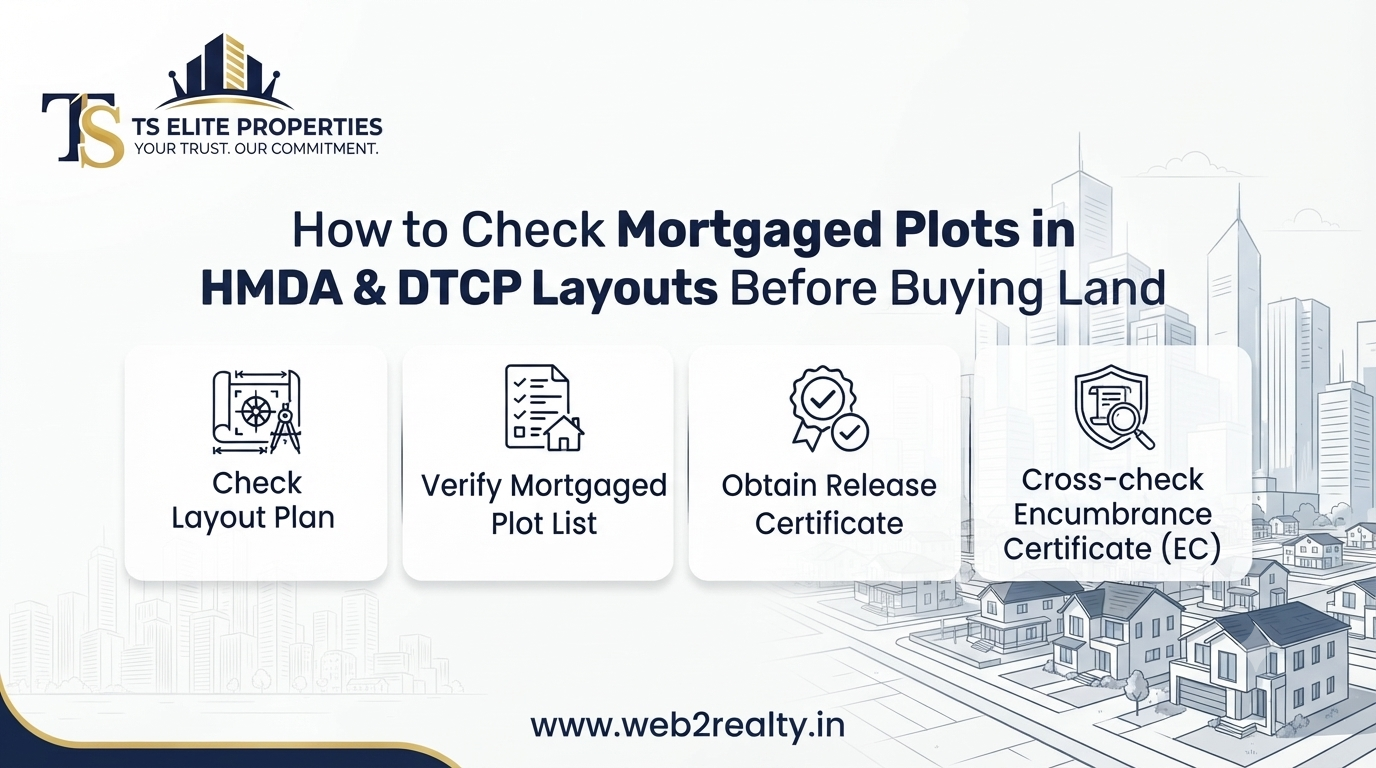
How to check mortgaged plots in HMDA layouts

How to Check Mortgaged Plots in HMDA & DTCP Layouts Before Buying Land

Buying an open plot can be a good option for building a home or making a long-term property investment. With development taking place across Hyderabad and surrounding areas, many buyers are exploring plotted layouts for residential and investment purposes.

However, buying land requires more than checking the location, price, road connectivity, and amenities. One important issue buyers should investigate is whether the plot is mortgaged.

A plot may be part of an approved layout and still have a mortgage, loan, or other financial claim attached to it. Therefore, proper HMDA layout verification, title verification, and document checking are important before buying land.

In this guide, we explain how to check whether a plot is mortgaged, which documents you should review, and what precautions you can take before completing the purchase.

What Is a Mortgaged Plot?

A mortgaged plot is a property that has been offered as security for a loan or financial obligation.

For example, a landowner or developer may use land as security when obtaining finance from a bank or financial institution. Until the applicable loan is settled and the mortgage is properly released, the property may remain subject to that financial charge.

For a buyer, purchasing such a plot without checking its status can create legal and financial complications.

Before buying land, you should find answers to these basic questions:

  • Who is the legal owner of the property?

  • Is the land currently mortgaged?

  • Is the specific plot included in the mortgage?

  • Has an earlier mortgage been released?

  • Does the plot match the approved layout?

  • Are there any other registered encumbrances?

These checks can help you understand the property’s status before you invest your money.

Why Is HMDA Layout Verification Important?

If a property is being marketed as an HMDA-approved layout, buyers should independently verify the approval details.

HMDA layout verification involves checking whether the layout information matches the relevant approval records and whether the plot being offered corresponds with the approved plan.

During the verification process, look at important details such as:

  • Layout approval number

  • Survey numbers

  • Total land extent

  • Plot numbers

  • Road layout

  • Open spaces

  • Utility areas

  • Developer or landowner details

  • Mortgage-related information, where applicable

An approved layout does not automatically mean that every individual plot is free from mortgages, disputes, or other legal issues. Therefore, layout verification should be combined with complete property due diligence.

How Do Plots Become Mortgaged?

A developer or landowner may obtain financing by offering land as security to a bank or financial institution.

In a plotted development, certain plots may be identified as mortgage plots. These plots may not be freely transferable until the applicable financial obligation is settled and the mortgage is formally released.

This is why buyers should verify the specific plot number they intend to purchase.

For example, if you are interested in Plot No. 125, do not simply rely on a salesperson’s statement that the plot is clear. Check the relevant documents and records to confirm the status of Plot No. 125.

1. Check the Encumbrance Certificate

The Encumbrance Certificate (EC) is an important document to examine when checking property records.

An EC can provide information about certain registered transactions and encumbrances recorded against a property during the period covered by the certificate.

When reviewing the EC, look for entries relating to:

  • Mortgages

  • Registered loans

  • Property sales

  • Releases

  • Charges

  • Other registered transactions

Make sure the EC covers an appropriate period and relates to the correct property details.

However, an EC should not be treated as the only proof of a clear title. Some matters may not appear in the EC, so other documents and independent legal verification are also important.

2. Verify the Latest Sale Deed

The latest sale deed is another important document when buying a plot.

Compare the details in the sale deed with the property being offered to you.

Check:

  • Seller’s name

  • Survey number

  • Plot number

  • Plot area

  • Plot dimensions

  • Property boundaries

  • Registration details

  • Previous ownership details

The information should be consistent across the relevant documents.

If the plot number, survey number, area, or boundaries do not match, ask for clarification before making any payment.

3. Check the Link Documents

A buyer should not look only at the latest sale deed. It is also important to understand how the property reached the current owner.

Previous documents, commonly known as link documents, can help establish the ownership history.

Depending on the property, these may include:

  • Previous sale deeds

  • Gift deeds

  • Partition deeds

  • Settlement documents

  • Inheritance records

  • Release deeds

  • Court orders, where applicable

Reviewing the ownership chain can help identify missing documents, inconsistencies, or potential claims.

An independent property lawyer can examine these documents and explain any issues that require further investigation.

4. Verify the HMDA Approved Layout

This is one of the most important steps in HMDA layout verification.

If a seller or developer claims that a project has HMDA approval, verify the approval through the relevant official records.

Check whether:

  • The approval details are genuine

  • The survey numbers match

  • The land extent is consistent

  • The plot number appears in the approved plan

  • Plot dimensions are consistent

  • Roads match the approved layout

  • Open spaces are properly shown

  • The actual development follows the approved plan

Do not depend only on brochures, advertisements, WhatsApp messages, or screenshots supplied by the seller.

The approved records and property documents should support the information being presented to you.

5. Check Mortgage Details for the Specific Plot

When buying a plot in a developed layout, find out whether the specific plot is included in any mortgage arrangement.

This is an important part of HMDA layout verification and property due diligence.

Do not assume that every plot within an approved venture has the same legal status.

Ask for documentary evidence showing the status of the particular plot you want to purchase.

For example:

Plot No. 125 → Check whether Plot No. 125 is included in any mortgage or financial charge.

The seller should be able to provide appropriate documents to support the property’s status.

6. Ask for Mortgage Release Documents

If the plot was previously mortgaged, ask for documents proving that the mortgage has been released.

Depending on the circumstances, relevant documentation may include:

  • Mortgage release deed

  • Release letter

  • Bank NOC

  • Loan closure documentation

  • Updated registration records

The exact documents required can vary depending on how the mortgage was created and released.

Do not rely only on a verbal statement such as, “The loan has already been cleared.”

Always ask for documentary evidence and have it reviewed professionally where necessary.

7. Verify the Bank NOC Where Applicable

If a property was mortgaged to a bank or financial institution, the lender’s documentation may be important.

If the seller says that the bank has approved the sale or released the property, ask for appropriate written documentation.

The bank’s NOC or release document should clearly relate to the relevant property and transaction.

If you are unsure whether the document is sufficient, have an independent property lawyer review it before proceeding.

8. Check the Records After Mortgage Release

If an earlier mortgage has been released, do not stop after receiving a release letter.

Where applicable, check whether the relevant records have been updated to reflect the release.

This can help ensure that the property’s current documentation is consistent with the claimed mortgage status.

Your property lawyer can advise you about the documents and registrations that should be checked for the specific transaction.

9. Compare the Approved Layout With the Actual Site

Document verification should always be supported by a physical site inspection.

Visit the property and compare the actual site with the approved layout and property documents.

Check:

  • Plot number

  • Plot dimensions

  • Boundaries

  • Roads

  • Access points

  • Nearby plots

  • Open spaces

  • Existing structures

  • Possible encroachments

If necessary, arrange a physical survey with a qualified professional.

This can help identify differences between the documents and the property on the ground.

10. Check DTCP Approval Where Applicable

Not every plotted development comes under the same planning authority.

Depending on its location and applicable planning rules, a project may involve DTCP or another competent authority.

If a seller claims that a layout has DTCP approval, verify the approval independently.

Check whether the approval corresponds with:

  • Survey numbers

  • Land extent

  • Layout details

  • Plot numbers

  • Developer or landowner information

Whether you are conducting HMDA layout verification or checking a DTCP layout, always compare the approval information with the actual property documents.

11. Remember: Layout Approval Is Not the Same as Clear Title

This is an important distinction for every land buyer.

Layout approval and title verification are two different checks.

Layout approval generally relates to planning and development requirements.

Title verification focuses on ownership and the seller’s legal right to transfer the property.

Therefore, buyers should ask two separate questions:

Question 1:

Is the layout approved by the applicable planning authority?

Question 2:

Does the seller have the legal right to sell this specific plot, and is the plot free from relevant claims or encumbrances?

Both questions should be answered before completing the purchase.

12. Check for Court Cases and Other Claims

Mortgage verification is only one part of property due diligence.

Buyers should also investigate whether the property is involved in any known legal dispute or claim.

Possible issues may include:

  • Ownership disputes

  • Family disputes

  • Partition cases

  • Boundary disputes

  • Land acquisition matters

  • Other litigation

A property lawyer can advise you about appropriate legal searches based on the property’s history.

If a dispute exists, understand its nature and potential impact before proceeding with the purchase.

13. Verify the Seller’s Authority

Before buying a plot, confirm that the person selling the property has the legal authority to sell it.

If there are multiple owners, verify that the required owners are properly involved in the transaction.

For inherited property, check relevant inheritance and legal-heir documents.

If the seller is acting through a Power of Attorney, verify that the document is valid and authorizes the proposed transaction.

These checks can help reduce ownership-related problems later.

14. Avoid Paying a Large Advance Before Verification

One common mistake buyers make is paying a large advance because the seller says that the property is in high demand.

It is better to complete the important checks first.

Before making a significant payment:

  1. Verify ownership.

  2. Check the Encumbrance Certificate.

  3. Review the link documents.

  4. Complete HMDA layout verification or the applicable planning-authority verification.

  5. Check the mortgage status.

  6. Verify mortgage release documents, if applicable.

  7. Inspect the property physically.

  8. Obtain independent legal advice.

Taking a little extra time before paying can help you identify potential problems early.

HMDA Layout Verification Checklist

Use this simple checklist before buying a plot:

Document / CheckWhat to Verify
OwnershipCurrent owner’s legal title
Sale deedPlot number, area and boundaries
Link documentsPrevious ownership history
Encumbrance CertificateRegistered transactions and encumbrances
Layout approvalApproval details and survey numbers
Plot numberMatch with approved layout
Mortgage statusWhether the specific plot is mortgaged
Release documentsProof of mortgage release, if applicable
Bank NOCLender’s confirmation, where applicable
Land recordsRelevant official records
LitigationPotential legal disputes
Site inspectionBoundaries, roads and physical condition
Legal opinionIndependent lawyer’s review

Common Mistakes to Avoid

Buyers can reduce unnecessary risks by avoiding a few common mistakes.

Relying Only on the Brochure

A project brochure is a marketing document. Always verify important claims against relevant records.

Checking Only the Latest Sale Deed

The ownership history can be important. Review the relevant link documents as well.

Assuming HMDA Approval Means Clear Title

Planning approval and ownership verification are separate matters.

Ignoring Mortgage Status

Always check whether the specific plot has been mortgaged or previously mortgaged.

Accepting Verbal Assurances

Important claims about title, mortgage release, approvals, and ownership should be supported by documents.

Rushing Because of a Limited-Time Offer

Take sufficient time to complete your due diligence before making a substantial financial commitment.

Final Thoughts

Buying land requires careful verification. Price, location, connectivity, and development potential may be important considerations, but proper documentation should come first.

HMDA layout verification can help buyers confirm whether a layout and its relevant details correspond with the applicable approval records. However, it should be only one part of the overall verification process.

Before purchasing a plot, check the title, link documents, Encumbrance Certificate, mortgage status, applicable approvals, seller’s authority, and physical property details.

Most importantly, verify the specific plot you intend to buy rather than assuming that every plot in a layout has the same legal status.

When there is uncertainty, consult an independent property lawyer before signing an agreement or making a substantial payment.

Looking for Open Plots in Hyderabad?

Planning to buy an open plot in Hyderabad or nearby growth corridors?

At Web2Realty, we believe buyers should have access to clear property information before making an important investment decision.

Explore available plot options, understand the location and documentation, compare suitable properties, and arrange a site visit before proceeding.

Looking for open plots in Hyderabad? Contact Web2Realty today to discuss your requirements and explore available property options.

Check the documents. Verify the layout. Understand the title. Then make an informed property decision.

Frequently Asked Questions

1. What is HMDA layout verification?

HMDA layout verification is the process of checking whether a layout’s approval details correspond with the relevant records and whether the survey numbers, land extent, plot numbers and other details match the property being offered.

2. How can I check whether a plot is mortgaged?

Start by checking the Encumbrance Certificate and relevant property documents. For a plotted development, also check whether the specific plot number is included in any mortgage arrangement and ask for appropriate lender release documents if the mortgage has been cleared.

3. Is an HMDA-approved plot automatically free from mortgage?

No. Layout approval and mortgage status are separate matters. Buyers should independently verify whether the specific plot has a mortgage or other relevant encumbrance.

4. What documents should I check before buying an HMDA plot?

Important documents may include the sale deed, link documents, Encumbrance Certificate, approved layout plan, applicable land records, mortgage or release documents, and other relevant approvals.

5. What is a mortgage release document?

A mortgage release document provides evidence that a previously created mortgage or financial charge has been released, subject to the circumstances of the transaction. It should be reviewed carefully before proceeding.

6. Can I buy a mortgaged plot?

A transaction involving a mortgaged property requires careful legal and financial handling. The buyer should understand the lender’s rights and ensure that the mortgage is properly released or otherwise dealt with before acquiring the property.

7. Why should I check the plot number during HMDA layout verification?

Checking the plot number helps confirm that the exact property being offered matches the approved layout and supporting documents. It can also help identify whether the plot has a different status from surrounding plots.

8. Is an Encumbrance Certificate enough for property verification?

No. An EC is an important document, but it does not replace complete legal due diligence. Buyers may also need to check title documents, link documents, applicable land records, approvals, litigation and the physical property.

9. Should I hire a property lawyer before buying a plot?

An independent property lawyer can review the title, ownership history, encumbrances, mortgage documents and other relevant records. Professional legal advice can be particularly useful when the documentation is complex.

10. What is a common mistake when buying a plot?

A common mistake is relying only on seller statements or marketing material. Buyers should independently verify the specific plot, its documents, approval status, ownership and mortgage position before making a significant financial commitment.

This version is designed to be more readable for website visitors, while keeping the primary keyword natural rather than forcing it into every paragraph.

Related Post

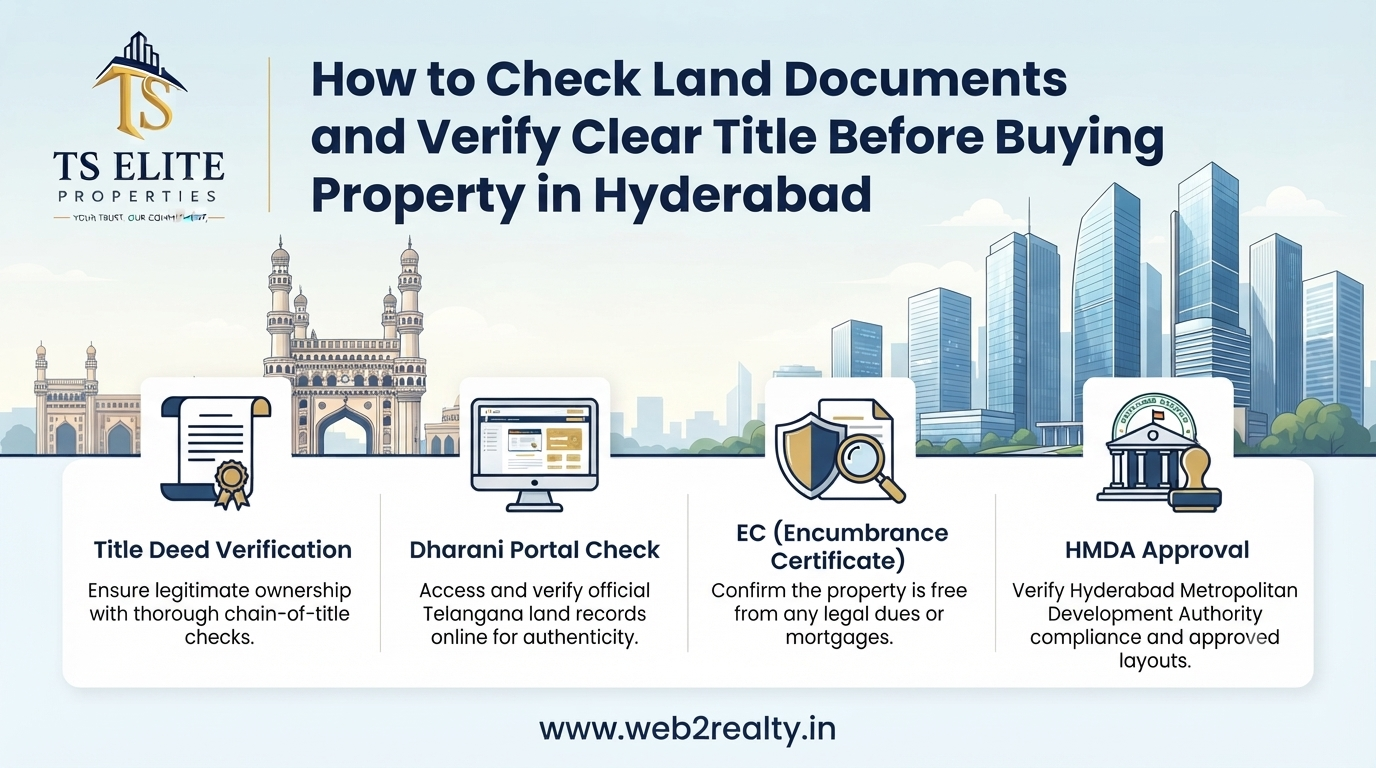
How to Check Land Documents and Verify Clear Title Before Buying Property in Hyderabad.

Property document verification in Hyderabad

How to Check Land Documents and Verify Clear Title Before Buying Property in Hyderabad.

Buying land is one of the biggest financial decisions a person can make. Whether you are purchasing a residential plot, investing in an open plot venture, or looking for property in Hyderabad for future development, checking the documents carefully is essential.

A property may look attractive because of its location, price, road connectivity, or future development potential. However, these factors should not replace proper legal verification. Before paying an advance or signing an agreement, buyers should confirm that the seller has the legal right to sell the property and that the title is clear.

If you are planning to buy property in Hyderabad, this guide explains the important land documents you should check and the steps you can take to verify the property’s title.

Why Is Document Verification Important When Buying Property in Hyderabad?

Hyderabad has experienced significant growth in residential, commercial, and land development. As new roads, infrastructure projects, employment hubs, and residential communities develop around the city, demand for property in Hyderabad continues to attract buyers and investors.

But every property should be treated as a separate legal transaction.

A property can have problems such as:

  • Disputes over ownership
  • Missing link documents
  • Unregistered transactions
  • Outstanding loans or mortgages
  • Claims from legal heirs
  • Incorrect survey numbers
  • Government or assigned land issues
  • Restrictions on land use
  • Pending court cases
  • Differences between physical boundaries and official records

Proper document verification can help identify these issues before you invest your money.

1. Check the Current Sale Deed

The sale deed is one of the most important documents when buying property in Hyderabad.

It establishes the transfer of ownership from the seller to the buyer. When reviewing the current sale deed, check:

  • Name of the current owner
  • Survey number
  • Property extent
  • Property boundaries
  • Location
  • Registration details
  • Previous transaction details
  • Consideration amount
  • Signatures of the parties

Make sure the seller’s name matches the ownership records and identification documents.

Do not rely only on a photocopy provided by the seller. Where possible, verify the registered document through the appropriate government records.

2. Verify the 30-Year Link Documents

Checking only the latest sale deed is not enough.

You should examine the chain of ownership, often referred to as the link documents. These documents show how ownership moved from one person to another over the years.

Depending on the property’s history, the chain may include:

  • Previous sale deeds
  • Gift deeds
  • Partition deeds
  • Settlement deeds
  • Inheritance documents
  • Court orders
  • Release deeds
  • Other registered transfer documents

The purpose is to establish an unbroken chain of ownership.

For older properties, buyers commonly ask a property lawyer to examine a long historical period, often around 30 years, depending on the circumstances and legal requirements.

If there is a missing link in the chain, ask the seller to explain it and have an independent lawyer review the issue before proceeding.

3. Obtain and Check the Encumbrance Certificate

An Encumbrance Certificate (EC) is an important document to check before purchasing property in Hyderabad.

It can help identify registered transactions and certain encumbrances associated with the property during the period covered by the certificate.

The EC may help you identify transactions such as:

  • Registered sales
  • Mortgages
  • Certain charges
  • Releases
  • Other registered transactions

However, an EC should not be treated as the only proof that a property is completely free from every possible legal issue.

For this reason, combine the EC with title documents, revenue records, court searches where appropriate, and professional legal verification.

4. Verify the Property Tax and Local Records

Check whether property taxes and other applicable dues have been paid.

Depending on the type and location of the property, relevant local records may include municipal or other authority records.

Look for:

  • Property identification details
  • Owner information
  • Tax payment history
  • Property assessment details
  • Outstanding dues

Unpaid dues may create problems later, so clarify all pending amounts before completing the purchase.

5. Check the Survey Number and Land Extent

One of the most important steps when buying land is confirming that the property described in the documents is the same land that exists physically on the ground.

Check:

  • Survey number
  • Sub-division number, if applicable
  • Total extent
  • Plot number
  • Boundaries
  • Measurements
  • Location

A small difference in measurements or boundaries can become a major issue later.

It is advisable to compare the registered documents with official land records and conduct a physical survey when necessary.

6. Confirm the Seller’s Identity and Ownership

Before entering into an agreement, verify the seller’s identity and authority to sell the property.

The name appearing on the ownership documents should correspond with the person selling the property.

If the property is owned by multiple people, all necessary owners may need to participate in the transaction.

Special attention is required when property has been inherited. In such cases, buyers should check whether there are other legal heirs who could have a claim.

If someone is selling property through a power of attorney, verify the validity and scope of that authority carefully.

7. Check for Legal Heirs and Family Claims

Inherited property requires additional caution.

For example, a person may claim to be the owner because the property was inherited from a parent or relative. However, other legal heirs may potentially have rights depending on the circumstances.

Ask for relevant inheritance documents and previous title records.

A property lawyer can help determine whether:

  • All necessary heirs have been included
  • A partition has been legally completed
  • Release deeds are required
  • Any family settlement exists
  • There are pending disputes

This step can prevent ownership disputes after you purchase the property.

8. Check Whether the Property Is Under a Loan or Mortgage

Before buying property in Hyderabad, confirm whether the land or property has been mortgaged.

A property may have been offered as security for a bank loan or other financial obligation.

Ask the seller for relevant loan closure and release documentation if applicable.

If an existing loan is being settled as part of the transaction, ensure that the process is properly documented and that the required release documents are obtained.

Never assume that a seller’s verbal statement is sufficient.

9. Verify HMDA, DTCP and Other Applicable Approvals

If you are purchasing an open plot or a plot in a development venture, check whether the required planning approval applies to the project and whether the approval is genuine.

Depending on the location and type of development, buyers may come across approvals or permissions associated with authorities such as HMDA or DTCP.

Check:

  • Approval number
  • Project name
  • Survey numbers
  • Approved layout
  • Approved plot numbers
  • Road widths
  • Open spaces
  • Land extent

The approval should correspond to the actual property being offered for sale.

A buyer should not rely solely on a brochure, advertisement, WhatsApp message, or salesperson’s statement.

10. Check RERA Registration Where Applicable

For projects covered by the Real Estate (Regulation and Development) Act, RERA registration may be relevant.

If the project falls within the applicable RERA requirements, verify its registration details through the appropriate official records.

Check whether:

  • The project is registered
  • The promoter details are correct
  • The project details match the property being offered
  • The declared project information is consistent

RERA compliance and land title are related but different matters. A buyer should still conduct independent title verification.

11. Verify Land Use and Restrictions

Not every piece of land can be used for every purpose.

Before purchasing property in Hyderabad, check the applicable land-use classification and restrictions.

Depending on the property, you may need to investigate issues relating to:

  • Agricultural land
  • Residential use
  • Commercial use
  • Conversion requirements
  • Government land
  • Assigned land
  • Endowment or prohibited properties
  • Water bodies or affected areas
  • Road widening
  • Development restrictions

If your intention is to construct a house or commercial building, confirm that the intended use is legally permissible.

12. Search for Court Cases and Disputes

A property can sometimes be involved in litigation that may not be obvious from basic ownership documents.

A legal professional can conduct appropriate searches and examine available court records based on the property’s history and circumstances.

Pay particular attention to disputes involving:

  • Ownership
  • Partition
  • Inheritance
  • Boundaries
  • Possession
  • Mortgage
  • Land acquisition

If a seller says that a dispute is “small” or “will be solved soon,” do not proceed without understanding the legal implications.

13. Conduct a Physical Site Inspection

Documents are important, but you should also visit the property.

During your site visit, compare the actual property with the documents.

Check:

  • Property boundaries
  • Approach road
  • Existing structures
  • Neighbouring properties
  • Electricity lines
  • Water channels
  • Fencing
  • Access rights
  • Encroachments

If possible, conduct the inspection with a qualified surveyor or professional who can help verify measurements and boundaries.

14. Hire an Independent Property Lawyer

One of the safest steps you can take before purchasing property in Hyderabad is to get an independent legal opinion.

The lawyer should review the relevant documents and provide an assessment of the title and transaction.

Ideally, the lawyer should not be connected to the seller or developer.

Ask the lawyer to examine:

  • Current title deed
  • Link documents
  • Encumbrance Certificate
  • Revenue records
  • Approvals
  • Tax records
  • Inheritance documents
  • Mortgage or release documents
  • Litigation issues
  • Applicable restrictions

Legal verification may cost some money, but it can be significantly less expensive than dealing with a property dispute after purchase.

Simple Property Document Verification Checklist

Before buying property in Hyderabad, keep this checklist handy:

☑ Current sale deed
☑ Previous link documents
☑ Encumbrance Certificate
☑ Revenue/land records where applicable
☑ Property tax records
☑ Survey number and measurements
☑ Seller identity and ownership
☑ Legal heir documents where applicable
☑ Mortgage/loan details
HMDA/DTCP approval where applicable
☑ RERA registration where applicable
☑ Land-use verification
☑ Court/litigation search
☑ Physical site inspection
☑ Independent legal opinion

Common Mistakes Buyers Should Avoid

Many buyers become focused on price and location and forget the legal side of the transaction.

Avoid these common mistakes:

Buying Based Only on a Low Price

A low price can be attractive, but it should not be the main reason for purchasing land.

Paying a Large Advance Before Verification

Complete essential document and title checks before committing substantial money.

Trusting Verbal Promises

Important promises should be properly documented.

Checking Only the Latest Sale Deed

Always understand the property’s ownership history.

Ignoring Survey and Boundary Details

The property you see on the ground should correspond with the property described in the documents.

Depending Only on the Developer’s Documents

Obtain independent verification instead of relying exclusively on information supplied by the seller or developer.

Final Thoughts

Buying property in Hyderabad can be an important investment, but the decision should be based on more than location, price, and future growth expectations.

Clear documentation and a legally verifiable title are fundamental.

Before purchasing land, carefully examine the sale deed, link documents, Encumbrance Certificate, ownership records, approvals, land-use information, and applicable legal records. A physical site inspection and independent legal opinion can provide an additional layer of protection.

Most importantly, do not rush because of a limited-time offer or pressure to make an immediate payment. Take the time to verify the property properly.

Looking for Property in Hyderabad?

If you are searching for quality open plots and property in Hyderabad, start by understanding the location, documentation, approvals, pricing, and development potential.

At Web2Realty, our goal is to help buyers explore property opportunities with greater clarity and confidence. Whether you are looking for open plots for investment or land for future development, make informed decisions with proper document verification.

Explore available property opportunities, compare locations, ask questions, and schedule a site visit before making your decision.

👉 Looking for property in Hyderabad? Contact Web2Realty today to discuss your requirements and explore suitable property options.

Frequently Asked Questions

1. What documents should I check before buying property in Hyderabad?

Important documents may include the current sale deed, previous link documents, Encumbrance Certificate, applicable land/revenue records, tax records, approvals, and documents relating to mortgages or inheritance.

2. What are link documents in property transactions?

Link documents show the history of ownership transfers from previous owners to the current owner. They help establish the chain of title.

3. Is an Encumbrance Certificate enough to prove clear title?

No. An EC is an important part of due diligence, but it should be reviewed along with title deeds, link documents, applicable land records, litigation searches, and other relevant documents.

4. Should I hire a lawyer before buying land?

Yes. An independent property lawyer can examine the title and documents and identify potential legal issues before you complete the purchase.

5. How do I verify HMDA or DTCP approval?

Check the applicable authority’s official records and ensure that the approval details, survey numbers, layout, plot numbers, and other project information match the property being offered.

6. What should I check during a property site visit?

Check the boundaries, measurements, approach road, surrounding properties, access, existing structures, encroachments, utilities, and whether the physical property matches the documents.

7. Can I buy property if there is a pending legal dispute?

A property involved in litigation requires careful legal assessment. Understand the nature of the dispute and its potential effect on ownership before proceeding.

8. Why is title verification important for property investment?

Title verification helps buyers understand ownership history and identify certain legal, ownership, mortgage, or documentation risks before investing their money.

9. What should I do before paying an advance for land?

Complete preliminary document verification, confirm the seller’s ownership, check relevant approvals and encumbrances, and obtain independent legal advice before making a significant payment.

10. Where can I find property in Hyderabad for investment?

You can explore different locations based on your budget, investment objective, connectivity, infrastructure, approvals, and future development. Always conduct proper legal and physical due diligence before purchasing.

Related Post

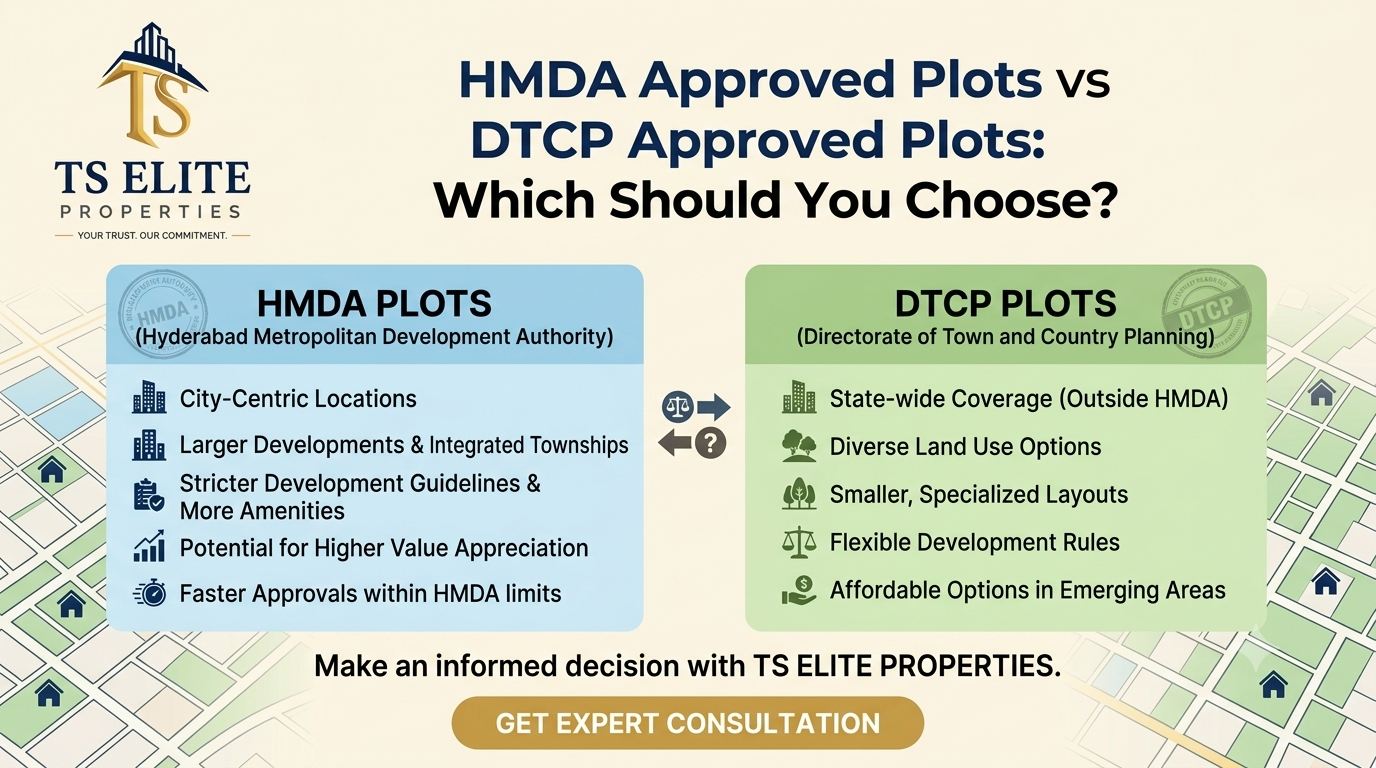
HMDA Approved Plots vs DTCP Approved Plots: Which Should You Choose?

HMDA vs DTCP approved plots in Telangana

HMDA Approved Plots vs DTCP Approved Plots: Which Should You Choose?

Buying a plot in Telangana can be a good long-term investment, especially in areas where roads, industries, employment zones, and other infrastructure projects are developing. But before investing your hard-earned money, one important question comes up: Which approval is safer HMDA, DTCP, or RERA?

Many buyers search for HMDA vs DTCP approved plots because they want to understand the difference between these approvals and choose a property with better legal and development clarity.

The truth is that HMDA, DTCP, and RERA are not three competing approvals for exactly the same thing. Each has a different purpose. HMDA and DTCP mainly relate to planning and layout permissions, while RERA is a regulatory framework that provides protections and disclosure requirements for eligible real estate projects.

So, which one should a buyer choose?

Let’s understand HMDA vs DTCP approved plots, the role of RERA, what documents to verify, and how to make a safer plot-buying decision in Telangana.

What Is HMDA Approval?

HMDA stands for Hyderabad Metropolitan Development Authority. It is the planning authority responsible for development and planning in its jurisdiction around Hyderabad.

An HMDA-approved layout generally means that the layout has received approval from HMDA according to applicable planning and layout regulations.

HMDA approval can be particularly relevant when you are purchasing plots within the HMDA planning area.

Why Do Buyers Prefer HMDA-Approved Plots?

HMDA-approved plots can offer several advantages:

  • Planned layout development
  • Approved road network
  • Designated open spaces
  • Better planning compliance
  • Greater clarity about the approved layout
  • Potentially stronger buyer confidence
  • Better suitability for buyers looking for property around Hyderabad’s growth corridors

However, HMDA approval alone should not be treated as a complete guarantee that every aspect of a property transaction is safe.

Buyers should still verify ownership, title, encumbrances, survey details, land conversion where applicable, and registration-related documents.

What Is DTCP Approval?

DTCP refers to the Directorate of Town and Country Planning. DTCP deals with planning and development in areas falling under its applicable jurisdiction outside the relevant metropolitan authority areas.

A DTCP-approved layout means the layout has received planning approval from the competent planning authority under the applicable regulations.

DTCP-approved plots are common across developing areas of Telangana.

Why Consider DTCP-Approved Plots?

DTCP-approved plots can be attractive because:

  • They are part of an approved layout
  • Layout planning is considered during approval
  • Roads and open spaces are planned
  • They can be available in developing locations
  • They may offer investment opportunities outside the core metropolitan area
  • Prices may be more accessible in some emerging locations

As with HMDA plots, DTCP approval should be only one part of your due diligence.

HMDA vs DTCP Approved Plots: What Is the Difference?

One of the most common mistakes buyers make is assuming that HMDA approval is automatically better than DTCP approval.

The better approach is to understand where the property is located and which planning authority has jurisdiction over that location.

Feature

HMDA

DTCP

Full form

Hyderabad Metropolitan Development Authority

Directorate of Town and Country Planning

Main role

Metropolitan planning and development

Town and country planning

Typical area

Hyderabad metropolitan region and applicable areas

Applicable areas outside HMDA jurisdiction

Main relevance

Layout and development planning

Layout and development planning

Buyer consideration

Verify HMDA approval and documents

Verify DTCP approval and documents

Is it a title guarantee?

No

No

Should documents be checked?

Yes

Yes

The key point is simple:

HMDA vs DTCP approved plots is not about one approval always being safer than the other. It is about whether the layout is legally approved by the competent authority and whether the property’s other documents are clear.

What Does RERA Approval Mean?

RERA stands for the Real Estate (Regulation and Development) Act, 2016.

RERA was introduced to improve transparency and accountability in the real estate sector.

In Telangana, eligible real estate projects may come under the Telangana RERA framework.

For buyers, RERA can provide useful information about a registered project, promoter, project details, timelines, and other disclosures.

But there is an important distinction:

RERA Is Not the Same as HMDA or DTCP Approval

HMDA and DTCP are primarily concerned with planning and layout development permissions.

RERA is focused on regulation, transparency, disclosures, and buyer protection for applicable real estate projects.

Therefore, a buyer should not simply ask:

“Is this plot RERA approved?”

Instead, ask:

“What is the layout approval, and does RERA registration apply to this project?”

The answer should be verified based on the specific project and applicable rules.

HMDA vs DTCP vs RERA: Which Is Safer?

There is no single answer such as “HMDA is always safest” or “RERA is better than DTCP.”

Each serves a different purpose.

HMDA

Best understood as a planning and layout approval applicable within its jurisdiction.

DTCP

Also relates primarily to planning and layout approval within its jurisdiction.

RERA

Provides a regulatory and transparency framework for applicable real estate projects.

Therefore, the safest approach is not to choose an approval based only on its name.

Instead, look for a combination of:

Proper planning approval + clear title + correct land records + applicable RERA compliance + proper documentation + reliable developer.

Why Clear Title Is More Important Than Just the Approval Name

Imagine you find two plots.

Plot A has HMDA approval.

Plot B has DTCP approval.

You may immediately think that Plot A is safer.

But what if Plot A has a title dispute or an unresolved encumbrance?

At the same time, Plot B may have:

  • Proper planning approval
  • Clear ownership
  • Verified documents
  • No problematic encumbrances
  • Correct survey information
  • Proper registration documentation

In such a situation, the approval name alone does not determine which property is safer.

This is why HMDA vs DTCP approved plots should always be evaluated together with title and legal verification.

10 Things to Check Before Buying an Approved Plot

Whether you are considering an HMDA or DTCP layout, don’t rush into booking.

1. Verify the Layout Approval

Ask the developer for the actual approval document and layout plan.

Don’t depend only on a brochure, advertisement, WhatsApp message, or verbal statement.

Check:

  • Approval number
  • Approval authority
  • Survey numbers
  • Layout details
  • Approved area
  • Roads
  • Open spaces
  • Plot numbers
2. Check the Parent Documents

Understand how the land came into the current owner’s possession.

A property lawyer can help examine the chain of ownership and relevant parent documents.

This is particularly important for large land parcels converted into plotted developments.

3. Check Encumbrance

An Encumbrance Certificate can help identify registered transactions or certain claims affecting the property.

However, an EC should not be treated as the only legal verification.

A lawyer should review the complete title documentation.

4. Verify the Survey Number

Make sure the survey number mentioned in the sale documents matches the approved layout and relevant land records.

A mismatch can create serious problems later.

5. Check the Plot Number

The plot number shown in the brochure should correspond with the approved layout plan.

Don’t assume that every plot shown in a marketing brochure is necessarily an approved plot.

6. Check Road Access

Look at the approved layout and physically inspect the property.

Check whether the proposed road access exists and whether the plot is actually accessible.

A good location with poor access can affect future usability and value.

7. Check Land Use and Conversion

Depending on the property and location, applicable land-use permissions and conversion requirements should be verified.

Don’t assume that a plotted layout automatically answers every land-use question.

8. Check RERA Applicability

Ask the developer whether the project is covered by RERA and, if applicable, verify the project’s registration details.

The project information should match the property being marketed to you.

9. Check the Seller or Developer

Research the developer before paying a large amount.

Look at:

  • Previous projects
  • Track record
  • Documentation
  • Customer reviews
  • Registration practices
  • Project delivery history
10. Get Independent Legal Verification

This is one of the most important steps.

Don’t depend entirely on the developer’s legal team.

Hire an independent property lawyer to examine the documents before signing the sale agreement or paying a significant advance.

HMDA Approved Plots vs DTCP Approved Plots: Which Should You Choose?

The right choice depends on your investment objective.

If you are looking at a property within HMDA jurisdiction, an HMDA-approved layout may be the relevant planning approval to verify.

If you are looking at a property outside HMDA jurisdiction, a DTCP-approved layout may be the appropriate approval, depending on the location and authority.

Therefore, don’t choose a plot simply because someone says:

“HMDA is better than DTCP.”

Instead, ask:

  • Is the approval genuine?
  • Is the layout approved by the competent authority?
  • Is the title clear?
  • Are the survey numbers correct?
  • Is the plot part of the approved layout?
  • Are there any encumbrances?
  • Is RERA applicable?
  • Are the registration documents proper?
  • Is the developer trustworthy?

These questions are much more important than simply comparing two approval names.

Can an RERA-Registered Project Also Have HMDA or DTCP Approval?

Yes, these can relate to different regulatory requirements.

A project can have planning/layout permissions while also being subject to RERA registration requirements if it falls within the applicable scope of RERA.

This is why buyers should understand that:

HMDA/DTCP and RERA are not substitutes for each other.

One deals primarily with planning approval, while the other deals with regulation and transparency for applicable real estate projects.

Why Location Still Matters

Approval is important, but location matters too.

A legally documented plot in a developing corridor may have better long-term potential than a poorly located property with limited connectivity.

When evaluating plots around Hyderabad and Telangana, consider:

  • Existing roads
  • Proposed infrastructure
  • Employment centers
  • Industrial developments
  • Public transport
  • Schools and hospitals
  • Nearby residential growth
  • Highway connectivity
  • Future development plans

However, never buy based only on promises about “future development.”

Verify major infrastructure claims from reliable official sources wherever possible.

Common Mistakes Buyers Should Avoid

Mistake 1: Choosing Only by Approval

An approval name does not replace complete due diligence.

Mistake 2: Believing Every Marketing Claim

Words such as “near airport,” “future city,” “highway coming soon,” or “guaranteed appreciation” should be independently verified.

Mistake 3: Ignoring the Actual Layout Plan

Always compare the plot being offered with the approved layout.

Mistake 4: Paying Before Document Verification

Avoid making a large payment before reviewing important documents.

Mistake 5: Assuming RERA Means Everything Is Perfect

RERA registration is useful, but buyers still need to verify title, approvals, and the specific property.

Final Verdict: HMDA vs DTCP Approved Plots

So, HMDA vs DTCP approved plots which is safer?

The answer is: neither is automatically safer simply because of the approval name.

An HMDA-approved plot can be a good choice when the property is within HMDA jurisdiction and all relevant documents are clear.

A DTCP-approved plot can also be a good choice when it is properly approved by the competent authority and the title and other documents are satisfactory.

RERA adds another layer of regulatory transparency where applicable, but it should not be considered a replacement for layout approval or independent title verification.

For buyers in Telangana, the safest approach is to look at the complete property picture:

Approved Layout + Clear Title + Verified Land Records + Applicable RERA Compliance + Proper Documentation + Good Location + Independent Legal Verification

That is a much stronger basis for buying a plot than choosing between three approval labels.

Looking for Approved Plots in Telangana?

If you are searching for HMDA vs DTCP approved plots in and around Hyderabad, take time to compare the approval, location, documentation, connectivity, and future development potential before making your decision.

At Web2Realty, our goal is to help buyers explore property opportunities with better clarity and confidence.

Whether you are looking for open plots in Hyderabad, HMDA-approved plots, DTCP-approved plots, or land in developing areas of Telangana, make documentation and due diligence your first priority.

Don’t choose a plot only because it sounds attractive. Choose it after understanding what you are buying.

👉 Explore available properties at Web2Realty and connect with our team to discuss suitable plot options and arrange a site visit.

Frequently Asked Questions

1. Is HMDA better than DTCP?

Not necessarily. HMDA and DTCP are different planning authorities with different jurisdictions. The appropriate approval depends on the property’s location and competent authority.

2. Are HMDA-approved plots safe to buy?

HMDA approval is an important factor, but it does not by itself guarantee clear ownership or eliminate every legal risk. Buyers should verify title, encumbrances, land records, and other documents.

3. Are DTCP-approved plots safe?

A properly approved DTCP layout can be considered, but buyers should conduct complete legal and document verification before purchasing.

4. Is RERA approval the same as HMDA approval?

No. HMDA approval relates primarily to planning and development within HMDA’s jurisdiction, while RERA is a regulatory framework for applicable real estate projects.

5. Which is better for investment: HMDA or DTCP plots?

There is no universal answer. Location, price, title clarity, development potential, connectivity, infrastructure, and documentation should all be considered.

6. Should I check RERA before buying a plot?

Yes, you should determine whether RERA registration applies to the particular project and, where applicable, verify the project’s registration details.

7. What documents should I check before buying a plot?

Important documents may include the approved layout plan, title documents, link documents, encumbrance records, survey details, relevant land records, sale documents, and applicable permissions. An independent property lawyer should review them.

8. Can I get a bank loan for an HMDA or DTCP plot?

Loan availability depends on the property, documents, lender, borrower profile, and other conditions. Approval by HMDA or DTCP alone does not automatically guarantee a loan.

9. Is a plot with both layout approval and RERA registration safer?

Where RERA registration is applicable, having the relevant planning approval and RERA registration can provide additional information and regulatory transparency. However, independent title and document verification is still important.

10. What is the most important thing to check before buying a plot?

Don’t focus on one document alone. Verify the title, approved layout, survey details, encumbrances, applicable permissions, RERA status, and the identity and credibility of the seller/developer before purchasing.

Related Post

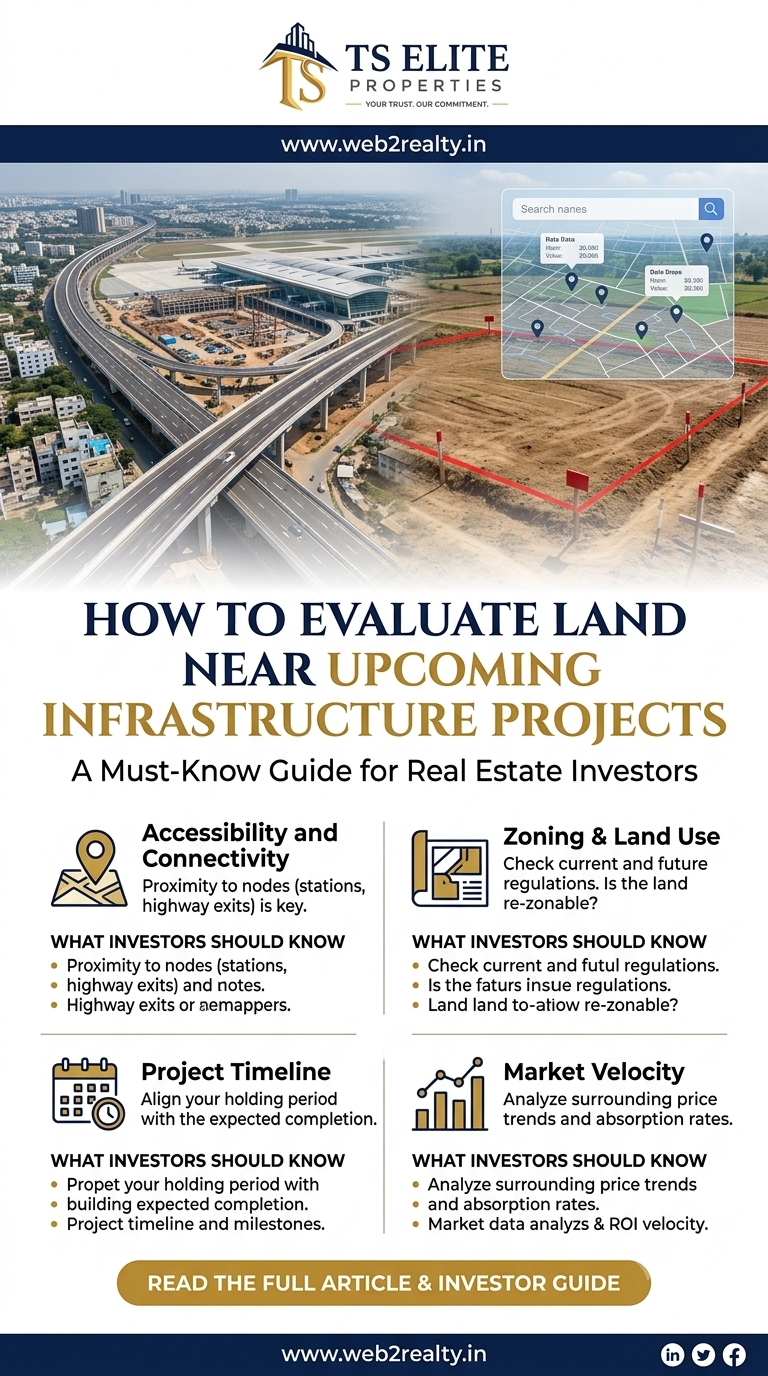
Where Should You Invest in Telangana Before Major Infrastructure Projects Are Completed?

Best open plots in Telangana for future investment

Where Should You Invest in Telangana Before Major Infrastructure Projects Are Completed?

Telangana is going through an important phase of infrastructure and economic development. Hyderabad continues to expand, while new roads, highways, industrial areas, regional connectivity projects, employment hubs, and planned urban developments are creating new opportunities across the state.

For land investors, this raises an important question:

Where should you invest in Telangana before major infrastructure projects are completed?

The answer is not simply about finding the cheapest land. A good investment location should have a combination of connectivity, infrastructure, employment opportunities, surrounding development, legal approvals, and realistic future demand.

For buyers searching for the best open plots in Telangana, understanding these factors can help identify locations that may have stronger long-term potential.

However, future growth is never guaranteed. Infrastructure projects can change timelines, and property markets can move differently from expectations. Therefore, investors should research carefully before making a purchase.

Why Invest Before Major Infrastructure Is Completed?

Real estate markets often respond to infrastructure development.

When a new road, highway, airport, industrial project, or employment hub is completed, accessibility can improve significantly. Businesses and residents may then find the surrounding areas more attractive.

Investing before completion can allow buyers to enter an emerging location before it becomes fully developed.

But there is a difference between early investment and speculation.

A good investor looks for projects that are officially planned or progressing, rather than relying on rumours.

This is especially important when searching for the best open plots in Telangana.

What Makes an Area Suitable for Future Investment?

Before selecting a location, consider six major factors:

  1. Infrastructure
  2. Connectivity
  3. Employment
  4. Industrial and commercial development
  5. Residential demand
  6. Legal approvals and documentation

When several of these factors come together, an area may have better potential for long-term real estate development.

Let’s look at some of the important areas and growth factors investors should monitor.

1. Areas Around Hyderabad’s Expanding Growth Corridors

Hyderabad is the primary economic and employment centre of Telangana.

As the city grows, development is gradually extending into surrounding areas. Locations outside the established city can offer more land availability and may provide opportunities for long-term investors.

Areas connected to major roads, employment hubs, industrial zones, and upcoming infrastructure deserve attention.

For investors searching for the best open plots in Telangana, Hyderabad’s surrounding growth corridors can be an important starting point.

However, each location should be evaluated independently.

Being close to Hyderabad does not automatically mean that a property will appreciate. Connectivity, development, approvals, and actual demand still matter.

2. South Hyderabad and Emerging Development Zones

South Hyderabad has attracted considerable attention because of its connectivity to major infrastructure and employment destinations.

Areas around the airport and other major development corridors can benefit from improving connectivity and economic activity.

Investors should look at the relationship between:

  • Existing roads
  • Airport connectivity
  • Employment centres
  • Industrial development
  • Residential projects
  • Commercial activity
  • Future infrastructure

Locations where several of these factors overlap may deserve closer examination.

For buyers looking for the best open plots in Telangana, South Hyderabad and its surrounding areas can be considered as part of a broader location comparison.

3. Shadnagar and the Southern Growth Belt

Shadnagar has become a familiar name among land and plot investors because of its connectivity to Hyderabad and its position within the southern growth region.

Its location along important transport routes makes it relevant when studying long-term development.

The area also benefits from its connection to employment and industrial activity in the wider region.

However, investors should not choose a plot only because the location is popular.

Before buying, check the specific project’s:

  • Layout approval
  • Land title
  • Road access
  • Development status
  • RERA registration, where applicable
  • Surrounding infrastructure
  • Developer credentials

For investors considering the best open plots in Telangana, comparing individual projects within Shadnagar can be more useful than simply comparing the town with another location.

4. Maheshwaram and Nearby Growth Areas

Maheshwaram and surrounding areas are also worth monitoring because of their connection to Hyderabad’s southern development belt.

The wider region has attracted attention from residential, industrial, and infrastructure perspectives.

For land investors, the important question is whether a particular property has good access to existing roads and future development.

Instead of relying on a broad location name, evaluate the exact distance from:

  • Major roads
  • Employment centres
  • Industrial zones
  • Schools
  • Hospitals
  • Commercial areas
  • Public transportation

This can help you distinguish between a strategically located plot and one that simply carries a popular location name.

5. Kadthal and Keshampet Growth Potential

Kadthal and Keshampet are among the locations that investors may consider when studying Hyderabad’s southern and southeastern expansion.

Their potential should be evaluated in the context of road connectivity, surrounding development, employment opportunities, and larger regional infrastructure.

These areas may appeal to investors looking for land with a longer investment horizon.

However, the level of development can vary considerably from one location to another.

Therefore, buyers searching for the best open plots in Telangana should inspect the actual property rather than relying only on maps or promotional material.

A site visit can reveal important details such as road access, nearby construction, surrounding communities, and existing infrastructure.

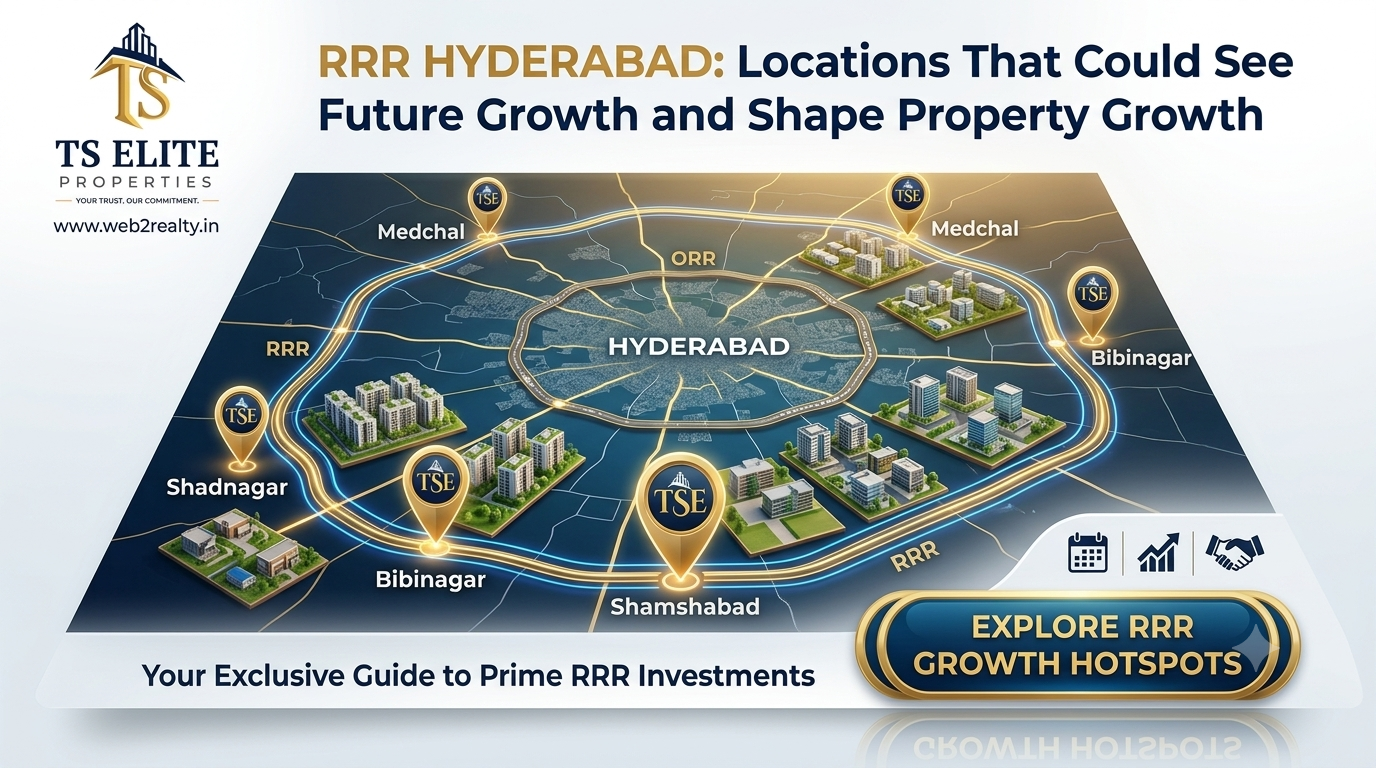
6. Areas Connected to the Regional Ring Road

Regional connectivity projects can influence the long-term development pattern of a region.

The proposed Regional Ring Road around Hyderabad has attracted significant attention because improved regional connectivity can influence the movement of people, goods, and businesses.

For investors, the key is to understand the exact alignment and surrounding development rather than simply purchasing land because it is described as “near RRR.”

When evaluating best open plots in Telangana near major infrastructure projects, verify the project’s official status and the property’s actual distance from the relevant corridor.

The closer a property is to a major project does not automatically make it a better investment.

7. Future City and Emerging Employment Centres

Large-scale planned development can create new employment and supporting infrastructure.

Hyderabad’s future development plans, including the proposed Bharat Future City, have increased interest in the southern part of the metropolitan region.

Such projects can potentially create demand for housing, commercial facilities, education, healthcare, hospitality, and other services.

For land investors, employment potential is particularly important.

People generally prefer to live within reasonable travel distance of their workplaces and essential services.

Therefore, investors searching for the best open plots in Telangana should study not only the proposed project itself but also the surrounding roads, existing settlements, and supporting infrastructure.

8. Industrial and Logistics Corridors

Industrial development can be a powerful driver of real estate demand.

When manufacturing companies, logistics parks, warehouses, pharmaceutical companies, and other businesses establish operations, they create employment and economic activity.

This can increase demand for nearby housing and commercial services.

Telangana’s strong pharmaceutical, life sciences, manufacturing, and technology sectors make industrial growth an important factor for land investors.

However, investors should distinguish between:

Announced project → Approved project → Construction → Operational project

Each stage carries a different level of certainty.

Do not treat an announcement as the same as a completed development.

9. Look for Infrastructure That Solves a Real Problem

Not every infrastructure project has the same impact on property values.

A useful question is:

What problem will this project solve?

For example, a new road that significantly reduces travel time between a residential area and an employment centre may have practical value.

Similarly, better connectivity to an airport, industrial zone, or major highway can make a location more accessible.

When considering the best open plots in Telangana, look for infrastructure that improves real-world accessibility rather than focusing only on project announcements.

10. Check Current Development Before Betting on the Future

Future development is important, but today’s reality matters too.

Before purchasing a plot, visit the location and check:

  • Road condition
  • Electricity availability
  • Water availability
  • Nearby houses
  • Existing communities
  • Schools and hospitals
  • Shops and services
  • Mobile and internet connectivity
  • Public transport
  • Construction activity

A location with reasonable existing infrastructure and strong future development prospects may offer a more balanced opportunity than a completely undeveloped location.

How to Identify the Best Open Plots in Telangana

The best property is not necessarily the one with the lowest price.

Instead, look for a combination of location + connectivity + approvals + infrastructure + demand.

Before purchasing, ask these questions:

Is the title clear?

Verify ownership and relevant land records.

Is the layout approved?

Check the applicable planning authority approval.

Is RERA registration applicable?

If applicable, verify the project’s RERA details.

Is there proper road access?

Do not rely only on a map. Visit the property.

Is the infrastructure project genuine?

Verify major project information through reliable official sources.

Is there actual demand?

Look at existing construction, nearby residents, businesses, and property activity.

Is the price reasonable?

Compare similar properties in the surrounding area rather than relying only on the seller’s quoted price.

A Simple Checklist for Land Investors

Before buying one of the best open plots in Telangana, use this checklist:

Factor

What to Check

Location

Distance from major growth centres

Connectivity

Highways, major roads and transport

Infrastructure

Existing and officially planned projects

Employment

Nearby industries and job centres

Development

Residential and commercial activity

Approvals

Applicable layout and planning permissions

Documentation

Title, ownership and encumbrance records

Demand

Actual buyer and residential activity

Price

Comparison with nearby properties

Future Potential

Long-term development prospects

This simple process can help investors make decisions based on evidence rather than excitement.

Common Mistakes to Avoid

1. Buying Only Because a Project Is “Coming Soon”

A future project may take longer than expected. Always verify its current status.

2. Choosing the Cheapest Plot

Price should be considered along with connectivity, documentation, demand, and location quality.

3. Ignoring Legal Verification

Never skip title and approval checks.

4. Buying Without a Site Visit

Online maps and brochures cannot show every detail. Visit the property personally.

5. Expecting Guaranteed Appreciation

No location can guarantee a particular return.

6. Investing With a Very Short Time Horizon

Emerging corridors may require patience because infrastructure and development take time.

Is It Better to Invest Before or After Infrastructure Completion?

Both strategies have advantages and disadvantages.

Before completion:
You may find more options and potentially enter at an earlier stage of development, but there can be greater uncertainty.

After completion:
The infrastructure and surrounding development are easier to evaluate, but prices may already reflect some of the area’s growth.

The better choice depends on your budget, risk tolerance, and investment horizon.

For long-term investors, early-stage opportunities can be worth studying but only after proper due diligence.

Final Thoughts

Telangana’s infrastructure and economic development are creating new possibilities for land investors.

Hyderabad’s expanding growth corridors, southern development belt, industrial zones, regional connectivity projects, and emerging employment centres are all worth monitoring.

But successful land investment is not about predicting the future perfectly.

It is about identifying locations with strong fundamentals and making decisions based on verified information.

If you are looking for the best open plots in Telangana, focus on location, connectivity, infrastructure, employment, surrounding development, approvals, documentation, and actual demand.

Most importantly, remember:

Buy based on fundamentals, not just future promises.

A well-researched investment decision today can put you in a stronger position as Telangana’s growth corridors develop over the coming years.

Looking for the Best Open Plots in Telangana?

Planning to invest in an open plot around Hyderabad or another emerging growth corridor in Telangana?

At Web2Realty, we help buyers explore plotted property opportunities and compare locations based on important factors such as connectivity, approvals, development, and investment potential.

If you are searching for the best open plots in Telangana, explore available properties, compare locations, and arrange a site visit before making your decision.

Your Trust. Our Commitment.

Contact Web2Realty today to explore suitable open-plot opportunities and take the next step toward your property investment.

Frequently Asked Questions

1. Where should I invest in Telangana before major infrastructure projects are completed?

Investors can study areas around Hyderabad’s expanding growth corridors, southern development belt, industrial zones, employment centres, and officially planned infrastructure corridors. However, every property should be evaluated individually.

2. What are the best open plots in Telangana for investment?

There is no single location that is best for every investor. The right plot depends on your budget, location preference, investment period, approvals, connectivity, documentation, and future demand.

3. Is it risky to buy land before infrastructure is completed?

There can be additional uncertainty because project timelines may change. Investors should verify the project’s official status and avoid making decisions based only on unconfirmed claims.

4. Why is infrastructure important for open-plot investment?

Infrastructure can improve accessibility and connect locations with employment centres, cities, industrial areas, and essential services. Better connectivity can support long-term development.

5. Should I invest near the Regional Ring Road?

RRR-related locations may deserve attention, but investors should verify the official alignment, project status, actual distance from the property, and surrounding development before investing.

6. Are South Hyderabad locations suitable for land investment?

Some southern areas have attracted attention because of infrastructure, employment, and planned development. However, suitability depends on the specific location, project approvals, connectivity, price, and market demand.

7. What should I check before buying an open plot?

Check the property’s title, ownership, applicable layout approvals, RERA registration where applicable, encumbrance details, survey information, road access, development permissions, and other relevant documents.

8. Is buying land before a major project completed guaranteed to generate profit?

No. Real estate returns are never guaranteed. Infrastructure delays, market conditions, demand, economic changes, and legal issues can affect property values.

9. How long should I hold an investment in an emerging corridor?

The appropriate holding period depends on the location and your financial goals. Emerging corridors generally require a longer-term approach because infrastructure and surrounding development may take years.

10. Should I visit the property before buying?

Yes. A site visit can help you evaluate road access, surrounding development, existing infrastructure, neighbourhood conditions, and the actual location of the property. Independent legal verification is also recommended before purchase.

Related Post

Why Telangana Is Becoming a Global Biotechnology Hub and What It Means for Real Estate Investors

Biotechnology growth in Hyderabad and Telangana

Why Telangana Is Becoming a Global Biotechnology Hub and What It Means for Real Estate Investors

Telangana is rapidly emerging as one of India’s important destinations for biotechnology, life sciences, pharmaceuticals, healthcare, and research. With Hyderabad at the centre of this growth, the state is attracting major investments, companies, researchers, skilled professionals, and entrepreneurs.

This development is creating opportunities not only for the biotechnology and healthcare sectors but also for the real estate market.

As new industries expand, the demand for homes, commercial spaces, offices, educational facilities, healthcare services, and well-connected residential communities is also expected to increase. For investors looking at long-term opportunities, this makes Hyderabad and its surrounding growth corridors worth watching.

For people considering land investment, HMDA & RERA approved plots in Hyderabad can be an attractive option because approvals and documentation are important factors when evaluating a property.

Let us understand why Telangana is becoming a biotechnology hub and how this transformation could influence real estate investment.

Telangana’s Growing Biotechnology and Life Sciences Ecosystem

Hyderabad already has a strong reputation in pharmaceuticals, healthcare, biotechnology, and life sciences. The city has developed an ecosystem that brings together pharmaceutical companies, research organisations, hospitals, universities, technology companies, and skilled professionals.

The presence of established industrial and research clusters gives Hyderabad an advantage when new biotechnology businesses look for locations to expand.

The growth is also supported by infrastructure, connectivity, educational institutions, and a large talent pool.

As more companies establish operations, the economic activity around these locations can increase. This can gradually influence surrounding areas and create new real estate demand.

This is one reason investors are paying attention to locations around Hyderabad’s major employment and infrastructure corridors.

Why Biotechnology Growth Matters to Real Estate

At first, biotechnology and real estate may appear to be two completely different industries. In reality, they are closely connected.

When a new technology, pharmaceutical, or life sciences company starts operations, it requires employees. Those employees need homes, transportation, schools, shops, restaurants, healthcare services, and other facilities.

Companies also require:

  • Office spaces
  • Research and laboratory facilities
  • Manufacturing facilities
  • Warehouses and logistics centres
  • Business parks
  • Hotels and serviced apartments
  • Retail and commercial spaces

As an ecosystem grows, the surrounding area can experience increasing demand for different types of properties.

This does not mean every location will automatically experience price appreciation. Investors still need to carefully evaluate infrastructure, approvals, connectivity, development plans, and demand before making a decision.

Hyderabad as a Major Life Sciences Destination

Hyderabad’s established pharmaceutical and life sciences ecosystem is one of the important reasons Telangana continues to attract investment.

The city has a combination of scientific talent, research institutions, pharmaceutical companies, hospitals, technology infrastructure, and supporting industries.

This creates a business environment where companies can collaborate and expand.

For real estate investors, the important point is the potential long-term effect of employment and infrastructure growth.

A location that gradually becomes connected to major employment centres may attract more residents and businesses over time.

Therefore, investors looking for HMDA & RERA approved plots in Hyderabad should not look only at today’s surroundings. They should also study the area’s future connectivity and development potential.

Infrastructure Can Strengthen the Real Estate Opportunity

Infrastructure plays a major role in real estate growth.

Roads, highways, airports, public transport, industrial corridors, educational institutions, and employment centres can improve accessibility to a location.

Hyderabad’s growth is increasingly moving beyond traditional city centres. Development corridors around the city are gaining attention because land availability can be better and future infrastructure can improve connectivity.

Projects and development initiatives associated with the city’s expanding growth corridors can influence how residential and commercial activity spreads.

For investors, the key question should be:

Will this location become more accessible and useful in the future?

Good connectivity can make it easier for people to travel to workplaces, schools, hospitals, shopping centres, and other important destinations.

Future City and Emerging Growth Corridors

Hyderabad’s future development is also being discussed in the context of large-scale planned growth areas, including the proposed Bharat Future City and other emerging development corridors.

The broader vision focuses on creating modern urban ecosystems supported by technology, healthcare, education, life sciences, business, and infrastructure.

If these planned developments progress successfully, surrounding areas could see greater economic activity.

However, investors should avoid making decisions based only on future announcements. A property should be evaluated based on its current legal status, accessibility, infrastructure, development activity, and realistic future potential.

This is particularly important when buying land.

Why Approvals Matter When Buying Plots

When purchasing a plot, legal and regulatory approvals should be among the first things an investor checks.

Buyers should understand whether the project has the required approvals and whether the property’s documentation is clear.

For eligible projects, HMDA approval can provide important planning and development assurance, while RERA registration can provide regulatory information and greater transparency for buyers.

That is why buyers searching online for HMDA & RERA approved plots in Hyderabad should verify the approval details instead of relying only on advertisements or sales claims.

Important documents and details may include:

  • HMDA approval, wherever applicable
  • RERA registration, wherever applicable
  • Layout approval documents
  • Clear title documents
  • Encumbrance details
  • Survey and land records
  • Road access
  • Development permissions
  • Sale agreement and registration documents

Buyers should independently verify the relevant documents and seek professional legal advice before purchasing.

Why Open Plots Can Be Considered for Long-Term Investment

Open plots offer flexibility compared with some other types of property.

An investor can potentially hold the land for several years, construct a house later, or use the property according to applicable regulations and development conditions.

Plots in developing locations may also attract investors who are looking for long-term opportunities rather than immediate rental income.

However, land investment requires patience.

Investors should not expect quick returns simply because a location is close to a major project. Real estate growth depends on several factors, including actual infrastructure development, employment growth, demand, connectivity, supply, and broader economic conditions.

Therefore, HMDA & RERA approved plots in Hyderabad should be evaluated as part of a complete investment strategy rather than as a guaranteed source of returns.

What Real Estate Investors Should Look For

If you are considering investing in land around Hyderabad’s emerging growth corridors, consider the following factors.

1. Location

Location remains one of the most important factors in real estate.

Check how close the property is to major roads, employment centres, educational institutions, healthcare facilities, and other infrastructure.

2. Approvals

Always verify the applicable approvals.

If you are specifically searching for HMDA & RERA approved plots in Hyderabad, ask the developer or seller for the relevant approval and registration details.

3. Connectivity

A property with good road connectivity can become more useful as nearby development increases.

Look at existing roads as well as officially planned infrastructure.

4. Surrounding Development

Check whether there are residential communities, commercial developments, schools, hospitals, industrial projects, or other facilities nearby.

Existing development can provide clues about the area’s current demand.

5. Developer Reputation

Research the developer’s track record.

Look at previous projects, customer feedback, documentation practices, and whether promised infrastructure has actually been delivered.

6. Legal Documentation

Never skip legal verification.

A property may look attractive from a location perspective, but unclear ownership or documentation problems can create serious issues later.

7. Long-Term Potential

Think beyond today’s price.

Ask whether the location has the infrastructure and economic drivers needed to support future development.

Biotechnology Growth Could Create a Wider Economic Impact

The impact of biotechnology development may extend beyond laboratories and pharmaceutical companies.

A growing life sciences ecosystem can support many other industries, including logistics, hospitality, education, healthcare, retail, transportation, food services, and professional services.

This wider economic activity can increase the need for housing and commercial infrastructure.

For Hyderabad, this could contribute to the continued expansion of the city’s real estate market.

However, investors should remember that development does not happen overnight. Large infrastructure and industrial projects can take years to become fully operational.

A long-term approach is therefore important when considering land investment.

Why Investors Should Think Beyond Central Hyderabad

Land availability inside established parts of Hyderabad can be limited and expensive.

As the city expands, investors often explore peripheral areas and emerging corridors where larger parcels of land and plotted developments may be available.

These areas can benefit from improving connectivity and future development, but they can also carry higher uncertainty.

This makes due diligence even more important.

Instead of simply asking, “How much will this plot increase in value?”, investors should ask:

  • Is the title clear?
  • Are the approvals genuine?
  • Is there proper road access?
  • What infrastructure exists today?
  • What development is actually planned?
  • Who is developing the surrounding area?
  • Is there real demand?
  • What is the holding period?

These questions can help investors make more informed decisions.

Final Thoughts

Telangana’s growing biotechnology and life sciences ecosystem is strengthening Hyderabad’s position as an important business and employment destination.

As industries expand, they can create demand for housing, commercial spaces, infrastructure, services, and supporting communities.

This creates an interesting connection between biotechnology growth and real estate.

For investors, emerging areas around Hyderabad may offer long-term opportunities, particularly where employment growth and infrastructure development come together.

If you are considering HMDA & RERA approved plots in Hyderabad, focus on location, approvals, connectivity, documentation, surrounding development, and long-term potential before making a decision.

Real estate investment should always be based on proper research and professional verification rather than promises of guaranteed returns.

Looking for HMDA & RERA Approved Plots in Hyderabad?

If you are planning to invest in a plot in Hyderabad or its emerging growth corridors, choosing a properly documented and approved property should be a priority.

Explore suitable HMDA & RERA approved plots in Hyderabad, compare locations, understand the available documentation, and make an informed investment decision.

Ready to explore your next plot investment?

Contact Web2Realty to learn about available plot opportunities, locations, approvals, pricing, and site-visit options.

Your Trust. Our Commitment.

Start your property search today and take the first step toward investing in Hyderabad’s growing real estate landscape.

Frequently Asked Questions

1. Why is Telangana becoming a biotechnology hub?

Telangana, particularly Hyderabad, has a strong combination of pharmaceutical companies, biotechnology businesses, healthcare institutions, research organisations, educational institutions, infrastructure, and skilled professionals. This ecosystem supports further investment and industry growth.

2. How can biotechnology growth affect Hyderabad real estate?

Biotechnology and life sciences companies create employment and business activity. This can increase demand for housing, offices, commercial spaces, retail, healthcare, hospitality, and other supporting infrastructure.

3. Are HMDA & RERA approved plots in Hyderabad a good investment?

Approved plots can provide greater confidence regarding planning and regulatory compliance, subject to the specific project’s approvals and applicable rules. However, no real estate investment guarantees returns. Buyers should conduct proper due diligence.

4. What should I check before buying a plot in Hyderabad?

Check the property’s title, applicable HMDA and RERA details, layout approval, encumbrance records, survey details, road access, development permissions, seller or developer credentials, and registration documents.

5. Is infrastructure important for plot investment?

Yes. Roads, highways, employment centres, public transport, educational institutions, healthcare facilities, and commercial development can influence the long-term attractiveness of a location.

6. Should I invest only because a property is near a future project?

No. A future project should be considered one factor among many. Investors should also examine current connectivity, approvals, legal documentation, surrounding development, actual project progress, and market demand.

7. Why are investors looking at areas outside central Hyderabad?

As Hyderabad expands, development is spreading toward peripheral and emerging corridors. These areas can offer different price points and larger land availability, although they may also carry greater development and timing risks.

8. How can I find suitable HMDA & RERA approved plots in Hyderabad?

Start by identifying your budget and preferred location. Then compare projects based on approvals, connectivity, documentation, developer reputation, infrastructure, and long-term potential. A professional property consultation and legal verification can help before purchase.

.

Related Post

RRR Hyderabad: Locations That Could See Future Growth and Shape Property Growth

RRR Hyderabad property growth locations

RRR Hyderabad: Locations That Could See Future Growth and Shape Property Growth

Hyderabad has grown far beyond its traditional city limits. Over the last few years, the development of the Outer Ring Road (ORR), major highways, IT corridors, industrial zones and airport connectivity has opened up new areas for residential and real estate development.

The next major infrastructure project that could influence Hyderabad’s wider growth is the Regional Ring Road (RRR).

The Hyderabad Regional Ring Road is planned as a major expressway around the wider Hyderabad region. According to the Hyderabad Metropolitan Development Authority (HMDA), the proposed RRR is approximately 354 km long and connects several National and State Highways around the Hyderabad Metropolitan Region. The Hyderabad Metropolitan Region has also been expanded up to the RRR, including a buffer of up to two kilometres outside the proposed road. (HMDA)

For property buyers and land investors, this creates an important question:

Which locations around RRR Hyderabad could see future development and stronger real estate activity?

While infrastructure development does not automatically guarantee property appreciation, areas with better connectivity, planned development, employment opportunities and supporting infrastructure can become more attractive over time.

In this article, we look at some of the locations and corridors that could play an important role in Hyderabad’s future property growth.

What Is RRR Hyderabad?

The Regional Ring Road is planned to create a large connectivity network around Hyderabad, linking important towns, highways and developing areas outside the existing ORR.

The RRR is being developed in northern and southern sections. Government documents identify locations including Sangareddy, Narsapur, Toopran, Gajwel, Bhongir, Choutuppal, Ibrahimpatnam, Shadnagar, Chevella and Shankarpally among the broader RRR connectivity network. (HMDA)

The project is important because it can improve movement between different parts of the Hyderabad region without requiring every trip to pass through the core city.

The government has also indicated that the region between the ORR and RRR could attract industries, services and transport-related development. (Telangana Government)

This makes the areas around the RRR worth watching from a long-term real estate perspective.

Why Could RRR Influence Property Growth?

Infrastructure is one of the major factors that can influence real estate demand.

When roads improve, travel becomes easier. When connectivity improves, businesses may find it easier to access different markets. Industrial and commercial development can create employment, which can eventually increase demand for housing, retail and other services.

RRR could therefore have a wider impact than simply reducing travel distances.

Potential benefits may include:

  • Better regional connectivity
  • Improved access to National and State Highways
  • Development of new growth corridors
  • Better connectivity between towns
  • Potential industrial and logistics development
  • Increased interest in land and plotted developments
  • Expansion of residential activity into emerging areas

However, investors should remember that infrastructure announcements alone should not be treated as a guarantee of returns.

1. Sangareddy and the Western Corridor

Sangareddy is already an important location on the western side of Hyderabad. Its connectivity with Hyderabad and other parts of Telangana makes it an area worth monitoring as the RRR network develops.

The northern RRR alignment starts from the Kondapur area on NH-65 in Sangareddy district and moves through locations including Narsapur, Gajwel and Bhongir before reaching Choutuppal. (HMDA)

The wider western corridor could benefit from improved movement of people and goods.

For property buyers, the important factor is not simply the RRR alignment but also the availability of roads, nearby employment zones, existing settlements and future infrastructure.

Plots with proper approvals and clear documentation may become increasingly relevant as these areas develop.

2. Toopran and the Northern Growth Corridor

Toopran is another location that could attract attention because of its position on the northern RRR corridor.

Its connection with major highways makes it strategically important for regional movement. As connectivity improves, areas around highway junctions and established towns can become attractive for commercial and residential development.

For investors considering land around this corridor, it is important to look beyond the headline RRR project.

Check the exact distance from the proposed road, existing access roads, surrounding development and approval status before making a purchase.

3. Gajwel and Surrounding Areas

Gajwel is another important town associated with the northern RRR corridor.

Improved regional connectivity can support economic activity around established towns. Over time, this can create demand for housing, commercial properties, warehouses and supporting services.

For long-term land investors, locations that combine existing population with future infrastructure can be more interesting than completely undeveloped areas.

4. Bhongir and the Eastern Side

Bhongir sits on an important eastern side of Hyderabad’s wider growth network.

The RRR northern section is planned to connect through Bhongir before reaching Choutuppal. (HMDA)

Bhongir’s location near major road connections makes it an area that investors can keep on their radar.

The potential opportunity here is not only residential development. Improved connectivity could support commercial activity, logistics and other businesses serving the surrounding region.

5. Choutuppal

Choutuppal is another important location on the RRR network.

Its position toward the east and its highway connectivity make it significant from a regional transportation perspective.

As Hyderabad expands outward, locations connected to major highways can potentially become important nodes for residential and commercial development.

Investors should nevertheless examine individual projects carefully rather than assuming that every property near an RRR corridor will perform equally.

6. Ibrahimpatnam and the Southern Corridor

The southern side of RRR is particularly interesting because of its relationship with Hyderabad’s expanding southern development zone.

Ibrahimpatnam and surrounding areas have the potential to benefit from improving connectivity and the wider development of southern Hyderabad.

The southern RRR alignment is planned to pass on the southern side of the Future City area, making this broader region one to watch. (HMDA)

The combination of regional road connectivity and planned economic development could make the southern corridor increasingly important over the long term.

7. Shadnagar

Shadnagar has already become a popular location for plotted development and land investment.

Its connectivity toward Bengaluru Highway, the airport region and southern Hyderabad has made it an important growth corridor.

The RRR network could further strengthen the strategic importance of the broader Shadnagar region by improving connections between different parts of the Hyderabad metropolitan area.

For buyers looking at HMDA plots in Hyderabad, Shadnagar and nearby growth areas can be considered as part of a wider location comparison.

But buyers should verify the exact approval, land-use status and project documentation before purchasing.

8. Chevella and Shankarpally

Chevella and Shankarpally are also important locations in the broader western and southern development network.

These areas have benefited from their connection to Hyderabad and surrounding growth corridors.

Future infrastructure can increase interest in land, but the quality of the surrounding development is equally important.

A good investment location should ideally have more than just a proposed road. Buyers should look for existing connectivity, social infrastructure, employment opportunities and a clear development pattern.

RRR and HMDA Plots in Hyderabad: What Buyers Should Check

The expansion of the Hyderabad Metropolitan Region up to the RRR is significant from a planning perspective. HMDA states that the expanded HMR covers 1,355 revenue villages across 104 mandals in 11 districts, with an area of about 10,472.723 square kilometres. (HMDA)

For people searching for HMDA plots in Hyderabad, this wider planning area can create more choices. But buyers should understand that being located within the broader HMDA region does not automatically mean that every plot has the same approval or development status.

Before purchasing, check:

1. HMDA Approval

Verify the actual approval status of the plotted development and do not rely only on advertising claims.

2. RERA Details

Where applicable, check the project’s RERA registration and compare the details with the official project documents.

3. Clear Title

Make sure the land title is properly examined and that there are no major legal or ownership issues.

4. Exact Location

Do not simply purchase because a seller says a project is “near RRR.”

Check the actual location and its distance from the proposed alignment.

5. Road Connectivity

A plot located close to a major road but without good local access may not offer the same convenience as a property connected to existing roads.

6. Future Development

Study the surrounding area. Look for existing villages, schools, hospitals, commercial activity, industrial projects and planned infrastructure.

Why Location Matters More Than Just the RRR Name

One common mistake among land investors is assuming that every property close to a major infrastructure project will automatically appreciate.

Real estate growth is more complicated.

Two plots may be located within the same broad RRR corridor but have very different prospects because of differences in:

  • Road access
  • Land use
  • Approvals
  • Nearby development
  • Water and electricity availability
  • Social infrastructure
  • Employment centres
  • Distance from major junctions
  • Future connectivity

Therefore, RRR should be viewed as one important factor, not the only factor.

RRR + Future City Could Strengthen Southern Hyderabad

The development of Bharat Future City is another major factor to watch in the southern part of the Hyderabad region.

Government planning documents describe Bharat Future City as a major greenfield development, with proposed road, transit and regional connectivity infrastructure. (Musi Telangana)

The Telangana government has also discussed improving connectivity between the ORR, RRR and Future City through radial roads. (Telangana Government)

In August 2026, the Telangana government reported that officials were reviewing road-network expansion involving ORR, RRR and radial roads, while also highlighting the importance of completing Radial Road-1 connecting Kongara Kalan and Future City. (Telangana Government)

This combination of projects could make the southern Hyderabad growth corridor particularly important to monitor over the coming years.

Should You Invest Near RRR Hyderabad?

RRR Hyderabad is certainly an infrastructure development worth watching, particularly for long-term real estate investors.

However, the right approach is to focus on location quality rather than speculation.

If you are considering land, compare multiple locations and evaluate the actual project documentation, approvals, connectivity and surrounding development.

For buyers searching for HMDA plots in Hyderabad, an approved and properly documented plotted development in a strategically located growth corridor may offer a more structured approach than purchasing land solely because it is advertised as “near RRR.”

Final Thoughts

The Regional Ring Road could become an important part of Hyderabad’s future growth story.

Locations such as Sangareddy, Toopran, Gajwel, Bhongir, Choutuppal, Ibrahimpatnam, Shadnagar, Chevella and Shankarpally are among the areas connected with the broader RRR development network and deserve attention from people studying long-term property opportunities. (HMDA)

But infrastructure is only one part of a successful real estate investment.

The best approach is to combine infrastructure analysis with location research, approval verification, title checks, road access and realistic investment objectives.

If you are exploring HMDA plots in Hyderabad, take the time to compare locations, verify documents and understand the development potential before making a decision.

Looking for HMDA Plots in Hyderabad?

Explore well-connected plotted developments in Hyderabad’s emerging growth corridors. Compare locations, approvals, connectivity and project details before you invest.

Contact Web2Realty to explore available open plots and find a location that matches your investment requirements.

Frequently Asked Questions

1. What is RRR Hyderabad?

RRR Hyderabad refers to the proposed Regional Ring Road around the wider Hyderabad Metropolitan Region. It is planned to improve regional connectivity by connecting important highways, towns and growth areas around Hyderabad.

2. Which areas are connected with Hyderabad RRR?

The broader RRR network includes locations such as Sangareddy, Narsapur, Toopran, Gajwel, Bhongir, Choutuppal, Ibrahimpatnam, Shadnagar, Chevella and Shankarpally. The exact alignment should be checked against official HMDA documents. (HMDA)

3. Will property prices definitely increase near RRR?

No. Infrastructure can improve the attractiveness of a location, but property appreciation is never guaranteed. Demand, approvals, access roads, employment, development and market conditions also matter.

4. Are HMDA plots in Hyderabad a good investment?

HMDA-approved plotted developments can be considered by buyers looking for regulated and planned development, but approval should always be independently verified. Buyers should also check title, RERA applicability, land use and project documentation.

5. What should I check before buying a plot near RRR?

Check the project’s approval status, title documents, RERA details where applicable, exact RRR distance, existing road access, land use, surrounding development and availability of basic infrastructure.

6. Why is Shadnagar important for land investment?

Shadnagar has strategic connectivity toward southern Hyderabad and major transport corridors. Its broader location within the southern growth network makes it an area that many land investors continue to monitor.

7. Is RRR better than ORR for property investment?

They serve different purposes. ORR is an established ring road around the city, while RRR is planned farther out to improve regional connectivity. Investors should evaluate individual locations rather than assuming one road will automatically produce better returns.

8. How can I find suitable HMDA plots in Hyderabad?

Start by identifying your preferred location, budget and investment period. Then compare approved projects, verify documents and examine the area’s existing and planned connectivity before making a decision.

Related Post

How to Evaluate Land Near Upcoming Infrastructure Projects: What Real Estate Investors Should Know

Plots in Hyderabad near upcoming infrastructure projects

How to Evaluate Land Near Upcoming Infrastructure Projects: What Real Estate Investors Should Know

Infrastructure development is one of the major factors that can influence the future of real estate. New highways, metro routes, airports, industrial parks, regional roads, business districts, and other large projects can improve connectivity and encourage development around them.

For real estate investors, this creates an important question: How can you identify land that may benefit from upcoming infrastructure projects?

Buying property near a proposed project can offer opportunities, but it also requires careful research. An infrastructure announcement alone does not guarantee higher property prices. Investors need to understand the project’s status, location, connectivity, surrounding development, legal approvals, and actual market demand.

This is particularly important for people looking for plots in Hyderabad, where several areas are experiencing infrastructure-led development and urban expansion.

Why Infrastructure Matters for Real Estate

Infrastructure can change the way people and businesses access a location.

A new road can reduce travel time. A new transport connection can make a developing area easier to reach. An industrial project can create employment. New commercial development can bring shops, offices, restaurants, and services.

As these changes happen, demand for nearby residential and commercial property may increase.

This is why plots in Hyderabad located in emerging growth areas can attract attention from investors who are willing to take a long-term view.

However, investors should remember that infrastructure is only one part of the investment decision.

The strongest opportunities are usually locations where infrastructure development is supported by population growth, employment, connectivity, amenities, and genuine demand.

1. Identify the Infrastructure Project

The first step is to understand exactly what infrastructure project is planned.

Do not rely only on advertisements, social media posts, or statements from property sellers.

Find out:

  • What is the project?
  • Where will it be located?
  • What areas will it connect?
  • What is its current status?
  • Has construction started?
  • Which authority or agency is responsible?
  • What is the expected development timeline?
  • How will the project affect nearby roads and communities?

Understanding these details can help you avoid making an investment based on an unverified future promise.

For buyers searching for plots in Hyderabad, this research can make a significant difference when comparing different locations.

2. Check the Distance From the Project

Being “near” an infrastructure project can mean very different things.

A property may be advertised as being close to a highway, airport, metro station, or business district, but the actual travel distance may be considerably different.

Always check the exact location on a reliable map and visit the site personally.

Consider:

  • Actual road distance
  • Travel time
  • Approach roads
  • Existing road quality
  • Alternative routes
  • Future access roads
  • Traffic conditions

A plot with convenient access to a major road can be more practical than a property that is technically closer but difficult to reach.

This is especially important when evaluating plots in Hyderabad in developing areas.

3. Study the Current Infrastructure

Do not focus only on what is planned for the future.

Look at what already exists today.

Check whether the area has:

  • Good roads
  • Electricity
  • Water supply
  • Public transport
  • Schools
  • Hospitals
  • Shopping facilities
  • Banks and ATMs
  • Restaurants
  • Fuel stations
  • Nearby residential communities

Existing infrastructure provides useful clues about the area’s current level of development.

Upcoming infrastructure can support future growth, but existing infrastructure provides a clearer picture of present-day livability.

4. Understand the Development Timeline

One common mistake investors make is assuming that every announced project will be completed quickly.

Large infrastructure projects can take years to plan, approve, construct, and become fully operational.

Therefore, investors should distinguish between:

Announced → Planned → Approved → Under Construction → Operational

These stages can have very different implications for an investment decision.

If a project is only at the announcement stage, investors should be more cautious about assigning future value to it.

If construction is progressing and related development is already visible, the investment story may be easier to evaluate.

5. Look for Employment Growth

Infrastructure becomes more valuable for real estate when it connects people to jobs.

An area may have an excellent road network, but if there is little economic activity around it, residential demand may remain limited.

Look for nearby:

  • IT and technology hubs
  • Industrial areas
  • Business districts
  • Logistics centers
  • Manufacturing facilities
  • Educational institutions
  • Healthcare centers
  • Commercial developments

Employment growth can create demand for housing.

This can eventually support demand for residential plots in Hyderabad, particularly in areas where workers want to live close to employment and transportation networks.

6. Study Population and Residential Growth

Another important indicator is whether people are actually moving into the area.

Look for signs of residential growth such as:

  • New apartment projects
  • Gated communities
  • Independent houses
  • Plotted developments
  • Retail stores
  • Schools
  • Restaurants
  • Local businesses

When more people begin living in an area, supporting infrastructure usually follows.

For investors, this can provide a stronger indication of demand than an infrastructure announcement alone.

7. Compare Land Prices With Nearby Areas

Before purchasing land, compare prices with similar properties in surrounding locations.

Do not assume that a plot is a good investment simply because it is close to a major infrastructure project.

Ask:

  • What are similar plots selling for?
  • How have prices changed in recent years?
  • Is the current asking price reasonable?
  • Are there comparable developments nearby?
  • Is the seller charging a large premium for future infrastructure?

Price comparison can help investors avoid overpaying.

When researching plots in Hyderabad, comparing multiple locations is often more useful than focusing on one project.

8. Verify Land Documents and Approvals

Infrastructure potential cannot compensate for problems with the property itself.

Before buying land, verify the documentation carefully.

Depending on the property and location, buyers may need to examine:

  • Ownership documents
  • Title records
  • Encumbrance information
  • Approved layout documents
  • Land-use details
  • Required development permissions
  • Survey information
  • Road access
  • Applicable zoning restrictions

Buyers should also confirm that the property being sold matches the documents.

It is advisable to consult qualified legal and property professionals before completing a transaction.

9. Check the Layout and Road Connectivity

For plotted developments, the internal layout is extremely important.

A property may be close to a major highway but still have poor internal connectivity.

Check:

  • Internal roads
  • Road width
  • Entry and exit points
  • Corner plots
  • Drainage
  • Electricity infrastructure
  • Water availability
  • Open spaces
  • Surrounding development

Good internal infrastructure can improve the practical value of a plotted development.

Therefore, investors should evaluate the entire project rather than only its location on a map.

10. Think About Long-Term Demand

Real estate investment should not be based entirely on short-term price movements.

Think about who may want the property in the future.

Potential future buyers could include:

  • Families
  • First-time homeowners
  • Developers
  • Businesses
  • Investors
  • Local residents

Ask yourself whether the location is likely to remain attractive after the infrastructure project is completed.

A strong location should ideally have multiple reasons for future demand.

This is one reason plots in Hyderabad can be attractive to long-term investors when they are located in areas supported by broader economic and infrastructure growth.

Infrastructure Does Not Guarantee Property Appreciation

It is important to keep expectations realistic.

A new highway, metro line, airport, or industrial project can support real estate growth, but appreciation is not automatic.

Property prices can also be affected by:

  • Interest rates
  • Economic conditions
  • Government policies
  • Supply and demand
  • Local development
  • Property regulations
  • Construction activity
  • Buyer sentiment

An investor should therefore avoid purchasing land simply because someone claims that prices will double after a particular project is completed.

Good investment decisions are based on evidence rather than promises.

Why Hyderabad Continues to Attract Land Investors

Hyderabad has expanded significantly beyond its traditional urban areas.

Growth in technology, business, infrastructure, education, healthcare, and residential development has created new areas of interest for property buyers.

As the city expands, locations on the outskirts and along emerging connectivity corridors can attract attention from investors looking for long-term opportunities.

This has increased interest in plots in Hyderabad, particularly where infrastructure development is combined with improving connectivity and surrounding economic activity.

However, every location needs to be evaluated independently.

A growing city can create opportunities, but not every plot will perform equally.

A Simple Checklist for Investors

Before buying land near an upcoming infrastructure project, ask these questions:

Location

  • Is the property easy to access?
  • What is the actual distance from the project?

Infrastructure

  • Is the project officially planned?
  • What stage is the project currently in?

Development

  • Are businesses and residential projects coming into the area?

Demand

  • Are people actually buying and living nearby?

Pricing

  • Is the asking price reasonable compared with nearby properties?

Documentation

  • Are ownership, title, layout, and approvals properly verified?

Future Potential

  • Will the location remain useful and attractive after the infrastructure project is completed?

If the answers are positive, the property may deserve further consideration.

Conclusion

Upcoming infrastructure projects can create new opportunities for real estate investors, but successful investing requires more than following headlines.

For anyone considering plots in Hyderabad, the best approach is to study the complete picture: infrastructure status, accessibility, employment growth, residential development, land prices, documentation, approvals, and long-term demand.

Do not buy simply because a property is advertised as being “near a future project.”

Instead, look for locations where real infrastructure, real connectivity, real development, and real demand are coming together.

With careful research and proper due diligence, investors can make more informed decisions and identify land opportunities that align with their long-term goals.

Looking for Plots in Hyderabad?

If you are planning to invest in land, explore locations with strong connectivity, future development potential, and proper documentation.

Web2Realty can help you explore open plot opportunities in Hyderabad and emerging growth corridors.

📞 Contact us today to discuss available plots, locations, pricing, approvals, and site-visit options.

Your Trust. Our Commitment.

Frequently Asked Questions

1. Is buying land near an upcoming infrastructure project a good investment?

It can be, provided the project is genuine, the location has good accessibility, and there is supporting economic and residential development. Investors should verify the project status before investing.

2. What infrastructure projects can influence land prices?

Highways, metro lines, airports, industrial corridors, business districts, regional roads, logistics hubs, and other major infrastructure can potentially influence nearby property demand and prices.

3. Should I buy plots in Hyderabad based only on future infrastructure?

No. Future infrastructure should be one factor in your decision. You should also consider current connectivity, approvals, documentation, surrounding development, pricing, and actual market demand.

4. How far should land be from an infrastructure project?

There is no universal ideal distance. The important factor is convenient and practical connectivity. A property with good access roads may be more valuable than one that is physically closer but poorly connected.

5. How can I verify an infrastructure project?

Check information from relevant government departments, planning authorities, official project announcements, and reliable sources. Do not depend only on information provided by property advertisements.

6. Why are plots in Hyderabad attracting investor interest?

Hyderabad’s urban expansion, employment opportunities, infrastructure development, and growth of residential areas have increased interest in land and plotted developments across emerging locations.

7. What documents should I check before buying land?

Buyers should verify ownership, title, encumbrance information, approved layout and applicable permissions, survey details, land use, and other relevant documents. Professional legal verification is recommended.

8. Can infrastructure increase land prices immediately?

Not necessarily. The effect may take time and depends on project progress, actual connectivity, economic activity, supply, demand, and the overall development of the surrounding area.

9. Is a cheaper plot always a better investment?

No. Price is only one factor. Location, documentation, accessibility, approvals, infrastructure, and future demand are equally important.

10. What is the best way to evaluate plots in Hyderabad?

Compare multiple locations, inspect the site, study infrastructure and development plans, compare market prices, verify all documents and approvals, and assess the property’s long-term demand before making a decision.

Related Post

How New Highways Create Real Estate Growth Corridors and Can Influence Land and Property Prices

Highway projects in Telangana

How New Highways Create Real Estate Growth Corridors and Can Influence Land and Property Prices

Telangana is experiencing rapid infrastructure development, and highways are playing an important role in shaping the state’s future growth. Better roads do more than reduce travel time. They can connect developing areas with cities, industrial zones, airports, business districts, and major employment centers.

As connectivity improves, previously less-developed locations can become more attractive for residential, commercial, and land investments. This is one of the reasons why investors are increasingly looking at Land in Telangana in areas located along important highways and emerging growth corridors.

New highways can influence where people live, where businesses operate, and where future development takes place. However, investors should understand that infrastructure alone does not guarantee price appreciation. Location, approvals, demand, surrounding development, and accessibility all matter.

Why Highways Matter for Real Estate Growth

Transportation is one of the most important factors influencing real estate development.

When a new highway is constructed or an existing road is expanded, connectivity between different locations becomes easier. A journey that previously took a long time may become faster and more convenient.

This improved accessibility can attract:

  • Residential projects
  • Open plot developments
  • Commercial properties
  • Warehouses and logistics parks
  • Industrial units
  • Educational institutions
  • Hospitals and healthcare facilities
  • Retail businesses
  • Hospitality projects

As more businesses and services enter an area, the demand for nearby land can increase.

For buyers looking at Land in Telangana, understanding upcoming road infrastructure can therefore be an important part of evaluating a location.

Highways Can Create New Growth Corridors

A growth corridor is an area that develops around important transportation routes and economic activity.

A highway can act as a backbone for development by connecting smaller towns and villages with larger cities. Over time, businesses may start looking for land along these routes because transportation becomes easier.

Once commercial activity begins, residential development often follows.

For example, a developing corridor may initially have open land and agricultural areas. After connectivity improves, developers may introduce plotted developments, housing projects, commercial spaces, and other facilities.

This can gradually transform the character of the area.

For investors, this transformation is important because early-stage locations may offer different pricing compared with established areas. But it is equally important to study whether the expected development is actually progressing.

How New Highways Can Influence Land Prices

One of the biggest questions for investors is whether highways can increase land prices.

The answer is that they can, but the impact varies from one location to another.

Several factors determine how strongly infrastructure affects prices.

1. Improved Accessibility

The first and most obvious benefit is better accessibility.

If a highway makes it easier to travel from a developing location to Hyderabad or another major city, the area may become more attractive to buyers.

Better accessibility can increase interest in residential plots and other forms of property.

This is particularly relevant when the road connects the location to employment hubs, industrial areas, airports, major commercial districts, or other important infrastructure.

2. Increased Commercial Activity

Highways can make transportation easier for businesses.

Commercial establishments may prefer locations with good road access because customers, employees, suppliers, and goods can reach them more easily.

As businesses move into a corridor, demand for commercial land can increase.

This can also create demand for supporting services such as restaurants, fuel stations, retail stores, hotels, warehouses, and offices.

As economic activity grows, nearby Land in Telangana may attract greater attention from investors.

3. Growth in Residential Demand

People generally prefer living in locations that offer convenient access to workplaces, schools, hospitals, shopping areas, and transportation networks.

When a highway improves access to these facilities, residential demand may gradually increase.

Developers may begin launching housing projects or plotted communities in areas where they expect future demand.

This can create a cycle:

Better Roads → Better Connectivity → More Development → More Employment & Services → Higher Housing Demand

The process may take several years, but infrastructure can be one of the factors supporting long-term growth.

Highways and Open Plot Investments

Open plots are often considered by investors who want to participate in the future development of a location.

However, buying a plot near a highway requires more than simply checking the distance from the road.

Investors should examine the exact location, road access, surrounding development, zoning, approvals, and future plans.

A plot that is technically close to a highway may not benefit significantly if there is no convenient access road.

On the other hand, a location with good connectivity to a major highway and nearby development may have stronger long-term potential.

This is why buyers searching for Land in Telangana should evaluate the complete infrastructure picture rather than focusing on a single highway.

Highway Development Can Attract Businesses and Industries

Highways are particularly important for industrial and logistics development.

Manufacturing companies, warehouses, distribution centers, and logistics businesses depend heavily on transportation.

Good highway connectivity can reduce travel time and improve the movement of goods.

When industrial or logistics activity develops in a region, employment opportunities may also increase.

Workers and businesses then create demand for housing, retail, schools, restaurants, and other services.

This can turn an infrastructure corridor into a broader economic growth corridor.

For Telangana, the combination of highways, industrial development, urban expansion, and planned infrastructure can create new opportunities across several regions.

The Importance of Employment Centers

A highway is most valuable to real estate when it connects people to places where economic activity is happening.

For example, a road connecting a developing location with an employment hub may have a stronger influence on residential demand than a road with limited economic activity around it.

Therefore, when evaluating Land in Telangana, investors should ask:

  • Where does the highway connect?
  • Which cities or towns can be reached more easily?
  • Are employment centers nearby?
  • Are industrial projects planned?
  • Are commercial developments increasing?
  • Is residential construction taking place?
  • Are schools and hospitals being developed?
  • Are public transport options improving?

The answers can help provide a more complete picture of the area’s potential.

Why Infrastructure Timing Matters

Infrastructure development does not always produce immediate real estate appreciation.

There can be several stages.

First, a project may be announced.

Second, planning and land acquisition may take place.

Third, construction may begin.

Finally, the road may become operational and surrounding development may accelerate.

Property prices can behave differently during each stage.

Investors should therefore avoid making decisions based only on announcements. It is better to verify the current status of a project and understand what infrastructure is already operational.

Do Highways Always Increase Property Prices?

No.

A new highway does not automatically mean that every nearby property will become more valuable.

Several factors can limit the impact.

These include:

  • Poor internal roads
  • Lack of public transport
  • Limited employment opportunities
  • Lack of nearby amenities
  • Unclear property documentation
  • Unapproved layouts
  • Environmental or zoning restrictions
  • Low buyer demand
  • Distance from actual development activity

In some cases, properties located too close to a busy highway may also face issues such as traffic noise, dust, and safety concerns.

Therefore, the goal should not simply be to buy the property closest to a highway.

The goal should be to identify a well-connected location with genuine development potential.

What Should You Check Before Buying Land in Telangana?

Before purchasing Land in Telangana, investors should carry out proper due diligence.

Check the Location

Study the exact location rather than relying only on the project name or nearby landmark.

Check the approach road, surrounding developments, nearby towns, and accessibility.

Verify Approvals

Make sure the layout and development have the required approvals from the relevant authorities.

Never depend only on advertisements or verbal assurances.

Check the Title

Property documentation is extremely important.

Buyers should verify ownership records and ensure there are no known legal disputes or title issues.

Study the Master Plan

If possible, understand the area’s zoning and future development plans.

This can help you understand whether the surrounding land is likely to remain residential, commercial, agricultural, or be used for other purposes.

Look at Existing Infrastructure

Do not invest based only on promised infrastructure.

Check what is already available.

Look at roads, electricity, water supply, drainage, public transport, schools, hospitals, and shopping facilities.

Compare Prices

Compare the property’s price with similar properties in nearby locations.

A developing corridor can offer potential, but investors should still avoid paying an unreasonable premium based purely on future expectations.

The Future of Land Investment in Telangana

Telangana’s continued infrastructure development is creating new areas of interest for real estate investors.

Highways, regional connectivity, industrial development, urban expansion, and other infrastructure projects can gradually reshape the property landscape.

As connectivity improves, some locations that were once considered peripheral may become more accessible to major cities and economic centers.

This is why Land in Telangana continues to attract attention from both individual investors and real estate developers.

However, successful property investment requires patience and research.

The best opportunity is not necessarily the location with the biggest highway announcement. It is often the location where connectivity, development, demand, approvals, and affordability come together.

Conclusion

New highways can play an important role in creating real estate growth corridors.

They can improve connectivity, attract businesses, support industrial development, increase residential demand, and make developing locations more accessible.

Over time, these factors can influence land and property prices.

For anyone considering Land in Telangana, infrastructure should be one of the key factors in the research process. But it should always be considered alongside property documentation, approvals, location, development activity, accessibility, and actual market demand.

A highway may provide the foundation for growth, but sustainable real estate growth depends on the entire ecosystem developing around it.

If you are considering buying land for investment, take time to understand the location today and its realistic development potential for tomorrow.

Looking for Land in Telangana?

Explore promising locations, compare connectivity and development potential, and choose your property carefully.

Contact Web2Realty today to learn more about open plots and land investment opportunities in Telangana and Hyderabad’s emerging growth corridors.

Your Trust. Our Commitment.

Frequently Asked Questions

1. How do new highways affect real estate prices?

New highways can improve connectivity and accessibility, which may increase demand for residential and commercial properties. However, the impact depends on factors such as surrounding development, employment opportunities, approvals, and buyer demand.

2. Is buying land near a highway a good investment?

It can be a good investment when the location has strong connectivity, proper approvals, genuine development activity, and long-term demand. Buyers should conduct proper due diligence before investing.

3. Can highways create new real estate growth corridors?

Yes. Improved road connectivity can encourage commercial, residential, industrial, and logistics development. Over time, these activities can create broader growth corridors.

4. Does every property near a highway increase in value?

No. Proximity alone does not guarantee appreciation. Access roads, zoning, documentation, infrastructure, surrounding development, and market demand are also important.

5. What should I check before buying Land in Telangana?

Check the property’s title, approvals, layout, location, road access, zoning, surrounding infrastructure, development plans, and prevailing market prices before making a purchase.

6. Why is connectivity important for land investment?

Good connectivity can make a location easier to access for residents, businesses, and investors. This can support future demand when combined with employment and infrastructure development.

7. Should I invest based only on a proposed highway?

No. It is better to verify the official status of the project and consider existing infrastructure and actual development activity. Do not make an investment decision based only on an announcement.

8. Can industrial development increase land demand?

Yes. Industrial and logistics projects can create employment and supporting commercial activity. This may increase demand for residential and commercial properties in surrounding areas.

9. Is Land in Telangana suitable for long-term investment?

Land can be considered for long-term investment, but suitability depends on the exact location, price, title, approvals, infrastructure, and future demand. Every property should be evaluated individually.

10. How can I find the right land investment opportunity?

Start by identifying locations with good connectivity and genuine development potential. Then compare prices, verify documents and approvals, inspect the site, and seek professional advice before making a decision.

Related Post

10 Things to Check Before Buying Land Near RRR and How Connectivity Could Shape Property Growth

Land Near RRR Hyderabad

10 Things to Check Before Buying Land Near RRR and How Connectivity Could Shape Property Growth

The development of the Regional Ring Road (RRR) is creating growing interest in land and property around Hyderabad and the surrounding districts. As connectivity improves, areas located around major road corridors can attract new businesses, industries, housing developments, and supporting infrastructure.

For investors, this has created strong interest in Land Near RRR. However, buying land only because a seller says it is “RRR-facing” or “close to RRR” can be risky. The actual location, access to interchanges, land title, approvals, road connectivity, and future development plans all matter.

The RRR is planned as a large access-controlled regional highway around Hyderabad, connecting important highways and growth areas outside the existing Outer Ring Road. The Hyderabad Metropolitan Development Authority has also expanded the Hyderabad Metropolitan Region toward the RRR, covering a buffer area of up to 2 km outside the proposed RRR corridor. (HMDA)

So, if you are considering Land Near RRR, it is important to look beyond the road itself and understand the complete development picture.

Why Is Land Near RRR Getting Attention?

Infrastructure has always played an important role in real estate growth.

When a new major road improves access between cities, towns, industrial areas, and employment centres, surrounding locations can become more attractive for development. The Telangana government has described the RRR as part of a broader economic growth corridor, with the potential for industrial, manufacturing, agricultural, and supporting developments around the highway. (Tender Monitoring Division)

Better connectivity can also reduce travel time and improve access to existing highways and regional centres.

However, infrastructure development does not automatically mean every plot will appreciate. The quality of the land and its actual connectivity are equally important.

Before buying Land Near RRR, consider these 10 important checks.

1. Check the Exact Location

The first step is to identify exactly where the land is located.

Do not depend only on statements such as “RRR is nearby.” Ask for the:

  • Village name
  • Mandal and district
  • Survey number
  • Plot number
  • Google Maps location
  • Layout location
  • Distance from the proposed RRR
  • Distance from the nearest interchange

A plot may be marketed as being near RRR while actually being several kilometres away from a useful access point.

For Land Near RRR, exact location is more important than a promotional description.

2. Verify the RRR Alignment

RRR is a large infrastructure project, and buyers should verify the latest official information rather than depending on old maps or brochures.

Government information indicates that the northern part of the RRR has reached an advanced planning stage, with the DPR finalised, while different portions of the overall project have different stages of development. (Digital Sansad)

This means buyers should understand which section of the RRR their proposed land relates to.

Before investing, compare the property’s survey number and location with official project information and applicable land acquisition notifications.

This is one of the most important checks when buying Land Near RRR.

3. Find the Nearest Interchange

This is often overlooked.

RRR is planned as an access-controlled highway. That means vehicles cannot simply enter the highway from every piece of adjoining land.

Instead, access is provided through designated interchanges.

Therefore, a plot that is physically close to RRR but far from an interchange may not receive the same connectivity advantage as a plot located near a major access point.

When evaluating Land Near RRR, calculate the actual road distance to the nearest confirmed interchange rather than simply measuring the distance “as the crow flies.”

4. Check Land Title and Ownership

Clear title should always be a priority when purchasing land.

Ask for the relevant ownership documents and verify the complete title history with a qualified property lawyer.

Important checks may include:

  • Previous sale deeds
  • Current ownership
  • Encumbrance Certificate
  • Revenue records
  • Survey details
  • Land classification
  • Pending disputes
  • Prohibited-property status
  • Any government acquisition notifications

A good location cannot compensate for a problematic title.

If you are purchasing Land Near RRR as a long-term investment, legal due diligence should come before making a major financial commitment.

5. Verify HMDA, DTCP and Layout Approvals

Another major consideration is the approval status of the layout.

Depending on the location and applicable jurisdiction, buyers should verify whether the project has the required approval from the relevant planning authority.

Do not accept statements such as:

“Approval is coming soon.”

“LRS will be done later.”

“Everyone is buying here.”

Instead, ask for the actual approval documents and verify them through the appropriate authority.

HMDA‘s current information shows that its metropolitan jurisdiction has been extended toward the RRR, so buyers should pay attention to the applicable planning authority for the specific location. (HMDA)

6. Check Whether the Land Is Affected by Acquisition

This is especially important for property being promoted using the RRR name.

A proposed highway requires land acquisition and designated right-of-way areas. A buyer should confirm that the particular survey number is not affected by the project.

Ask the seller or developer for documentary evidence.

Do not rely only on a map, brochure, or verbal promise.

Before purchasing Land Near RRR, verify the survey number against applicable government notifications and acquisition records.

This simple step can help avoid serious financial problems later.

7. Look at Existing Road Connectivity

RRR is important, but it should not be the only road you consider.

Study the existing roads connecting the property to nearby towns and highways.

Ask:

  • Is there an all-weather approach road?
  • Is the internal road properly developed?
  • What is the road width?
  • How far is the nearest major highway?
  • Is public transport available?
  • Can residents easily reach schools and hospitals?
  • Are nearby towns accessible?

Good Land Near RRR should ideally benefit from both present connectivity and future infrastructure.

A property that has no useful access today may take much longer to become attractive, even if a major road is planned nearby.

8. Study Future Development Around the Corridor

Roads can encourage more than residential development.

Improved connectivity can support:

  • Warehousing
  • Logistics
  • Manufacturing
  • Commercial centres
  • Educational institutions
  • Healthcare facilities
  • Retail businesses
  • Residential communities
  • Hospitality
  • Supporting services

The Telangana government’s planning documents have discussed the RRR as part of a wider economic corridor involving economic nodes and supporting infrastructure. (Tender Monitoring Division)

This creates an important investment question:

What could bring people and businesses to this location in the future?

When evaluating Land Near RRR, study nearby industrial areas, employment centres, highways, towns, proposed infrastructure, and existing development instead of focusing only on the RRR.

9. Compare Current Price With Nearby Locations

Do not assume that every property near RRR is automatically a good investment.

Compare the price with similar properties in surrounding villages and towns.

Consider:

  • Price per square yard
  • Plot size
  • Road width
  • Approval status
  • Distance from the interchange
  • Existing development
  • Water and electricity availability
  • Nearby infrastructure
  • Resale demand

A lower-priced plot may offer better value if it has strong fundamentals.

On the other hand, a very expensive plot may already include most of the expected future appreciation.

The goal should be to identify a reasonable entry price rather than simply buying because the property is marketed as Land Near RRR.

10. Think About Your Investment Timeline

Land is generally a long-term investment.

RRR-related development can take time because large infrastructure projects involve planning, land acquisition, approvals, construction, and connectivity improvements.

Therefore, ask yourself:

Am I buying for 2 years, 5 years, or 10 years?

Short-term investors may have different requirements from buyers planning to hold land for several years.

If your goal is long-term wealth creation, focus on location quality, title, approvals, connectivity, development potential, and demand.

Do not make an investment decision based only on the expectation that prices will increase quickly.

How Connectivity Could Shape Property Growth

Connectivity is one of the strongest factors influencing real estate development.

When roads become better connected, businesses can move people and goods more efficiently. Employees can travel more easily, logistics becomes more convenient, and new commercial activity can develop around important nodes.

This can gradually increase demand for land.

The RRR is particularly significant because it is designed to connect regional areas outside Hyderabad’s existing urban road network. The broader planning vision includes connections with national and state highways as well as economic development around the corridor. (Tender Monitoring Division)

However, property growth usually happens in stages.

Stage 1: Infrastructure Announcement

When a major project is announced, investor interest often increases.

Stage 2: Planning and Land Development

As alignments, roads, approvals, and other infrastructure become clearer, developers and investors start studying specific locations.

Stage 3: Physical Infrastructure

When roads and connectivity improve, actual businesses and residents may begin moving into the surrounding areas.

Stage 4: Commercial and Residential Growth

Once employment, services, and infrastructure develop, demand for residential plots, homes, commercial properties, and other real estate can increase.

This is why buying Land Near RRR requires patience and careful location selection.

Is Land Near RRR a Good Investment?

It can be a promising long-term opportunity, but there is no guarantee of appreciation.

The strongest opportunities are generally more likely to be found where several factors come together:

Good location + clear title + proper approvals + strong existing roads + access to major interchanges + future development potential.

The RRR alone should not be considered a reason to buy.

Instead, think about the complete ecosystem developing around the road.

A plot near a future interchange, for example, may have a different investment profile from a plot that is technically close to the RRR but has poor road access.

Final Checklist Before Buying Land Near RRR

Before paying an advance, make sure you have checked:

☑ Exact survey number and location
☑ RRR alignment and project status
☑ Nearest confirmed interchange
☑ Land acquisition status
☑ Clear title and ownership history
☑ Encumbrance Certificate
☑ Revenue records
HMDA/DTCP approval, where applicable
☑ Layout and land-use details
☑ Road connectivity
☑ Water and electricity availability
☑ Nearby infrastructure
☑ Current market price
☑ Future development potential
☑ Legal verification by a qualified professional

Taking these steps can help you make a more informed decision and avoid buying land based purely on marketing claims.

Conclusion

The development of the Regional Ring Road could play an important role in shaping the future growth of areas around Hyderabad and Telangana.

For investors, Land Near RRR can be an interesting opportunity because improved regional connectivity may encourage residential, commercial, logistics, and industrial development.

But smart investing requires more than following an infrastructure story.

Always verify the exact location, road access, interchange distance, title, approvals, acquisition status, current price, and future development potential before investing.

If you are looking for Land Near RRR, choose a location based on facts and long-term fundamentals rather than promises of quick returns.

Looking for Land Near RRR?

Explore suitable open-plot opportunities in and around Hyderabad’s emerging growth corridors with a focus on location, approvals, connectivity, and long-term investment potential.

Contact us at www.web2realty.in  today to discuss available plot locations, pricing, approvals, and site-visit options.

Your investment decision deserves clarity, proper verification, and the right location. Start your land search with confidence.

Frequently Asked Questions

1. What does Land Near RRR mean?

Land Near RRR generally refers to plots or properties located close to the proposed Regional Ring Road corridor around Hyderabad. However, buyers should verify the exact location and distance from the RRR and its designated interchanges.

2. Is buying Land Near RRR a good investment?

It can be a potential long-term investment when the property has clear title, proper approvals, good road connectivity, and access to future development areas. However, infrastructure does not guarantee property appreciation.

3. Why is connectivity important for land investment?

Better connectivity can make an area more accessible to residents, businesses, industries, and logistics operators. Over time, this can support increased development and property demand.

4. Should I buy land directly beside RRR?

Not necessarily. Since the RRR is planned as an access-controlled highway, proximity alone does not guarantee easy access. The distance to an authorised interchange and the quality of connecting roads are more important factors.

5. What documents should I check before buying Land Near RRR?

You should verify title documents, ownership history, Encumbrance Certificate, revenue records, survey details, applicable layout approvals, land-use information, and any acquisition notifications. A qualified property lawyer should conduct legal due diligence.

6. How can I verify whether my land is affected by RRR acquisition?

Use the property’s exact survey number and compare it with applicable government acquisition notifications and official project records. Do not depend solely on a developer’s map or verbal assurance.

7. Will RRR increase land prices?

Improved connectivity can create conditions for future development and may increase demand in suitable locations. However, price appreciation depends on several factors, including location, infrastructure, approvals, employment, demand, and overall market conditions.

8. What is more important: being close to RRR or being close to an interchange?

Being close to a useful, designated interchange can be more important than simply being close to the highway. An access-controlled road does not provide direct entry from every adjoining property.

9. What should I check besides RRR connectivity?

Check existing roads, highways, nearby towns, schools, hospitals, employment centres, industrial development, utilities, layout approvals, title, land acquisition status, and resale demand.

10. How long should I hold Land Near RRR?

The appropriate holding period depends on your financial goals and the development stage of the particular location. Buyers considering infrastructure-led investment should generally evaluate the opportunity with a long-term perspective rather than expecting immediate returns.

Related Post

Why Shadnagar & Maheshwaram Are Hotspots for Land Investment

Land for investment near Hyderabad

Why Shadnagar & Maheshwaram Are Hotspots for Land Investment

Hyderabad has become one of the most active real estate markets in South India. While established areas continue to attract buyers, many investors are now looking at locations on the outskirts of the city for better long-term opportunities.

Among the emerging locations, Shadnagar and Maheshwaram have gained considerable attention. Their strategic location, improving connectivity, proximity to major employment zones and expanding infrastructure are making them interesting options for people looking for land for investment.

Land investment is generally a long-term decision. Unlike apartments, land does not require regular maintenance in the same way, and investors have greater flexibility regarding its future use, subject to applicable planning rules and approvals.

But what makes Shadnagar and Maheshwaram particularly attractive? Let’s explore the reasons behind their growing popularity.

Why Consider Land for Investment Near Hyderabad?

Hyderabad’s growth is gradually moving beyond the traditional city limits. As the city expands, new residential communities, industrial areas, logistics hubs, educational institutions and commercial developments are appearing in peripheral locations.

This outward growth is creating new opportunities for land for investment.

Investors often look for locations where infrastructure development is happening alongside employment growth. Roads, highways, airports, industrial corridors and business hubs can influence future demand for land and property.

However, infrastructure alone should never be considered a guarantee of returns. Buyers should also examine approvals, title documents, road access, zoning and actual development activity before purchasing.

Shadnagar: A Growing Land Investment Destination

Shadnagar has emerged as one of the better-known growth corridors in the southern part of the Hyderabad region.

Its location along the Hyderabad–Bengaluru highway gives it an important connectivity advantage. The area is also connected to Hyderabad’s airport and several surrounding towns.

As Hyderabad continues to expand towards the south, Shadnagar is increasingly being considered by buyers searching for relatively affordable land for investment outside the established city areas.

Connectivity Is a Major Advantage

Connectivity plays a major role in land value.

Shadnagar benefits from its position along the NH-44 corridor, providing road connectivity towards Hyderabad as well as Bengaluru and other southern destinations.

The presence of the railway network is another advantage for the wider Shadnagar region.

For an investor, good connectivity can make a location useful for both residential and commercial development in the future.

Proximity to Hyderabad Airport

Rajiv Gandhi International Airport is one of the major economic assets of Hyderabad.

Shadnagar’s location within the broader southern growth corridor gives it access to the airport and surrounding development zones.

The airport supports several types of economic activity, including logistics, hospitality, transportation, warehousing and business services.

As these sectors grow, surrounding areas can experience increased demand for housing and commercial property.

This is one reason why land for investment in Shadnagar continues to attract attention from long-term investors.

Maheshwaram: A Key Southern Growth Corridor

Maheshwaram is another location that has gained importance because of Hyderabad’s southward expansion.

Its proximity to the airport, industrial areas and major infrastructure corridors has made it an area worth watching for property investors.

Maheshwaram is also positioned within the wider development influence of southern Hyderabad, where several infrastructure and employment initiatives are being planned or developed.

For investors considering land for investment, Maheshwaram can be particularly interesting because of its combination of location and future development potential.

Future City and the Southern Hyderabad Story

One of the major developments strengthening the southern Hyderabad region is Bharat Future City.

The Telangana government is developing Bharat Future City as a planned urban development focused on areas such as technology, innovation, sustainability and economic growth.

The government has also highlighted major technology investments in the Future City region, including large data-centre developments.

These investments can create employment and supporting economic activity.

When large businesses establish operations in an emerging area, the impact can extend beyond the project itself.

Employees need homes. Businesses require offices and services. Retailers, restaurants, schools, healthcare facilities, logistics companies and other supporting businesses may follow.

This creates a broader ecosystem that can influence real estate demand.

For people considering land for investment, the development of southern Hyderabad is therefore an important trend to monitor.

Shadnagar vs Maheshwaram: Which Is Better?

Both locations have their own advantages.

Shadnagar may appeal to investors looking for a location with strong highway connectivity and an established growth story.

Maheshwaram may appeal to investors who want to be closer to the airport, Future City and the southern development corridor.

The better choice depends on the investor’s budget, investment period and intended use.

Instead of asking which location is universally better, investors should ask:

  • How much can I invest?
  • How long can I hold the property?
  • Is the property approved?
  • How accessible is the plot?
  • What infrastructure is already available?
  • What development is planned nearby?
  • Is the title clear?
  • What is the surrounding development like?

Answering these questions can help investors make a more informed decision.

Infrastructure Can Support Long-Term Growth

Infrastructure is one of the biggest factors behind the popularity of emerging real estate locations.

Roads, highways, ring roads, airport connectivity and public transport can reduce travel time and make previously distant locations easier to access.

The Regional Ring Road (RRR) is another major infrastructure project being watched closely in the Hyderabad region.

According to the Hyderabad Metropolitan Development Authority, the RRR is planned as a major regional connectivity corridor around Hyderabad.

Such infrastructure can support the movement of people and goods and potentially encourage development along connected corridors.

For land for investment, the key is to study exactly how a property connects to these projects rather than relying only on a project’s name in promotional material.

Why Land Can Be Attractive for Long-Term Investors

Land offers a different investment proposition compared with apartments and other built properties.

A plot does not become outdated in the same way as an older building. Depending on the location and applicable regulations, the owner may have flexibility to develop or sell it later.

Land can also be easier to understand for first-time investors because the investment is focused on the underlying property rather than construction quality, apartment maintenance or building amenities.

However, land investment also comes with risks.

A plot with poor access, unclear ownership or inadequate approvals can become difficult to sell.

Therefore, land for investment should always be purchased after proper due diligence.

What Should You Check Before Buying Land?

1. Verify the Title

Always check the ownership and title documents.

A qualified property lawyer should review the documents before you complete the transaction.

2. Check Layout Approval

Make sure the layout has the required approval from the relevant authority.

Do not rely only on verbal statements from a seller or agent.

3. Confirm Road Access

Check whether the plot has proper legal access to a public road.

A physically accessible plot is not necessarily the same as a plot with legally documented access.

4. Check the Location

Visit the property personally.

Look at the roads, surrounding development, nearby buildings, electricity, water availability and other basic infrastructure.

5. Study Future Development

Research upcoming infrastructure and development projects in the surrounding region.

But remember that proposed projects can change or face delays.

6. Understand Your Investment Horizon

If you are buying land for investment, think about how long you are willing to hold it.

Land investment is generally better suited to investors who can take a longer-term view rather than expecting quick profits.

Why Early Investors Are Watching These Corridors

Shadnagar and Maheshwaram are no longer viewed simply as distant outskirts.

The development of southern Hyderabad is creating greater attention around these corridors.

Improved connectivity, airport access, Future City-related development, employment opportunities and expanding urban activity are all contributing to the region’s growing importance.

For investors, this creates an opportunity to research the market before making a decision.

The goal should not be to buy the cheapest plot available.

Instead, look for land for investment that combines location, connectivity, legal clarity, approvals and long-term development potential.

Final Thoughts

Shadnagar and Maheshwaram are emerging as important destinations for real estate investment around Hyderabad.

Shadnagar offers strong highway connectivity and an established growth corridor, while Maheshwaram benefits from its position closer to the airport and southern Hyderabad’s expanding development ecosystem.

Future City, major infrastructure projects and employment-generating investments could further strengthen the importance of this part of the Hyderabad region.

For anyone searching for land for investment, these locations deserve careful consideration.

But remember: a good location does not automatically mean a good investment. Always verify the property’s title, approvals, road access, zoning, infrastructure and development potential before making a purchase.

Ready to Explore Land for Investment Near Hyderabad?

If you are looking for land for investment in Shadnagar, Maheshwaram or other emerging Hyderabad growth corridors, explore verified projects based on your budget and long-term goals.

Contact us at www.web2realty.in today to learn about available plots, approvals, location advantages and site-visit options. Take the next step toward finding a land investment that fits your future plans.

Frequently Asked Questions

1. Why are Shadnagar and Maheshwaram popular for land investment?

Both locations benefit from their position in Hyderabad’s southern growth corridor. Connectivity, airport access, infrastructure development and expanding economic activity are some of the factors attracting investors.

2. Is land for investment in Shadnagar a good option?

Shadnagar can be considered by investors looking for long-term opportunities in an emerging growth corridor. Investors should independently verify the specific property’s approvals, title, connectivity and development potential before purchasing.

3. Why is Maheshwaram important for real estate investment?

Maheshwaram is strategically located in southern Hyderabad and benefits from proximity to the airport and the wider Future City development corridor. These factors make the area worth monitoring for long-term real estate investment.

4. What infrastructure projects could influence these areas?

Future City-related development, regional road infrastructure, airport connectivity and other southern Hyderabad infrastructure initiatives could influence future development patterns.

5. Is buying land better than buying an apartment?

It depends on your investment objective. Land may offer greater flexibility and can be suitable for long-term investors, while apartments can provide immediate built-up space and may be suitable for rental or personal use.

6. What documents should I check before buying land?

You should verify ownership and title documents, layout approvals, encumbrance records, applicable land-use permissions, survey details and other relevant documents. Professional legal verification is strongly recommended.

7. How long should I hold land for investment?

There is no fixed period. Your ideal holding period depends on your financial goals, location, infrastructure development and market conditions. Emerging corridors are generally better evaluated with a long-term perspective.

8. Should I buy land only because Future City is nearby?

No. Future City is one factor to consider. You should also evaluate the exact location, connectivity, approvals, surrounding development, title and accessibility of the individual property.

9. What makes good land for investment near Hyderabad?

Good connectivity, clear title, proper approvals, legal road access, suitable zoning, nearby infrastructure and realistic long-term development potential are important factors to consider.

10. How can I find the right land investment project?

Compare multiple projects, verify approvals and documents, visit the site personally and understand the surrounding development. Speaking with a qualified legal professional before purchase can also help reduce risk.


Related Post