

Buying an open plot and constructing a customized home is one of the most fulfilling investments you can make. Unlike buying an apartment where layout, room dimensions, and common facilities are fixed by a builder, owning land gives you complete control. You choose the architectural style, room layouts, garden spaces, and interior finishes that reflect your personal vision.
In expanding metropolitan markets like Hyderabad, open plots also serve as powerful financial growth engines. Plotted land does not depreciate over time; instead, it gains substantial value as surrounding roads, employment centers, and commercial hubs mature.
However, buying land requires careful planning. Selecting the wrong plot can lead to legal complications, construction delays, or budget overruns. Success depends on two crucial steps: knowing how to evaluate the physical land and planning your complete budget before making a deposit.
This guide provides a step-by-step walkthrough of plot selection, breaks down the hidden costs of land purchases, and highlights the best open plots in Hyderabad across top growth corridors.
Selecting a plot involves balancing legal security, structural practicality, and everyday convenience. Before signing an agreement or paying an advance, evaluate these critical factors:
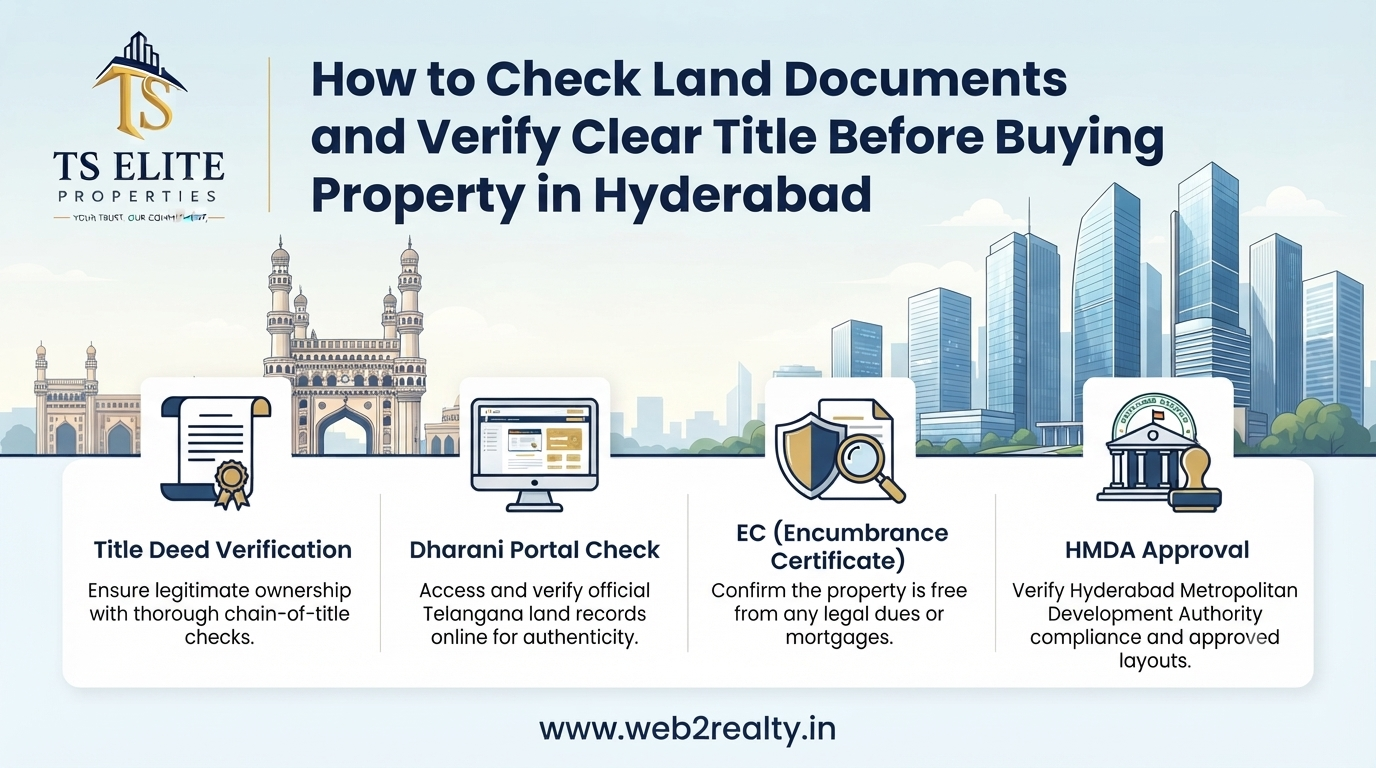
Legal verification is the single most important step when buying land. In Telangana, unapproved or illegal layouts can prevent you from securing building permits, water connections, or bank loans.
The physical condition of the ground directly impacts your construction costs and the long-term safety of your home:
The shape and direction of a plot affect natural light, air circulation, and structural layout efficiency:
Examine the immediate surroundings to ensure the plot is ready for construction:
Pro-Tip for Buyers: Visit the site at different times of the day preferably once during the day and once in the evening and inspect the area after heavy rain to evaluate traffic, ambient noise, and drainage performance.
A common mistake among land buyers is budgeting only for the sticker price of the plot per square yard. Purchasing open land involves several mandatory legal, administrative, and development fees. Failing to account for these extra costs can strain your finances.
To avoid financial surprises, break down your overall budget into distinct categories:
|
Budget Component |
Estimated Cost Percentage / Range |
Description |
|
Base Land Cost |
75% – 80% of total budget |
The agreed purchase rate per square yard. |
|
Stamp Duty & Registration |
~6% of property market value |
Statutory government charges in Telangana (4% Stamp Duty + 0.5% Registration + 1.5% Transfer Duty). |
|
Legal & Title Verification Fees |
₹15,000 – ₹35,000 (flat fee) |
Payment to an independent property lawyer for title search reports and document checks. |
|
Layout Development Charges |
Variable (₹100 – ₹300 per sq. yd) |
Charges collected by developers for underground cables, tar roads, water tanks, and park landscaping. |
|
Surveying & Fencing Costs |
₹20,000 – ₹50,000 |
Professional land surveying, boundary demarcation, and temporary boundary wall creation. |
|
Loan Processing & Administrative Fees |
0.5% – 1% of loan amount |
Processing fees charged by banks or housing finance companies. |
|
Emergency Contingency Buffer |
5% of total plot budget |
Reserve fund set aside for unexpected administrative or document processing expenses. |
If you plan to fund your purchase using a bank loan, keep these key financial rules in mind:
Hyderabad’s urban expansion is guided by the 158-kilometer, 8-lane Outer Ring Road (ORR) and the upcoming Regional Ring Road (RRR). Choosing the right location depends on your investment goal, budget, and construction timeline.
Here is an analysis of the top growth corridors offering the best open plots in Hyderabad:
Before transferring a booking deposit for an open plot in Hyderabad, verify these four core items:
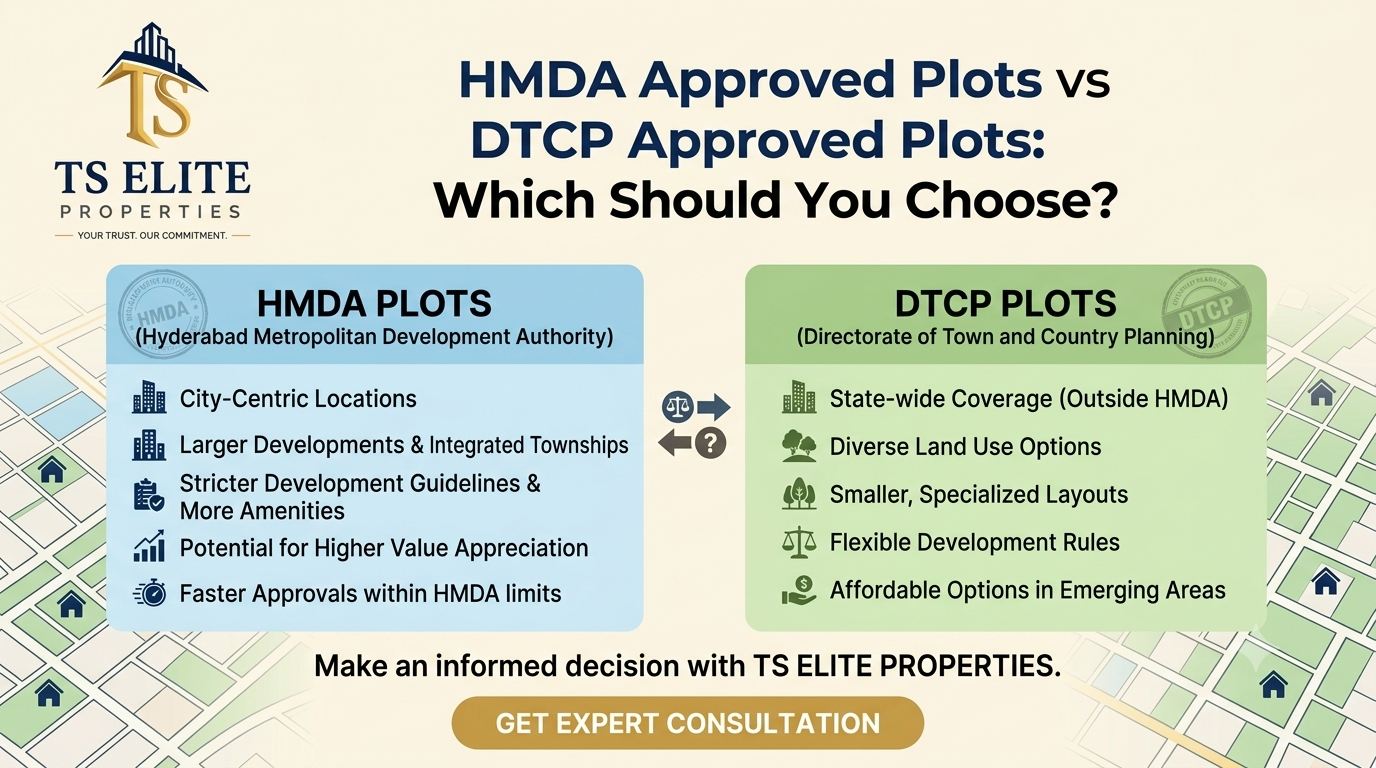
HMDA (Hyderabad Metropolitan Development Authority) layouts fall within the core urban and suburban metropolitan regions of Hyderabad. They follow strict planning guidelines with wider internal roads, dedicated parks, and ready municipal infrastructure. DTCP (Directorate of Town and Country Planning) layouts cover areas outside the HMDA jurisdiction, typically along emerging highway corridors. DTCP plots generally offer lower entry prices and high long-term appreciation.
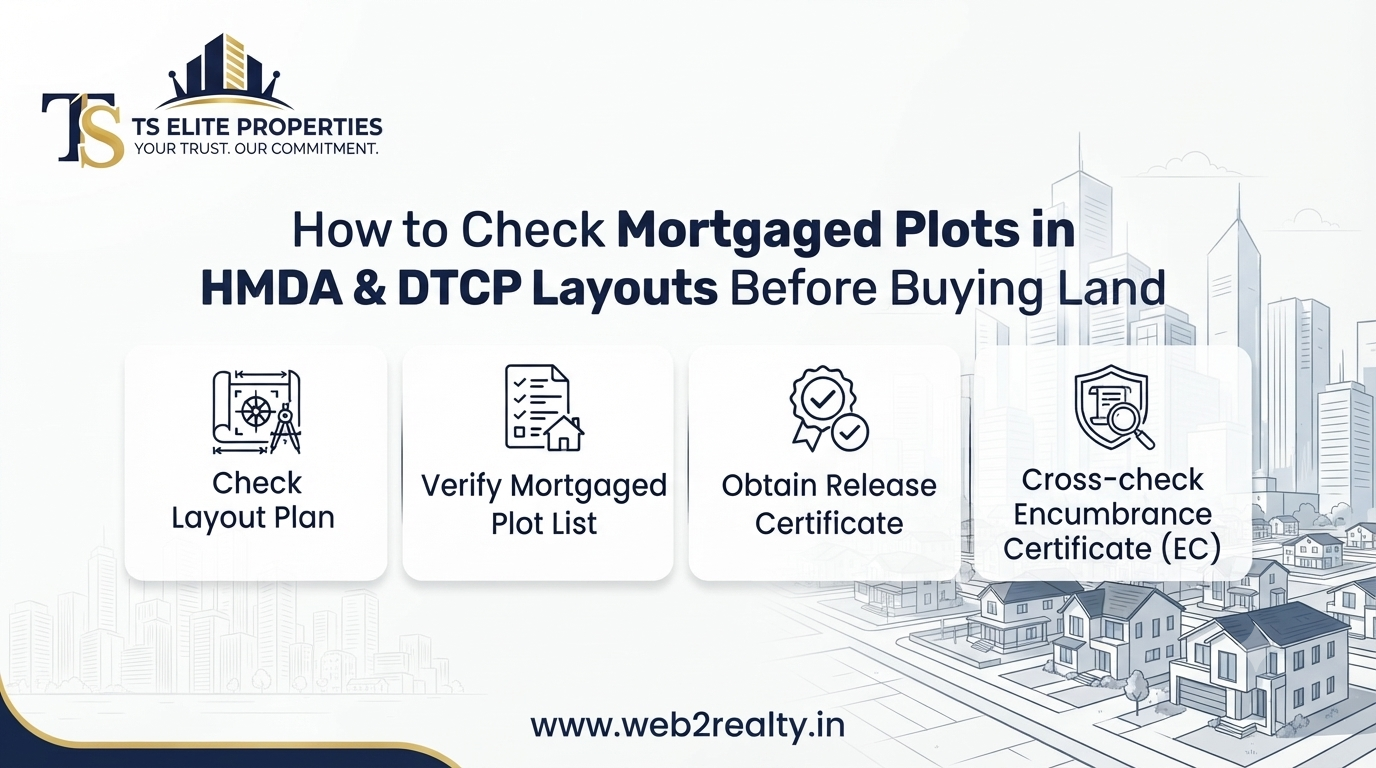
An LP (Layout Permission) Number is a unique identification code issued by the HMDA or DTCP when a developer’s layout master plan receives official government sanction. Verifying the LP number on the official planning authority portal ensures the plot layout is legal, non-agricultural, and safe from municipal demolition or legal disputes.
When budgeting for an open plot, expect to spend an extra 15% to 20% above the base plot price to cover:
Government Charges: Stamp duty, registration fees, and transfer duty (~6% in Telangana).
Legal Fees: Independent lawyer fees for 30-year title verification (₹15,000 – ₹35,000).
Development Charges: Infrastructure/amenity fees charged by layout developers.
Property Services: Land surveying, boundary fencing, and bank loan processing fees.
Unlike home loans (which cover up to 85%–90% of property cost), banks typically offer a Loan-to-Value (LTV) ratio of 70% to 80% for open plot purchases. This means you must prepare a minimum down payment of 20% to 30% of the land value from personal savings.
If you purchase the plot with cash/savings, there is no time limit to begin construction. However, if you take a plot-plus-construction loan from a bank, most financial institutions mandate that house construction must commence within 2 to 5 years from the date of loan disbursal.
For Luxury & Fast Appreciation: Western corridor (Kollur, Tellapur, Mokila, Shankarpally Road).
For High Capital Returns & Commercial Expansion: Southern corridor (Tukkuguda, Srisailam Highway, Maheshwaram near RGIA Airport).
For Affordable Entry-Level Investment: Eastern corridor (Warangal Highway, Bibinagar, Bhongir).
What specific aspect of plot buying or budget planning would you like to explore further?
Selecting the ideal open plot for your future home requires combining thorough physical inspection, legal verification, and realistic budget planning. By calculating total acquisition costs upfront and choosing high-growth corridors in Hyderabad, you build a foundation for both a comfortable residence and a high-yielding financial asset.
At Web2Realty.in, we simplify land buying by offering verified, 100% legal, HMDA- and DTCP-approved open plot listings across Hyderabad’s top investment corridors. Whether you are looking for a luxury villa plot near Tellapur and Mokila or high-growth investment land along the ORR, our real estate specialists support you through site visits, legal title verification, and complete registration assistance.
Explore premium open plot options in Hyderabad today at www.web2realty.in!
What specific growth corridor or plot budget range are you evaluating for your property investment?