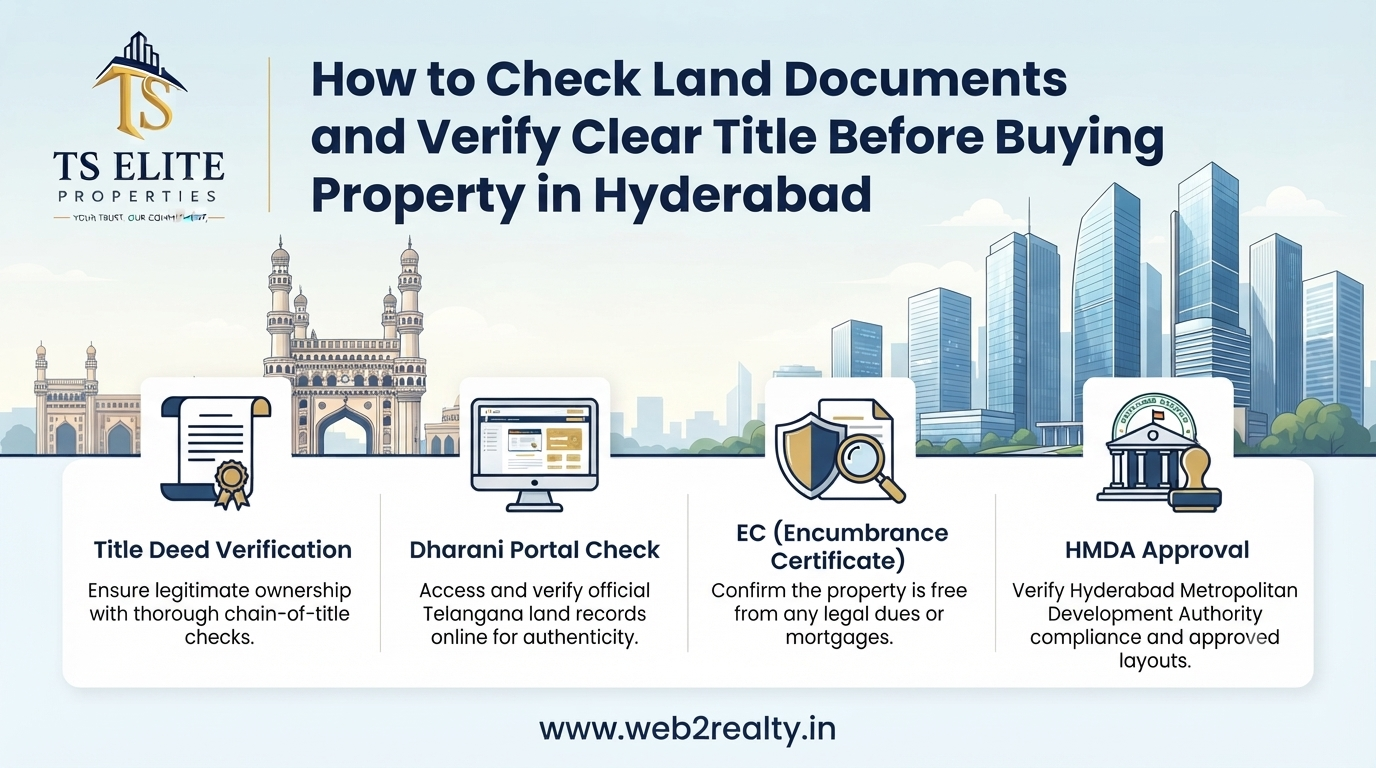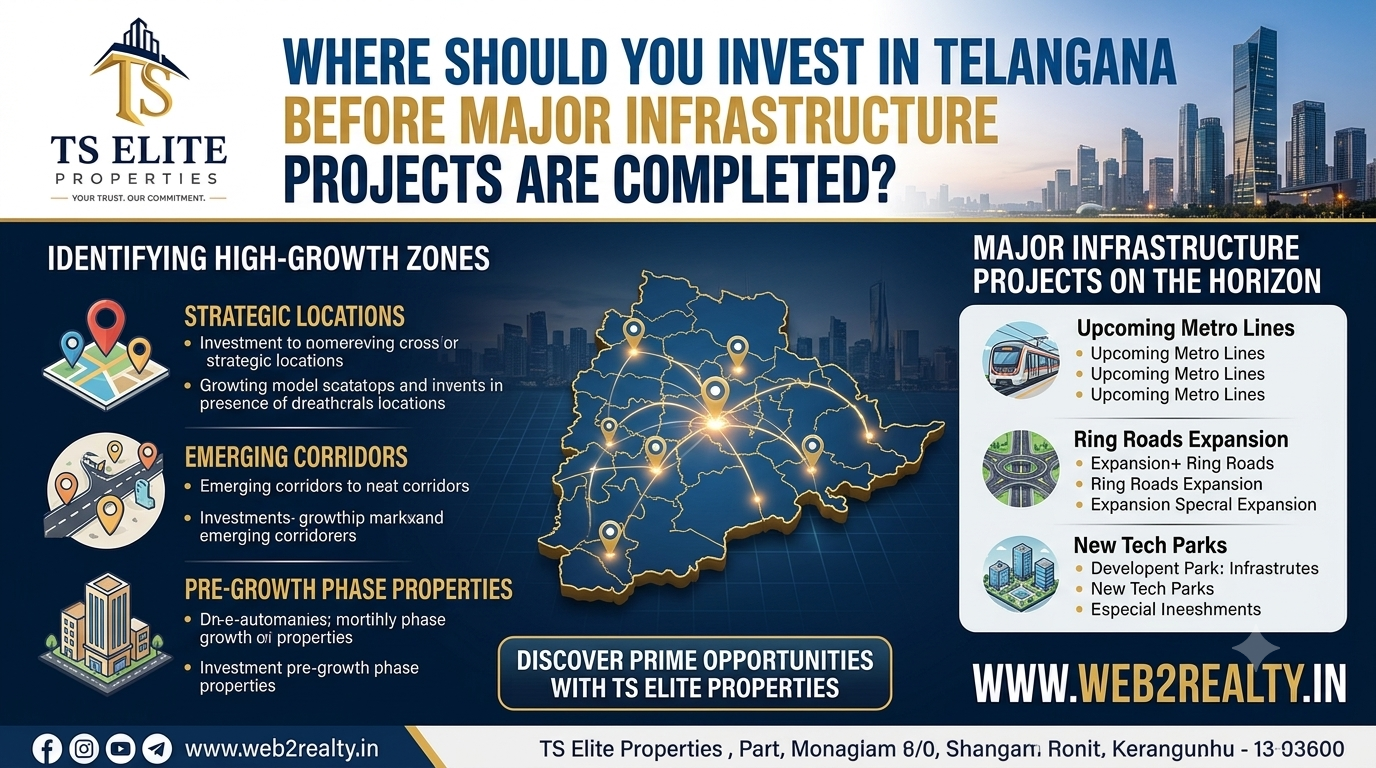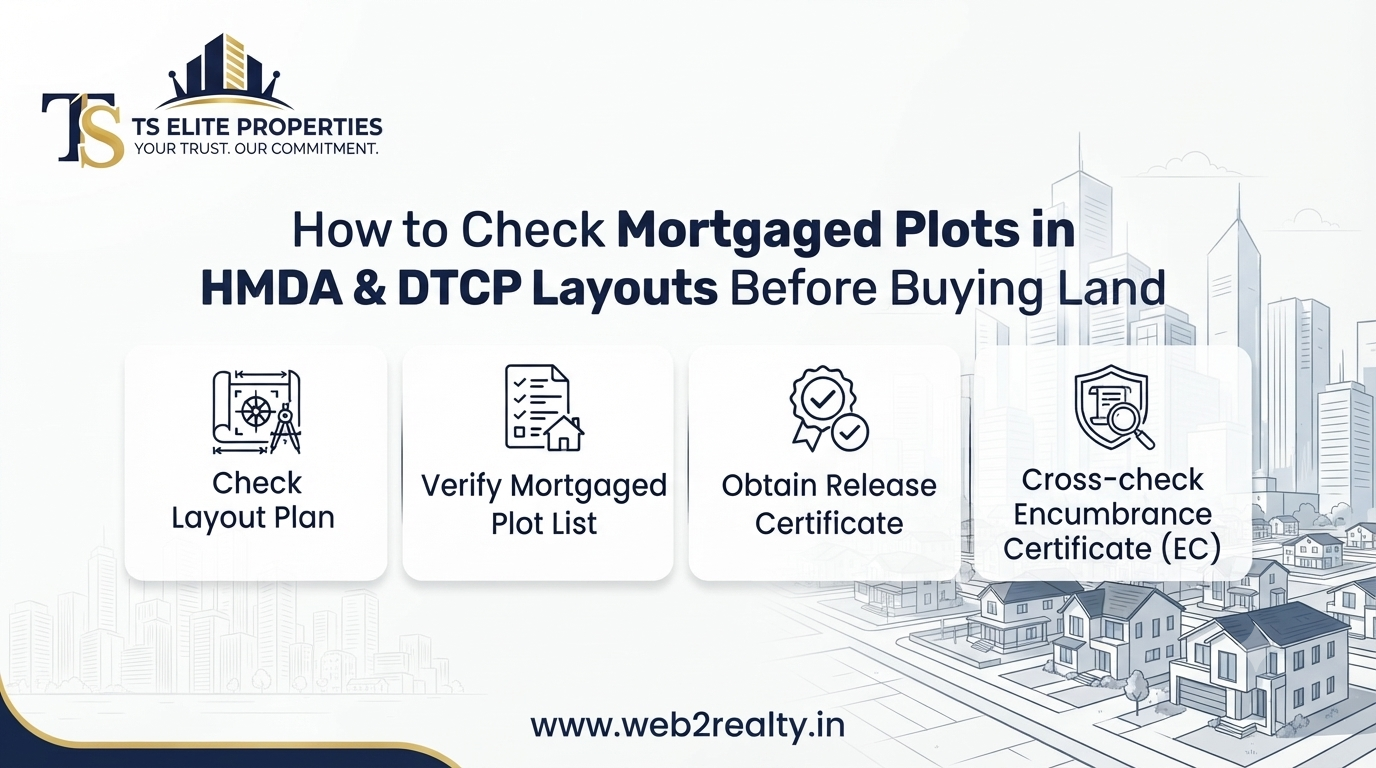

Real estate in Telangana has moved far beyond the traditional boundaries of central Hyderabad. Today, open plots, gated communities, and commercial layouts are expanding rapidly across suburban fringes, rural corridors, and satellite towns.
Two powerful engines drive this widespread real estate expansion: modern road connectivity and decentralized employment generation.
When modern expressways slash daily travel times and new industrial corridors generate steady local jobs, property valuations climb quickly. Understanding how transport routes and employment hubs interact provides practical clarity on what determines land prices in Telangana and where future growth is heading.
In real estate, raw land holds potential, but physical connectivity unlocks its financial value. An isolated parcel of land often yields modest agricultural returns; the moment a multi-lane highway, bypass, or radial corridor reaches its boundary, accessibility instantly transforms its market appeal.
Growth Phase | Infrastructure Trigger | Real Estate Impact |
Phase 1: Announcement & Survey | Government notifies road alignments (e.g., RRR, Radial Corridors). | Speculative buying begins; initial upward movement in land prices in Telangana. |
Phase 2: Construction & Land Acquisition | Earthworks start; arterial links and underpasses take physical shape. | Institutional developers acquire large land banks for gated layouts. |
Phase 3: Operational Connectivity | Expressways open to traffic; commute times drop by 40% to 60%. | End-users buy residential plots; commercial, retail, and schooling hubs emerge. |
The 158-kilometer Outer Ring Road demonstrated how ring-road infrastructure shifts urban geography. Two decades ago, locations such as Kokapet, Nanakramguda, Tellapur, and Puppalguda were quiet rural pockets. Once the 8-lane expressway became fully functional:
The 340-kilometer Regional Ring Road is applying that same growth model on a wider regional scale. Spanning beyond the ORR, the RRR connects key satellite towns:
By linking major national highways (NH-44, NH-65, NH-163, and NH-765), the RRR allows goods and commuters to bypass inner-city bottlenecks. As access to outer districts improves, land prices in Telangana around proposed junction interchanges are gaining steady appreciation.
Expressways require effective feeder networks to function at their best. Upgrades to state highways, radial roads connecting the inner ring to the outer ring, and elevated corridors along the Medchal and Srisailam routes ensure that interior agricultural pockets transform into viable residential and warehousing locations.
Roads provide the physical route, but local employment creates the steady population influx that sustains property demand. When multinational firms, research facilities, and manufacturing plants hire at scale, workers look for housing nearby, driving up demand for open plots and apartments.
Hyderabad’s reputation as a prime hub for Global Capability Centers and enterprise technology firms continues to draw skilled professionals. As technology campuses expand along the Financial District, Gachibowli, and outer western corridors like Mokila and Shankarpally, adjacent plotted developments experience strong buyer interest.
Telangana produces a significant share of global vaccines and pharmaceuticals. Specialized industrial belts such as Genome Valley in Shamirpet and mega-pharma clusters along the southern corridors employ thousands of technical and operational specialists. This sustained employment base drives demand for:
Special Economic Zones (SEZs) in Adibatla, Maheshwaram, and Shamshabad house global aerospace, precision engineering, and hardware manufacturing facilities. As multinational supply chains expand operations here, residential plotting ventures nearby experience healthy appreciation.
When major highway projects and large-scale employment hubs develop in the same corridor, land appreciation accelerates.
Evaluating land appreciation requires looking at several core real estate fundamentals:
Before committing capital to land investments along expanding road corridors, follow these key verification steps:
A: Highway exits offer seamless access for daily commuting and commercial transport. Developers prioritize these nodes for townships, commercial hubs, and logistics parks, which concentrates buyer demand and lifts land valuations.
A: The RRR connects secondary towns directly to national highways, allowing commuters and freight to bypass city traffic. This creates opportunities for warehousing, manufacturing, and affordable plotted housing, driving up land values across peripheral towns.
A: The Information Technology (IT/GCC), Pharmaceutical, Aerospace, Defense, and Logistics industries are the largest employment generators in Telangana, creating steady demand for housing and plotted layouts near these employment clusters.
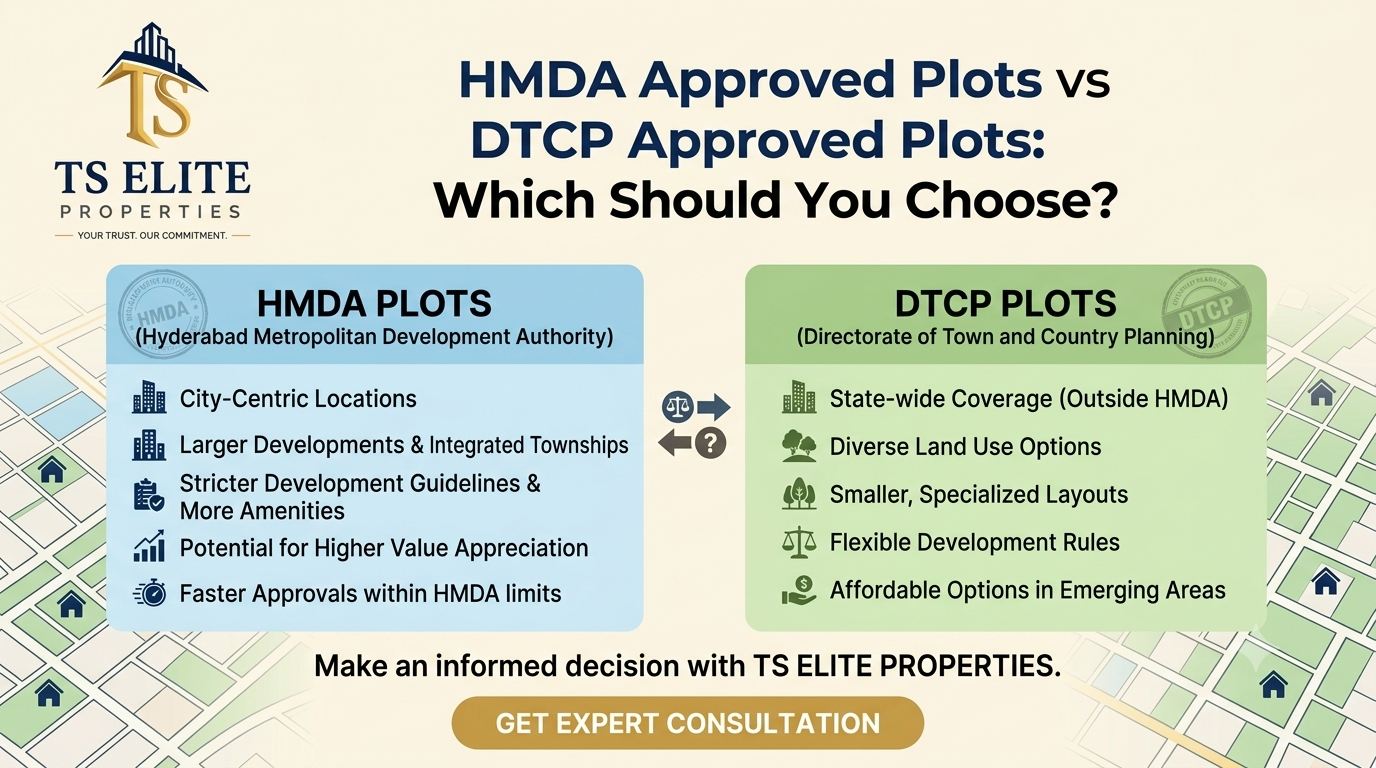
A: HMDA approves layouts within the Hyderabad metropolitan limits, where urban infrastructure and civic services develop faster. DTCP oversees planned layouts outside HMDA limits in developing towns and rural districts, generally offering lower entry costs with a longer-term growth horizon.
Telangana’s property market continues to expand as new expressways and industrial corridors open across the state. Investing early in strategically located plots along high-growth road networks offers a clear path toward sustainable, long-term capital appreciation.
Whether you are looking for an HMDA-approved villa plot, a DTCP layout near the upcoming Regional Ring Road, or commercial land near an industrial hub, choosing verified projects in well-connected locations is key.
Explore verified, clear-title plotted layouts across Telangana’s top highway corridors today. Contact www.web2realty.in for our real estate advisory team for detailed master plan maps, legal document checks, and guided on-site visits.