
Buying land is one of the biggest financial decisions you can make. Whether you want to build a home, hold land for future growth, or search for approved plots for investment, checking the legal status of a property is essential.
A plot may have a great location, an attractive price, and strong future development potential. However, these factors alone do not make it a safe investment. Before paying an advance or signing a sale agreement, you should understand the layout plan and verify the approvals related to the property.
For buyers looking for approved plots for investment, proper legal verification can reduce the risk of ownership disputes, unauthorized layouts, unclear titles, construction restrictions, and resale problems.
In this guide, we explain what a layout plan is, why it matters, what documents you should check, and how to verify whether a plot is legally approved.
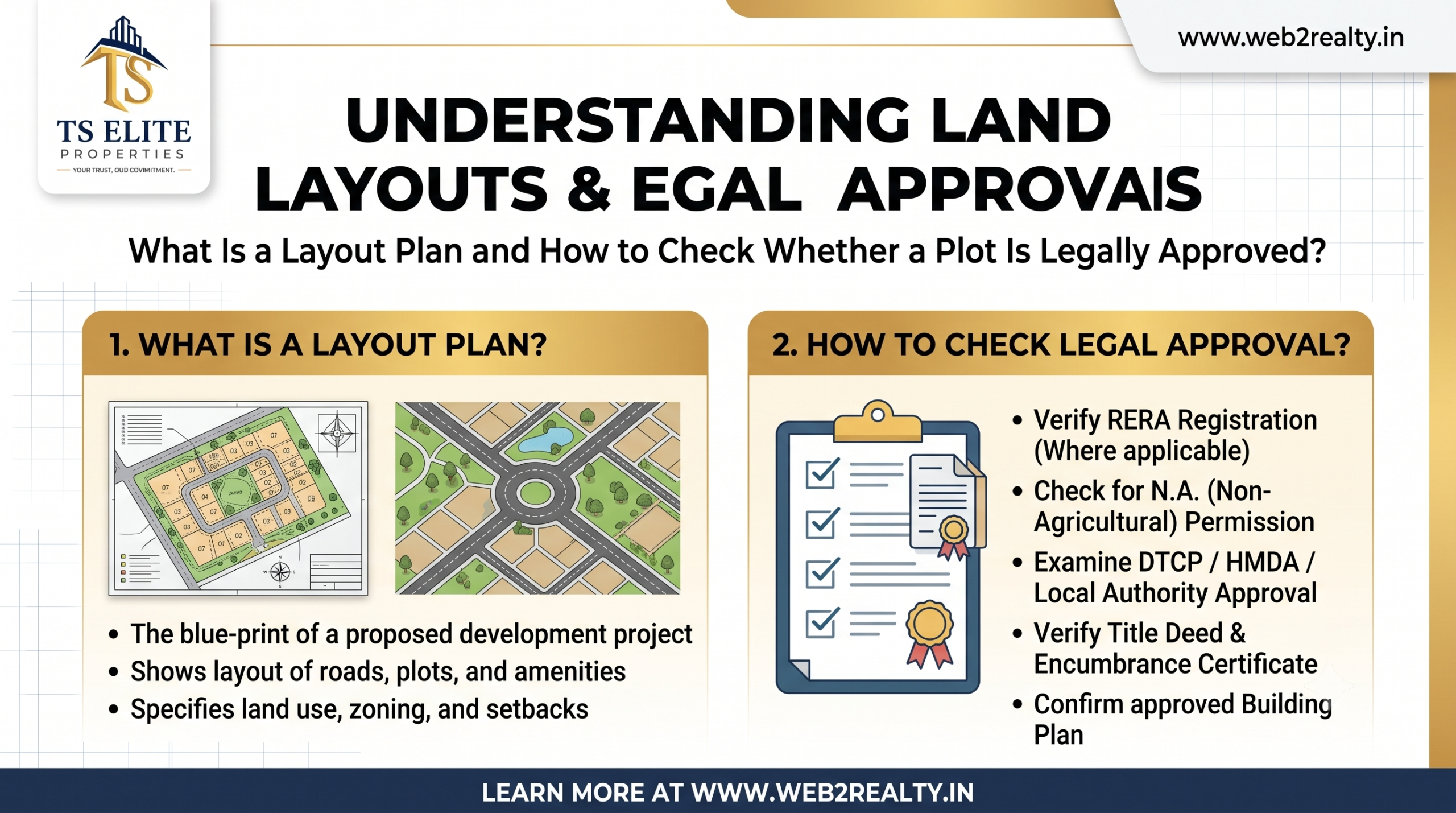
A layout plan is an official drawing that shows how a larger piece of land has been divided into individual plots and common areas.
A typical layout plan may show:
In simple terms, a layout plan shows how the land has been divided and how the entire development is planned.
For people searching for approved plots for investment, the layout plan is an important document. It allows buyers to compare the property being offered with the details approved by the relevant planning authority.
A layout plan is more than just a map. It provides important information about the development of the entire property.
For example, a developer may advertise a 200-square-yard plot. However, the advertisement alone may not tell you whether the plot is part of an approved layout or whether its dimensions match the approved plan.
By checking the layout plan, you can verify:
This is especially important when purchasing approved plots for investment, as the legal status of a property can affect construction, registration, financing, resale, and future development.
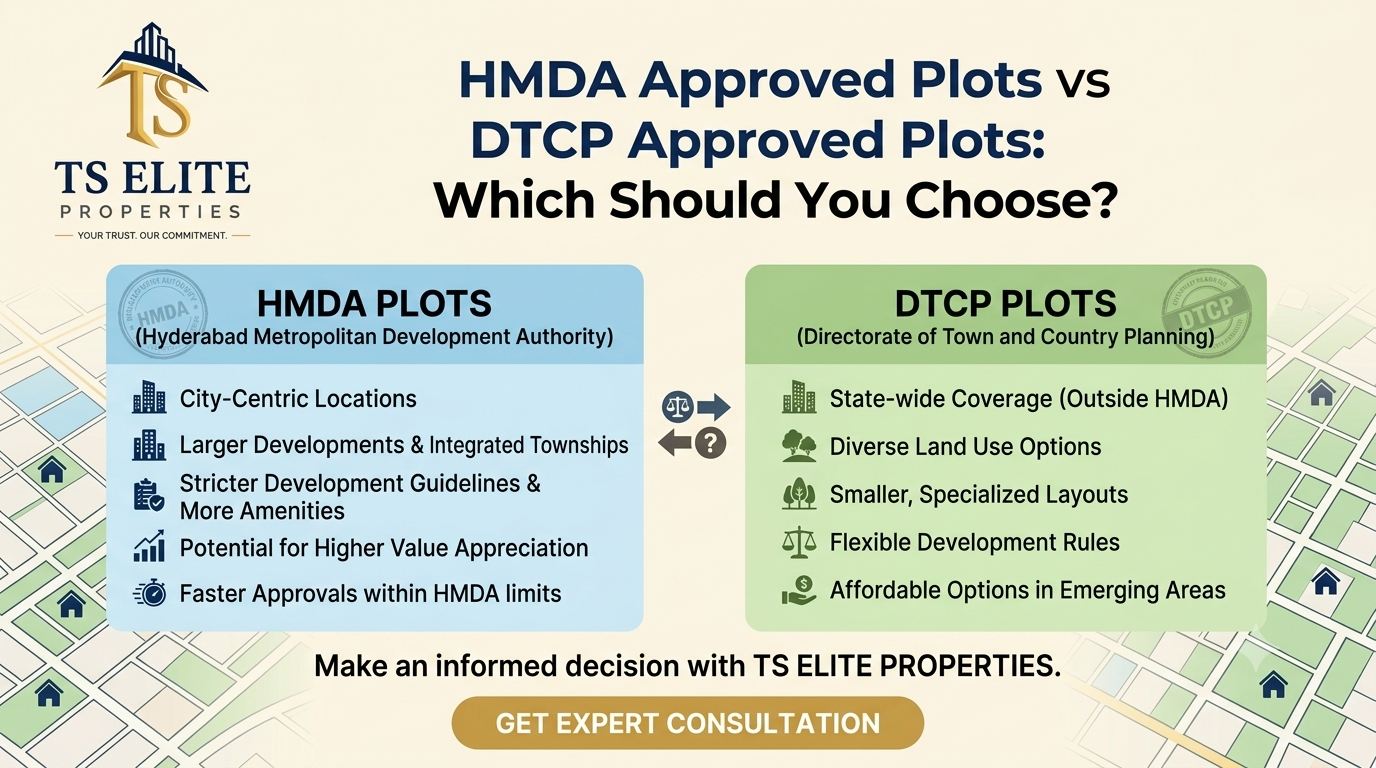
An approved plot generally means that the plot is part of a layout that has received the required approval from the relevant planning authority, subject to applicable laws and conditions.
However, buyers should not rely only on the word “approved” in an advertisement.
Before making a decision, ask the seller or developer:
These checks are particularly important when evaluating approved plots for investment.
A layout plan and a sale deed are two different documents, and both have an important role in a property transaction.
A layout plan shows how the larger land parcel has been divided into plots, roads, open spaces, and other areas.
A sale deed is the legal document used to transfer ownership of a specific property from the seller to the buyer.
One document cannot replace the other.
For example, a plot may appear on an approved layout plan, but you still need to verify whether the seller has a valid and transferable title to that plot.
Similarly, having a sale deed does not automatically prove that the entire layout has received all required planning approvals.
This is why buyers should complete both title verification and layout approval verification before purchasing land.
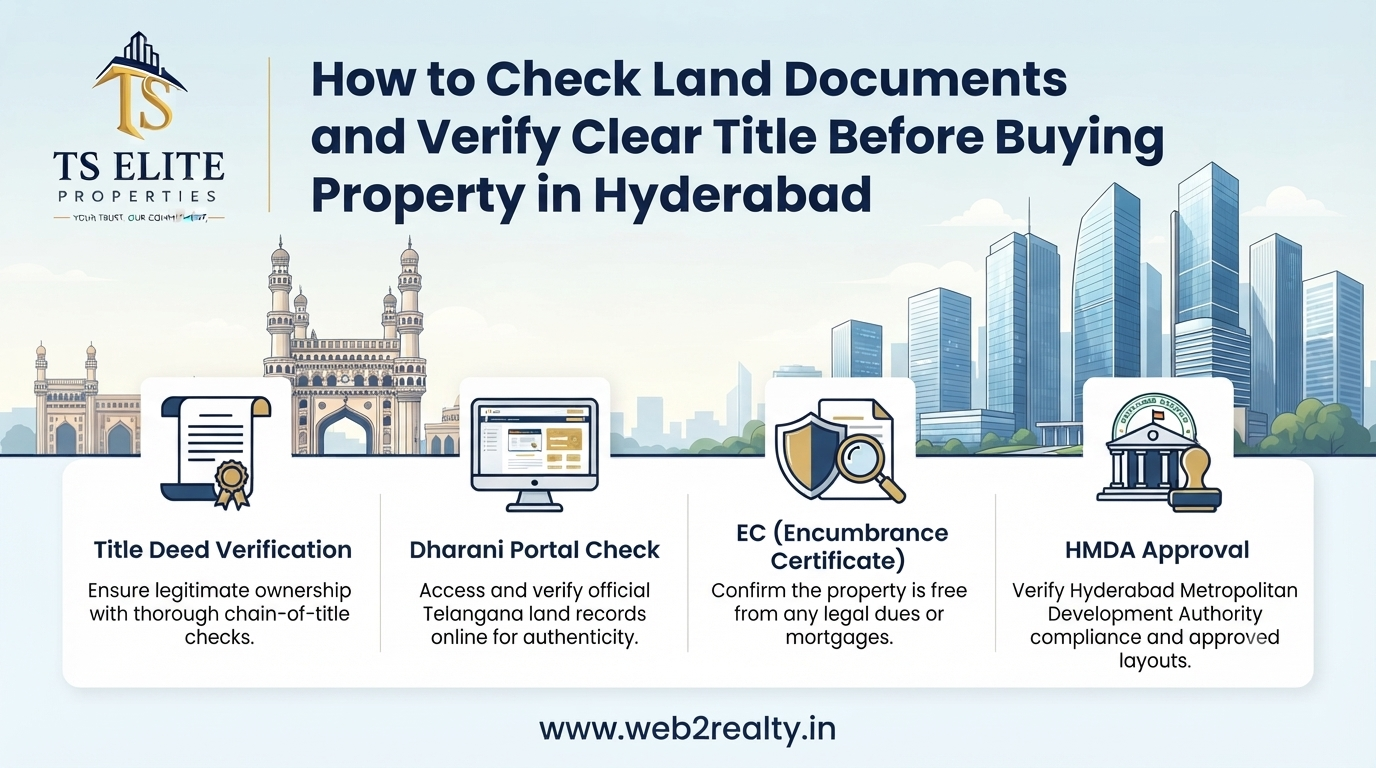
Before buying a plot, follow a systematic verification process. The following steps can help you identify potential issues before making a major financial commitment.
First, find out which planning authority has jurisdiction over the property.
Different locations may come under different planning or local authorities. Properties around Hyderabad and other parts of Telangana may therefore have different approval requirements depending on their location.
Ask the seller or developer for:
Do not accept statements such as “government approved“ without asking for supporting documents.
Always request a copy of the approved layout plan.
Do not rely only on:
The official approved plan should help you identify the plot number, roads, open spaces, boundaries, and other important details.
If you are considering approved plots for investment, confirm that the exact plot you are purchasing appears in the approved layout.
The approval number is an important reference when checking the legal status of a layout.
Ask for the:
Where online verification is available, check the details through the relevant official government portal.
If the information cannot be verified, consider consulting a qualified property lawyer before proceeding.
Survey numbers are extremely important in land transactions.
The survey numbers mentioned in the approved layout should correspond with the land being offered for sale.
A mismatch between the advertised property and official records can create serious legal and ownership issues.
Ask a qualified property lawyer or document professional to review the survey numbers and related land records.
This step is especially important for buyers looking for approved plots for investment in developing locations.
Never assume that every plot shown in a brochure is approved.
Compare the plot number across:
Also check whether the plot dimensions and survey details match.
If there is a discrepancy, do not ignore it. Ask the seller to explain the difference and verify the answer independently.
Road connectivity is another important factor when buying a plot.
A property may look attractive on paper, but you should also confirm that it has proper access.
Check whether:
Good road access can improve the usability, convenience, and future resale potential of a property.
Approved layouts may include designated areas for roads, parks, open spaces, utilities, and other common purposes according to applicable planning rules.
Compare the approved layout with the actual development on the ground.
For example, if an area is marked as an open space or park in the approved plan, it should not be presented to buyers as a private residential plot.
This comparison can help identify potential irregularities when evaluating approved plots for investment.
Layout approval does not automatically prove that the seller has a clear and transferable title.
Title verification is therefore one of the most important steps in the property-buying process.
Depending on the property, a legal professional may review:
A property lawyer can help determine whether the seller has the legal right to sell the property.
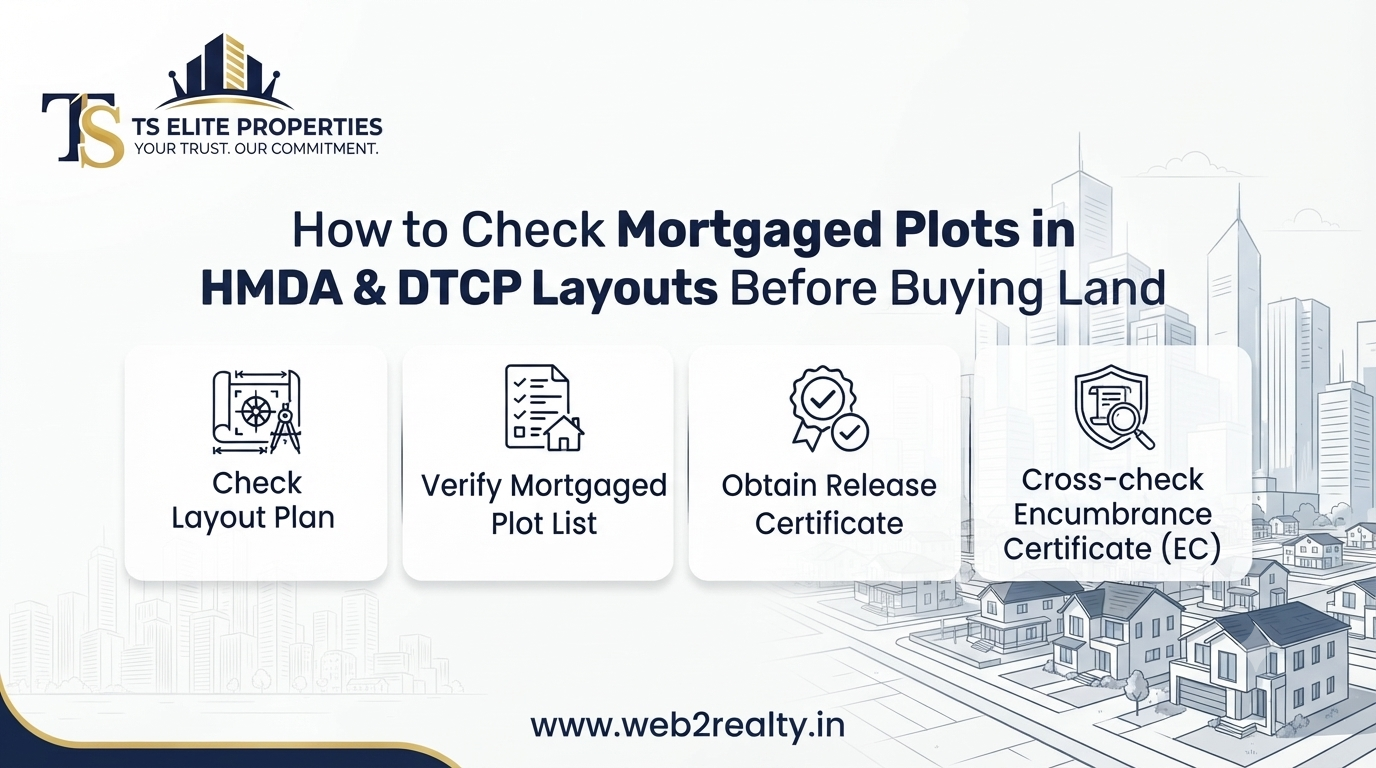
An encumbrance check can help identify registered transactions, mortgages, or other recorded claims connected to the property.
Buyers should obtain the relevant records and have them reviewed carefully.
If the property has an existing loan, mortgage, or registered charge, make sure the matter is properly resolved before completing the purchase.
A low price is not necessarily a good deal if the property has unresolved legal issues.
For applicable real estate projects, buyers should check whether the project is registered with the relevant RERA authority.
RERA requirements can depend on factors such as the type, size, and nature of a project. Therefore, buyers should determine whether the particular project falls within the applicable requirements.
If a developer claims that a project is RERA registered, ask for the registration details and verify them through the official authority.
For buyers searching for approved plots for investment, checking applicable regulatory requirements is an important part of due diligence.
Not every parcel of land can automatically be used for every purpose.
Land-use regulations may determine whether land can be used for:
If you plan to construct a home, confirm that the land and layout have the permissions required for the intended use.
This is particularly important when considering plots in developing and peripheral areas.
Documents are important, but a physical site visit is equally useful.
Visit the property and check:
If possible, visit the property more than once and at different times.
A site visit can reveal issues that may not be visible in advertisements, brochures, or online maps.
If you are searching for approved plots for investment, be careful when you come across the following situations.
If the approval has not yet been granted, do not treat the property as an approved plot.
Ask for the current approval status and verify it independently.
Limited-stock offers can create pressure to make a quick decision.
Do not allow sales urgency to replace legal verification.
Take enough time to check the documents before paying.
A genuine approval should have supporting documentation.
Ask:
A very low price may be attractive, but it can sometimes indicate issues related to:
Investigate the reason before assuming you have found a bargain.
This is an important warning sign.
If the plot number being sold does not appear on the approved layout, ask for clarification and obtain independent legal advice before proceeding.
Do not make a large payment simply because you are told that the price will increase tomorrow.
A good property investment decision requires proper due diligence.
Once all relevant documents have been properly verified, approved plots for investment may offer several potential advantages.
A plot can potentially be held for future use or construction, subject to applicable laws and permissions.
Land located in areas with improving infrastructure, connectivity, employment opportunities, and population growth may have long-term appreciation potential.
However, appreciation is never guaranteed.
Vacant land generally does not require the same level of maintenance as a completed building or apartment.
Depending on applicable regulations and permissions, buyers may be able to construct a home or another permitted property in the future.
Before planning construction, always check the applicable building and land-use rules.
Buying land for the first time can feel complicated. These simple rules can help you make a more informed decision:
Most importantly, understand exactly what you are buying before signing any agreement.
A layout plan is an official plan showing how a larger piece of land is divided into individual plots, roads, open spaces, parks, and other common areas.
Approved plots for investment are plots that form part of a layout that has received the required approval from the relevant planning authority, subject to applicable laws and regulations.
Ask for the approved layout plan, approval number, survey numbers, and details of the approving authority. Where online verification is available, check the information through the relevant official government portal.
No. A sale deed documents the transfer of ownership, but it does not by itself prove that the entire layout has received the required planning approvals.
Both title and layout approval should be verified.
Survey numbers help identify the specific land parcel. Matching the survey numbers in the title documents, approved layout plan, and property records can help identify discrepancies before purchase.
Depending on the property, important documents may include the approved layout plan, approval proceedings, sale deed, parent documents, encumbrance records, survey details, land-use permissions, tax records, and applicable RERA registration details.
No. Layout approval and property ownership are separate matters.
Buyers should independently verify the seller’s title and ownership history.
If the project falls within the scope of applicable RERA requirements, buyers should check the registration details with the relevant RERA authority.
RERA applicability depends on the type and size of the project and other applicable conditions.
Approved plots for investment can be suitable for long-term investors because land can provide flexibility and potential appreciation.
However, returns are not guaranteed. Location, purchase price, infrastructure, demand, development, and legal status should all be considered.
Be cautious about unclear approvals, missing plot numbers, survey-number mismatches, unclear title, disputed ownership, poor road access, unusually low prices, and sellers who pressure you to make an immediate payment.
It is advisable to consult a qualified property lawyer before completing a major land transaction.
A lawyer can review title documents, ownership history, encumbrances, approvals, and other legal records.
Not necessarily.
Construction is subject to applicable building rules, land-use permissions, development regulations, and required approvals.
Always confirm the permitted use and construction requirements before planning a building.
A layout plan provides valuable information about how a property development is organized, but it is only one part of the complete property verification process.
If you are searching for approved plots for investment, check the layout approval, plot number, survey numbers, ownership, title, encumbrance details, land use, applicable RERA requirements, road access, and other relevant documents.
A legally verified plot in a well-connected and developing location can become a valuable long-term asset. However, the best investment is not necessarily the property with the lowest price or the most attractive advertisement.
A better approach is to evaluate the location, legal documents, approvals, connectivity, pricing, infrastructure, and future demand together.
Take your time, verify the documents, and make an informed decision.
Looking for approved plots for investment in promising locations?
Explore suitable properties, compare locations and prices, review the available property information, and seek professional legal advice before making a major investment.
Visit Web2Realty.in to explore real estate opportunities and get started with your property search.
Do not invest based on an advertisement alone. Verify the property. Understand the documents. Compare your options. Then invest with confidence.
Your land investment journey can start with Web2Realty.in.