
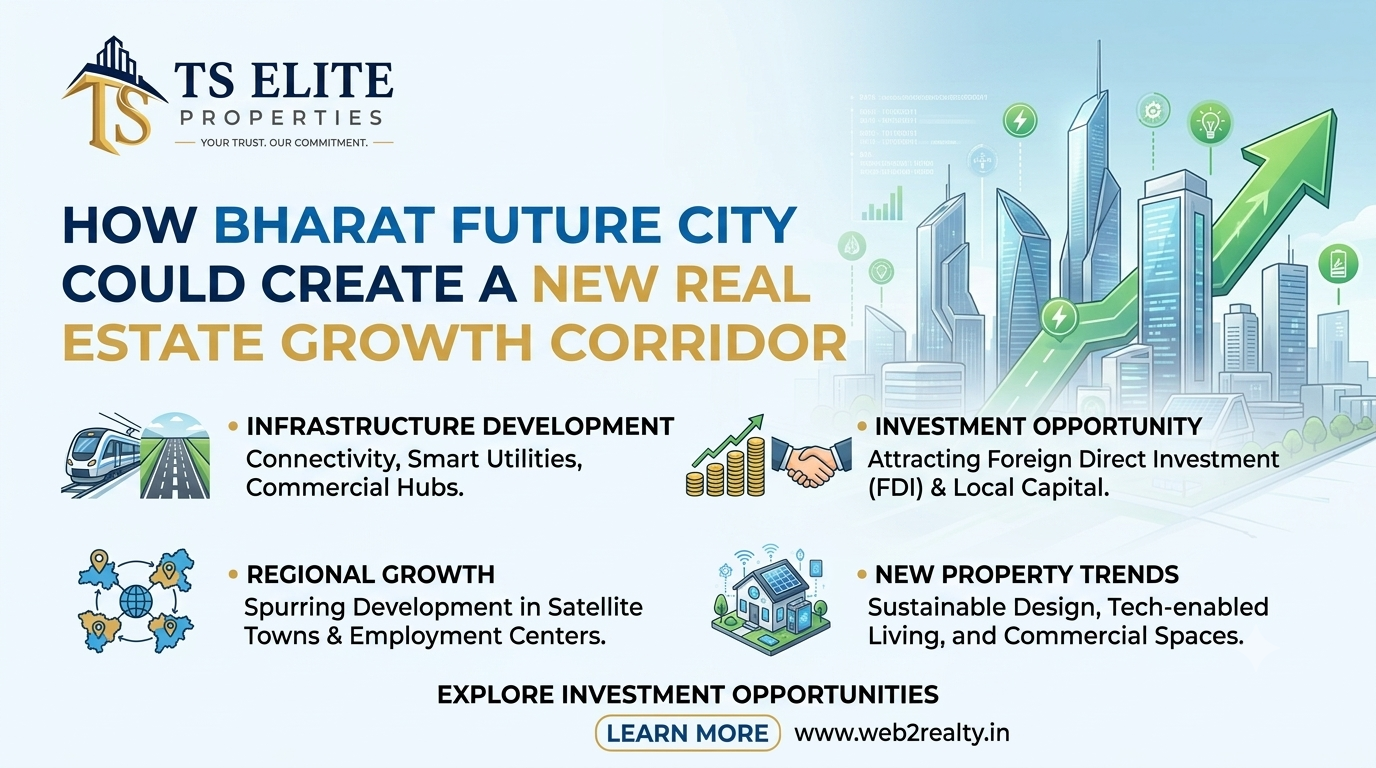
Hyderabad has been expanding rapidly over the past few years, with new roads, industries, business hubs and residential communities changing the city’s growth pattern. While areas around the western part of Hyderabad have already become major real estate destinations, attention is now moving towards the southern and southeastern regions.
One of the developments that could influence this shift is Bharat Future City.
Planned as a major urban development initiative, Bharat Future City is expected to bring together technology, healthcare, education, life sciences, business and residential development. As infrastructure and employment opportunities grow around the project, nearby locations could also experience increased demand for land and property.
This is why many investors are watching the region as a potential Real Estate growth corridor.
But what could make this area different from traditional Hyderabad growth zones? And how could Bharat Future City influence property demand over the coming years?
Let’s understand the potential in simple terms.
Bharat Future City is being planned as a modern urban development destination in the Hyderabad region. The broader vision focuses on creating an environment where businesses, technology, education, healthcare and residential communities can develop together.
Instead of being only a residential area, the idea is to create a mixed-use ecosystem.
This type of development can have a significant effect on surrounding real estate. When employment centres, educational institutions, healthcare facilities, commercial spaces and transportation infrastructure come together, demand for housing and land can increase around them.
For property investors, this is one of the important factors behind the potential of a new Real Estate growth corridor.
Infrastructure is one of the strongest factors influencing property growth.
A location may have affordable land today, but its long-term potential can change considerably when roads, public transportation, business parks and other infrastructure projects are developed nearby.
Bharat Future City is expected to benefit from the wider infrastructure network being developed around Hyderabad and its southern growth belt.
Better connectivity can make it easier for people to travel between residential areas, workplaces, airports, industrial zones and commercial centres.
As accessibility improves, previously less-developed areas can gradually become attractive for both homebuyers and investors.
This is how a Real Estate growth corridor often develops.
It usually starts with infrastructure and investment. Employment opportunities follow, residential demand increases, commercial activity grows, and eventually the surrounding locations become established property markets.
Hyderabad’s development is no longer limited to the traditional city centre.
The western corridor has already seen significant growth because of IT companies, office spaces and residential projects. Areas around HITEC City, Gachibowli and the Financial District have demonstrated how employment-driven development can transform surrounding real estate.
The next stage of growth could increasingly involve southern and southeastern Hyderabad.
Bharat Future City can potentially become an important part of this expansion.
Its location, combined with major transportation infrastructure and proximity to Rajiv Gandhi International Airport, could make the region more attractive for businesses and residents.
If planned infrastructure projects are delivered successfully, the area could gradually emerge as a new Real Estate growth corridor connecting residential, commercial and employment zones.
Jobs are one of the biggest drivers of real estate demand.
When a large business district, technology hub or industrial cluster develops, employees need places to live. Businesses also require offices, warehouses, hotels, retail spaces and other supporting services.
Bharat Future City’s focus on sectors such as technology, healthcare, education and life sciences could create an ecosystem that attracts professionals and businesses.
As employment opportunities increase, nearby locations may see demand for:
This creates multiple opportunities within a potential Real Estate growth corridor.
For land investors, the early stages of such development can be particularly interesting because land prices in emerging areas may be lower than those in already-established neighbourhoods.
However, investors should always evaluate the actual development status, approvals, connectivity and demand before making a purchase.
Rajiv Gandhi International Airport is another important advantage for the southern Hyderabad region.
An airport is not only a transportation facility. It can support the development of hotels, logistics, commercial offices, retail centres, business parks and residential communities.
Areas with convenient airport connectivity can become attractive to companies and professionals who frequently travel.
Bharat Future City’s broader development around the southern part of Hyderabad could therefore benefit from the airport’s presence.
Improved roads and transportation links between the airport, future business districts and residential areas could further strengthen the region’s position as a potential Real Estate growth corridor.
One of the interesting aspects of Bharat Future City is its focus on sectors beyond conventional IT.
Healthcare and life sciences are important industries with long-term growth potential.
Hospitals, research institutions, pharmaceutical companies, laboratories and healthcare-related businesses can create employment and attract skilled professionals.
These workers need housing, schools, shopping centres, restaurants, transportation and other services.
This creates a wider real estate ecosystem.
Instead of property demand depending on one industry, a diversified employment base can support different segments of the market.
For investors looking at a Real Estate growth corridor, diversification is an important factor to consider.
Education is another sector that can influence property demand.
When universities, training institutions, schools and research centres develop in a region, families and students may prefer to live closer to these facilities.
This can increase demand for apartments, rental homes, hostels and residential plots.
Over time, educational institutions can also attract businesses such as bookstores, restaurants, cafes, transport services and retail stores.
Therefore, the combination of education, healthcare and employment can create a sustainable development ecosystem around Bharat Future City.
Open plots can be an attractive option for investors who are looking at long-term development areas.
Unlike completed properties, land gives investors the flexibility to hold the asset while the surrounding region develops.
However, buying land in an emerging Real Estate growth corridor requires careful research.
Before purchasing a plot, investors should check:
It is important not to purchase land simply because a major project is planned nearby.
The actual location and connectivity of the property matter significantly.
Large infrastructure projects rarely benefit only the immediate development area.
Their impact can spread to surrounding villages, towns and suburbs.
For example, when a major business hub develops, demand can increase for housing in nearby areas. New roads may make distant locations easier to access. Commercial establishments may then appear along these routes.
This creates a ripple effect.
Over several years, multiple smaller developments can connect with the primary project and form a larger urban growth zone.
That is how a Real Estate growth corridor can gradually emerge.
Bharat Future City could therefore influence property markets beyond its immediate boundaries, particularly in locations that offer good connectivity and reasonable land availability.
Several factors could make the region worth watching.
More companies and institutions can create more jobs, which can support housing demand.
Better roads and transportation can increase the accessibility of surrounding locations.
Connectivity to the international airport can support residential, commercial and hospitality development.
Technology, healthcare, education and life sciences can provide a diversified economic base.
Emerging locations may provide opportunities before property prices reach the levels seen in established areas.
These factors explain why Bharat Future City is being discussed as a potential catalyst for a new Real Estate growth corridor around Hyderabad.
There is no single answer that works for every investor.
Real estate is a long-term investment, and emerging corridors usually require patience.
Investors should not make decisions based only on expected future price increases. Instead, they should look at the fundamentals of the property.
A good investment location should have strong connectivity, legal clarity, development potential and realistic demand.
If you are considering buying land around Bharat Future City, compare multiple locations and projects before making a decision.
Look beyond marketing claims and verify approvals, documents and infrastructure information independently.
The success of any large development depends on execution.
If planned infrastructure, businesses, institutions and residential communities develop as expected, Bharat Future City could become an important urban destination in the Hyderabad region.
Its impact could also extend to surrounding areas.
Over time, the combination of employment, infrastructure, education, healthcare, commercial activity and residential development could create a connected property market.
This could strengthen the region’s position as a Real Estate growth corridor and potentially create new opportunities for landowners, homebuyers, developers and investors.
However, real estate investors should remember that future development does not guarantee property appreciation. Market conditions, government policies, infrastructure timelines, approvals and actual demand can all influence investment outcomes.
Bharat Future City represents an important part of Hyderabad’s future development story.
Its proposed focus on technology, healthcare, education, life sciences and modern urban infrastructure could create employment and attract businesses to the region.
As these activities develop, nearby locations may experience increasing demand for residential and commercial properties.
This makes the surrounding region an area worth monitoring for anyone interested in Hyderabad real estate.
For investors with a long-term approach, understanding how infrastructure and employment create property demand can be more valuable than simply following short-term market trends.
If Bharat Future City develops according to its broader vision, it could become a major catalyst for a new Real Estate growth corridor around Hyderabad.
Before investing, study the location, connectivity, approvals and future development plans carefully. If you are exploring open plots and land investment opportunities around Hyderabad’s emerging growth corridors, compare suitable locations based on your budget and long-term investment goals.
Explore promising real estate opportunities today and take the first step towards building a long-term property portfolio. Contact Web2Realty to learn more about available properties and emerging investment locations around Hyderabad.
A Real Estate growth corridor is an area where infrastructure, employment, businesses, transportation and residential development are expanding together. Such areas can experience increasing demand for land and property over time.
Bharat Future City could attract businesses, employment, healthcare, education and other economic activities. This may increase demand for residential and commercial properties in nearby locations.
The project could support long-term development in Hyderabad’s southern region. Investors are interested because improved infrastructure and employment can potentially increase demand for surrounding properties.
It can be worth considering for investors with a long-term strategy, but every property should be evaluated individually. Check approvals, title, connectivity, infrastructure and development plans before purchasing.
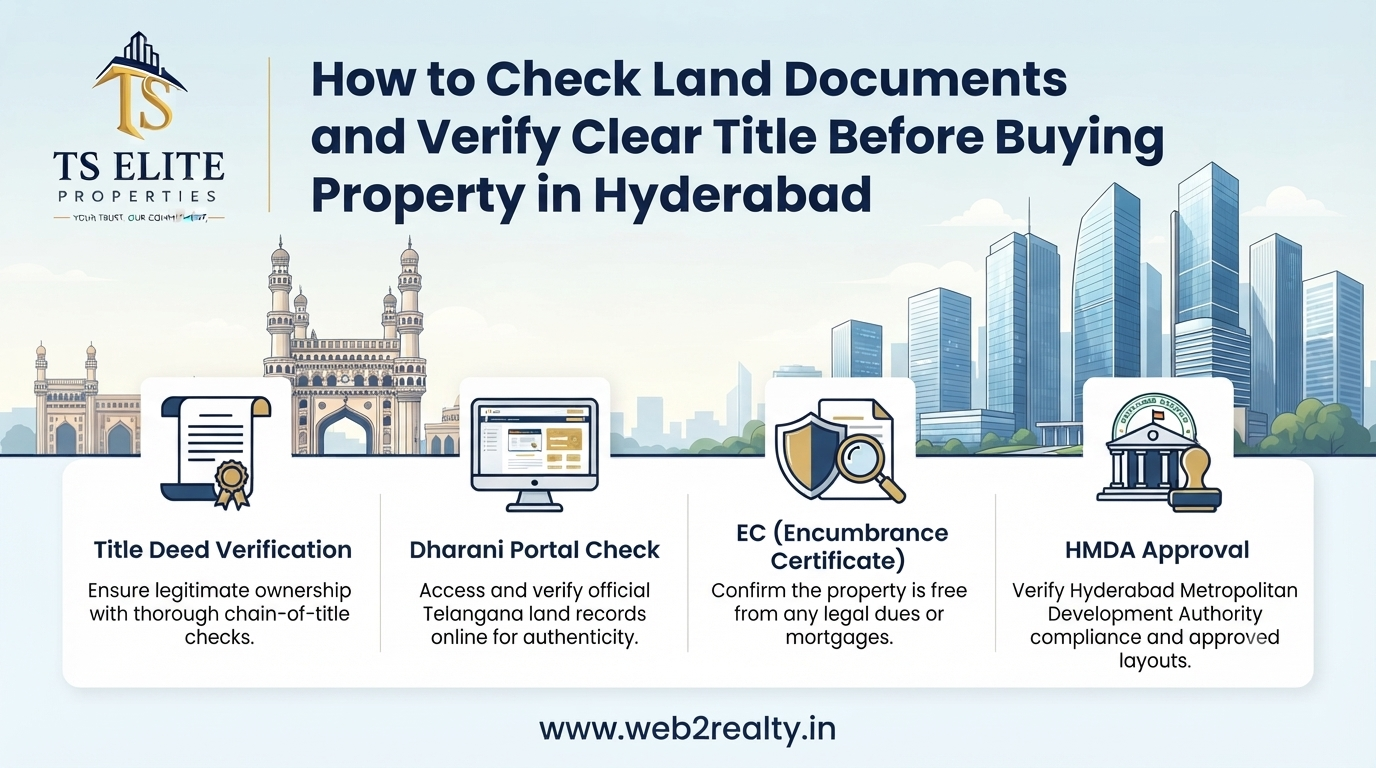
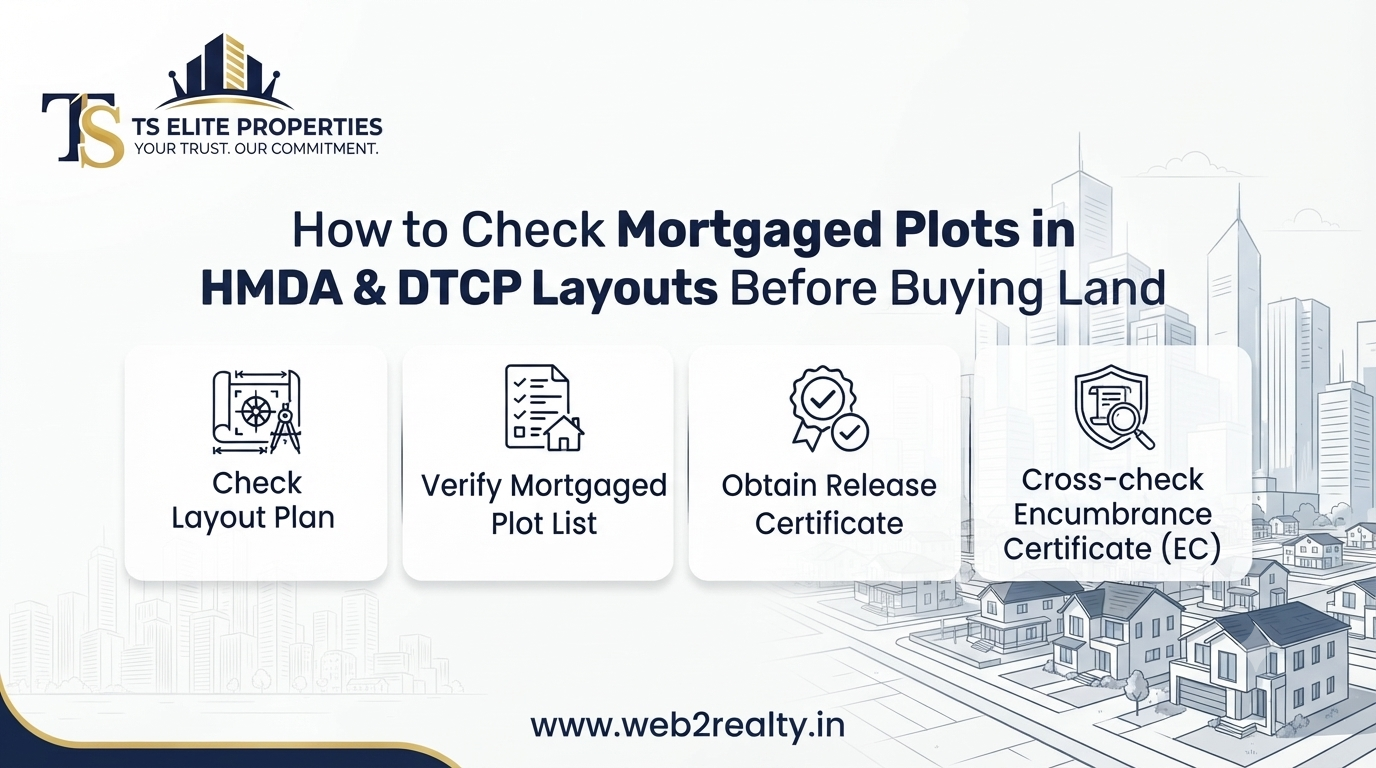
Check the property’s legal title, layout approval, road access, infrastructure, location, surrounding development, registration documents and the credibility of the developer.
It has the potential to become a catalyst for a new Real Estate growth corridor if planned infrastructure, employment centres and supporting developments are successfully implemented.
No property investment comes with a guaranteed return. Prices can be influenced by infrastructure execution, market demand, economic conditions, government policies and other factors.
Potentially residential plots, apartments, villas, rental housing, commercial properties, retail spaces and hospitality projects could benefit as the surrounding economy develops.
Infrastructure improves accessibility and can attract businesses and residents. Better connectivity often supports the development of residential and commercial activity around major projects.
Look for a combination of planned infrastructure, employment opportunities, connectivity, government-backed development, business activity and genuine end-user demand. Avoid relying only on future promises or promotional claims.