Stamp Duty, Registration Charges and Tax Benefits Buyers Should Know When Buying Property in Telangana.
Stamp Duty, Registration Charges and Tax Benefits Buyers Should Know When Buying Property in Telangana.
Buying a property is one of the biggest financial decisions many people make. Whether you are purchasing a flat, independent house, residential plot, or land, the property price is not the only expense you need to consider.
Buyers also need to budget for stamp duty, registration charges, transfer duty, taxes, legal expenses, and other transaction-related costs.
For anyone planning to buy Property in Telangana, understanding these charges before finalising the deal can help avoid unexpected expenses at the time of registration.
Telangana has become an important real estate market because of Hyderabad’s IT growth, infrastructure development, industrial activity, and expanding residential areas. As more buyers explore property opportunities across the state, knowing the basic registration and tax rules becomes increasingly important.
This guide explains stamp duty, registration charges, transfer duty, tax considerations, and practical tips buyers should know before purchasing Property in Telangana.
Important: Property charges and tax rules can change. The rates mentioned below reflect commonly reported 2026 rates and should be verified on the official Telangana registration portal for your specific property and jurisdiction before registration. (cleartax)
What Is Stamp Duty?
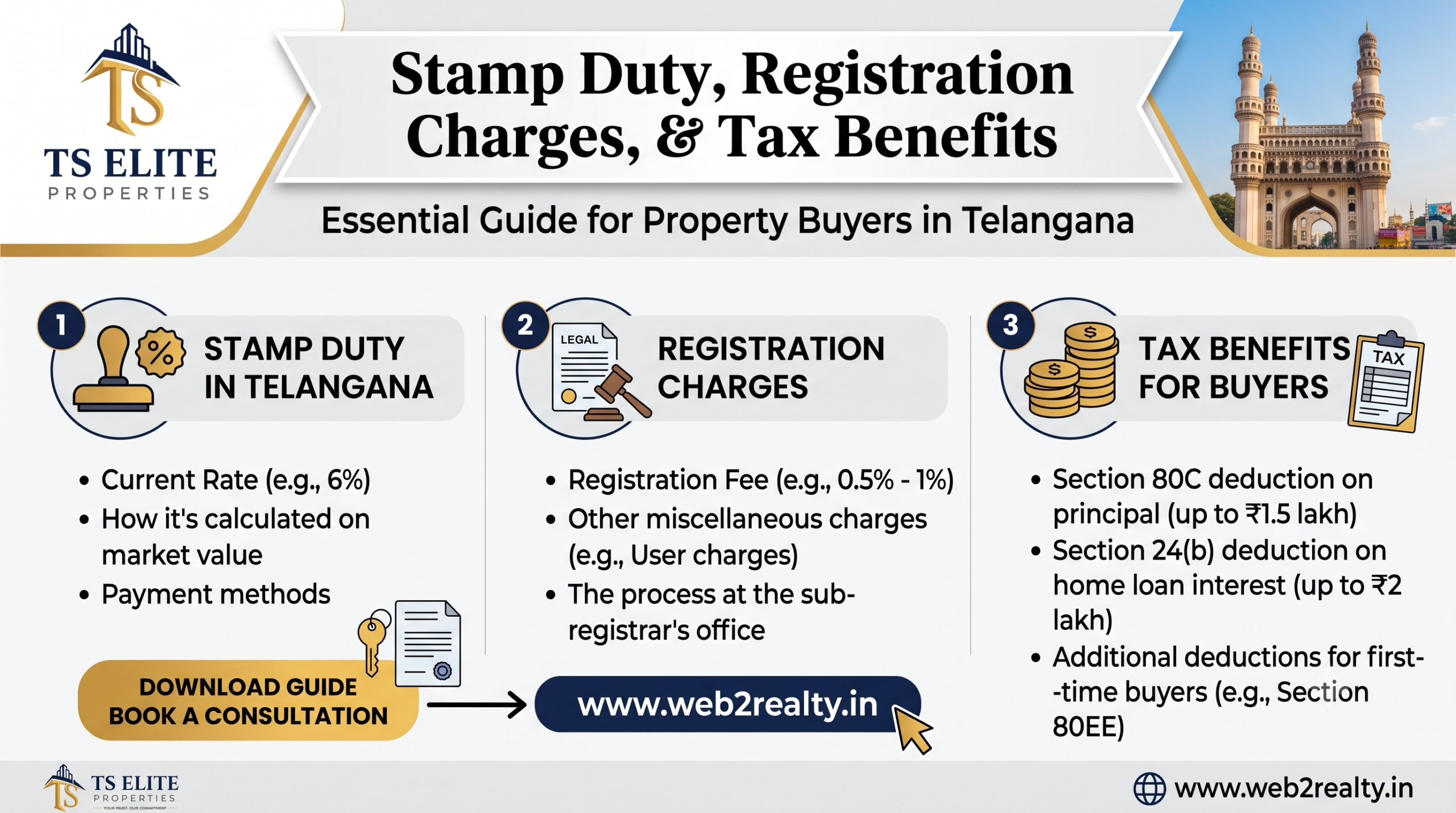
Stamp duty is a government levy paid on legal documents used to transfer property ownership.
When you purchase a property, the sale deed needs to be properly stamped and registered. Stamp duty is an important part of this process.
The amount generally depends on the applicable rate and the value on which the government calculates the duty.
For buyers of Property in Telangana, this means the property budget should include stamp duty in addition to the agreed purchase price.
Stamp duty is different from the registration fee. They are separate charges even though both are paid during the property registration process.
What Are Registration Charges?
Registration charges are the fees paid for officially recording the property transaction with the government.
Registration creates an official record of the sale and helps establish the registered transfer of ownership.
In Telangana, the applicable registration fee depends on the type of document and the location or category of the property.
For a standard sale deed in many urban areas, commonly reported rates include a 0.5% registration fee, along with applicable stamp and transfer duties. (MagicBricks)
What Is Transfer Duty?
Transfer duty is another charge associated with certain property transfers.
In urban areas, including Hyderabad municipal areas, commonly reported rates for a normal sale transaction include:
- Stamp duty: 4%
- Transfer duty: 1.5%
- Registration fee: 0.5%
This gives an approximate combined statutory burden of 6% for a typical sale deed in applicable urban areas. (PropWatch)
However, buyers should not assume the same calculation applies everywhere in Telangana.
The property’s jurisdiction and type of transaction matter.
Stamp Duty and Registration Charges in Telangana: An Example
Let’s take a simple example.
Suppose you purchase a property for ₹50 lakh and the applicable urban sale-deed charges are:
- Stamp duty at 4% = ₹2,00,000
- Transfer duty at 1.5% = ₹75,000
- Registration fee at 0.5% = ₹25,000
The approximate total would be:
₹3,00,000
Therefore, a buyer should not plan a budget of only ₹50 lakh for the transaction.
The actual amount payable depends on the applicable government valuation, transaction type, location, and current rules.
What Value Is Used to Calculate Stamp Duty?
One important point buyers should understand is that the chargeable value may not simply be the negotiated purchase price.
The applicable duties are generally calculated based on the higher of the consideration value and the government-notified market value, subject to the applicable rules.
For example, imagine you negotiate a property price of ₹45 lakh, but the applicable government market value is ₹50 lakh.
The duty may be calculated on the applicable higher value rather than simply the negotiated ₹45 lakh.
This is why buyers should check the current government market value before finalising their budget. (cleartax)
Urban and Rural Property Charges Can Differ
Another important point is that the applicable charges can vary depending on where the property is located.
For properties falling under Gram Panchayat areas, commonly reported 2026 rates for a sale deed are approximately:
- Stamp duty: 5.5%
- Registration fee: 2%
- Transfer duty: generally not separately charged in the same way as municipal areas
This can result in an overall burden of around 7.5% for the applicable rural category. (PropWatch)
This distinction is particularly important for buyers considering plots and land on the outskirts of Hyderabad.
A property may be marketed using the name of a nearby city or growth corridor, but its actual registration jurisdiction determines the applicable charges.
Therefore, always verify the property’s exact jurisdiction.
Why Buyers of Property in Telangana Should Budget for These Charges
Many first-time buyers focus entirely on the property price.
For example, someone may have a budget of ₹60 lakh and assume that they can purchase a ₹60 lakh property.
But the buyer may also need money for:
- Stamp duty
- Transfer duty
- Registration fee
- Legal verification
- Documentation
- Loan-related charges
- Brokerage, if applicable
- Society or builder-related charges, where applicable
- Other transaction expenses
These additional costs can significantly affect the total amount required.
If you are purchasing Property in Telangana, calculate the complete acquisition cost before committing to a property.
Tax Benefits Available to Homebuyers
Stamp duty and registration charges are not the same as income tax.
However, homebuyers may be eligible for certain tax benefits when purchasing a residential property, particularly when the purchase is financed through a home loan.
Home Loan Principal Repayment
Under the Income Tax Act, eligible taxpayers may be able to claim deductions for qualifying home-loan principal repayment under Section 80C, subject to the applicable conditions and overall limits.
Stamp duty and registration charges for acquiring a residential house can also fall within Section 80C’s eligible deductions, subject to the law and the overall Section 80C limit.
However, buyers should not assume that every property-related expense automatically qualifies.
Tax Benefit on Home Loan Interest
Eligible homeowners may also claim deductions for qualifying home-loan interest under Section 24(b), subject to applicable conditions and limits.
For a self-occupied house, the commonly applicable deduction limit for qualifying interest is up to ₹2 lakh per financial year, subject to the relevant conditions.
Tax treatment can differ depending on whether the property is self-occupied, let out, or under construction.
Therefore, buyers should consult a tax professional before making decisions based on expected tax savings.
Tax Benefits Are Not the Same for Every Property
This is an important point.
Tax benefits can depend on:
- Type of property
- Purpose of purchase
- Home-loan structure
- Whether the property is self-occupied or rented
- Date of completion
- Tax regime selected
- Applicable income-tax provisions
- Other eligibility conditions
A residential house purchased with a home loan may receive different tax treatment from a vacant plot.
Therefore, buyers considering Property in Telangana should understand the tax implications of their specific purchase rather than relying on general assumptions.
What About Buying a Plot?
Many investors purchase residential plots with the intention of building a house later.
A plot purchase should be evaluated differently from an apartment purchase.
For example, buyers should check:
- Layout approval
- Land title
- Survey details
- Land-use classification
- Road access
- Encumbrance status
- Applicable development permissions
- Registration value
- Construction restrictions
Tax benefits connected with a home loan may also depend on whether and when a house is constructed.
Therefore, don’t assume that buying a plot automatically provides the same tax benefits as buying a completed residential house.
New Property vs Resale Property
The tax and transaction costs can also differ depending on whether you purchase a new property or a resale property.
For a new property, buyers should understand the applicable tax treatment, including GST where relevant.
For a resale residential property, GST generally does not apply in the same way as it can for certain under-construction transactions.
However, GST treatment depends on the specific transaction and stage of construction.
Before making a large payment, ask the builder or seller for a clear breakup of all applicable taxes and charges.
Don’t Confuse GST With Stamp Duty
GST and stamp duty are separate.
Stamp duty is a state-level property transaction charge, while GST is a tax on the supply of goods and services and can apply to certain property transactions.
For example, an under-construction apartment may have GST implications depending on the transaction.
A completed property transaction generally has different GST treatment.
This is another reason why buyers should ask for a detailed cost sheet before booking Property in Telangana.
Important Documents to Check Before Registration
Before registering a property, make sure the documentation is properly verified.
Depending on the property, buyers may need to check:
- Sale deed
- Previous title documents
- Encumbrance Certificate
- Property tax records
- Layout approval
- Building approval, where applicable
- Land-use details
- Survey documents
- Identity and address documents
- Loan or mortgage details
- Applicable NOCs
- RERA details, where applicable
The exact documents required can vary according to the type of property and transaction.
A qualified property lawyer can help identify potential legal problems before registration.
Use the Official Registration System
Telangana provides online registration-related services and information through its government registration systems.
The Telangana government information portal directs users to the Registration and Stamps Department for stamp-duty and registration-fee rates and related services. (iPass)
The Bhu Bharati system also provides online workflows related to registration of sale and gift transactions. (Bhu Bharati)
Before registering your property, verify the latest applicable charges through the official government system rather than relying only on old articles, brokers, or social media posts.
How to Plan Your Property Budget
A smart buyer should divide the budget into several parts.
Property Cost
This is the negotiated purchase price.
Government Charges
Include stamp duty, registration fee, transfer duty, and any other applicable government charges.
Loan Expenses
Consider processing fees, valuation charges, documentation costs, and other lender-related expenses.
Legal Expenses
Professional legal verification can help identify title and documentation issues.
Other Costs
Depending on the property, there may be brokerage, maintenance deposits, utility connection charges, society charges, or builder-related expenses.
This approach gives you a more realistic estimate of the total cost.
Common Mistakes Buyers Should Avoid
1. Budgeting Only for the Property Price
Always keep additional funds for registration and other transaction expenses.
2. Using Outdated Rates
Property charges can change. Verify current rates before registration.
3. Ignoring Government Market Value
Check the applicable government valuation before finalising the transaction.
4. Assuming All Properties Have the Same Charges
Location, property type, and deed type can affect the applicable charges.
5. Assuming Tax Benefits Are Automatic
Tax deductions have eligibility conditions.
6. Skipping Legal Verification
Never sacrifice legal due diligence to save time or money.
7. Relying Only on Verbal Promises
Get important terms, charges, approvals, and commitments documented.
A Simple Checklist Before Buying Property in Telangana
Before finalising your purchase, ask yourself:
Have I checked the property title?
Have I verified the applicable approvals?
Have I checked the government market value?
Have I calculated stamp duty and registration charges?
Have I included transfer duty where applicable?
Have I understood the GST position, if relevant?
Have I checked my home-loan tax eligibility?
Have I reviewed the sale agreement carefully?
Have I taken legal advice where necessary?
If the answer to all these questions is yes, you are in a much better position to proceed.
Frequently Asked Questions (FAQs)
1. What is stamp duty when buying property in Telangana?
Stamp duty is a government charge imposed on the property transaction document, such as a sale deed. The applicable rate depends on the type of transaction and property jurisdiction.
2. What are the registration charges in Telangana?
Registration charges are fees paid to officially record the property transaction with the government. For many urban sale deeds, the commonly reported registration fee is 0.5%, subject to applicable rules and limits. (MagicBricks)
3. What is the stamp duty for property in Hyderabad?
For a standard sale deed in applicable urban areas, commonly reported 2026 rates are 4% stamp duty, 1.5% transfer duty, and 0.5% registration fee, or approximately 6% combined. (PropWatch)
4. Are stamp duty rates the same across Telangana?
No. Applicable charges can vary according to the property’s jurisdiction and the type of document or transaction. Gram Panchayat properties, for example, can have a different charge structure from municipal areas. (PropWatch)
5. On what value are stamp duty and registration charges calculated?
The applicable charges are generally calculated using the higher of the transaction consideration and the applicable government market value, subject to the relevant rules.
6. Can homebuyers get tax benefits on property purchases?
Eligible taxpayers may receive certain tax benefits for qualifying home-loan principal repayment, interest payments, and in some cases eligible stamp duty and registration expenses. The availability depends on the applicable income-tax provisions and the buyer’s circumstances.
7. Can I claim tax benefits when buying a plot?
Tax treatment for a vacant plot can differ from that of a residential house. Buyers should check the specific conditions applicable to their situation and consult a tax professional before assuming a deduction is available.
8. Is GST applicable when buying property in Telangana?
GST treatment depends on the type and stage of the property transaction. Certain under-construction properties can attract GST, while completed property transactions can have different treatment. Confirm the applicable GST position before purchasing.
9. Should stamp duty and registration charges be included in my property budget?
Yes. These are significant transaction costs and should be included when calculating the total amount required to purchase Property in Telangana.
10. Where can I verify the latest Telangana registration charges?
Buyers should verify the latest rates and applicable calculations through the official Telangana Registration and Stamps Department and government registration systems before completing a transaction. (iPass)
11. Can stamp duty and registration charges be negotiated?
Government-imposed statutory charges are generally not something a buyer negotiates with the seller. However, the applicable amount can depend on the legally relevant property value, jurisdiction, and transaction type.
12. Should I consult a lawyer before buying property?
Yes. A qualified property lawyer can help review title documents, agreements, approvals, encumbrances, and other legal aspects before you make a major financial commitment.
Final Thoughts
Buying Property in Telangana can be an important step toward building a home, creating a long-term asset, or expanding your investment portfolio.
But property investment is about more than negotiating the purchase price.
Understanding stamp duty, registration charges, transfer duty, taxes, legal costs, and potential tax benefits can help you plan your finances more effectively.
For urban sale transactions, commonly reported 2026 rates are around 4% stamp duty + 1.5% transfer duty + 0.5% registration fee, while applicable Gram Panchayat transactions can have a different structure. Always confirm the exact charges for your property before registration. (PropWatch)
Tax benefits may also be available for eligible homebuyers, particularly in relation to qualifying home-loan principal and interest payments. But the benefits depend on individual circumstances and prevailing tax rules.
The safest approach is simple: calculate the complete cost, verify the documents, check current government charges, and take professional legal and tax advice when needed.
Ready to Buy Property in Telangana?
Planning to purchase a plot, apartment, house, or other Property in Telangana?
Don’t wait until registration day to discover additional expenses.
Calculate your complete property budget, verify the applicable government charges, check all documents, and speak with www.web2realty.in for a trusted real estate and legal professional before making your final decision.
Looking for the right property in Telangana? Explore suitable properties, compare locations and prices, schedule a site visit, verify the documents, and take the next step towards www.web2realty.in for a secure property investment.
.
Recent post
- September 18, 2026